


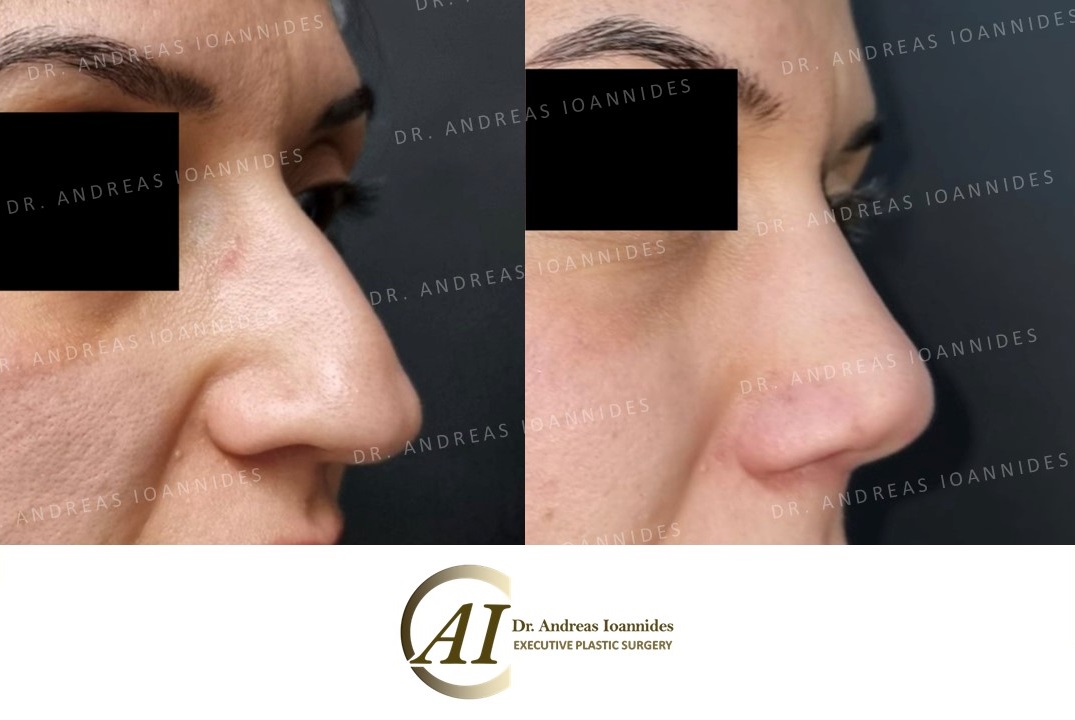
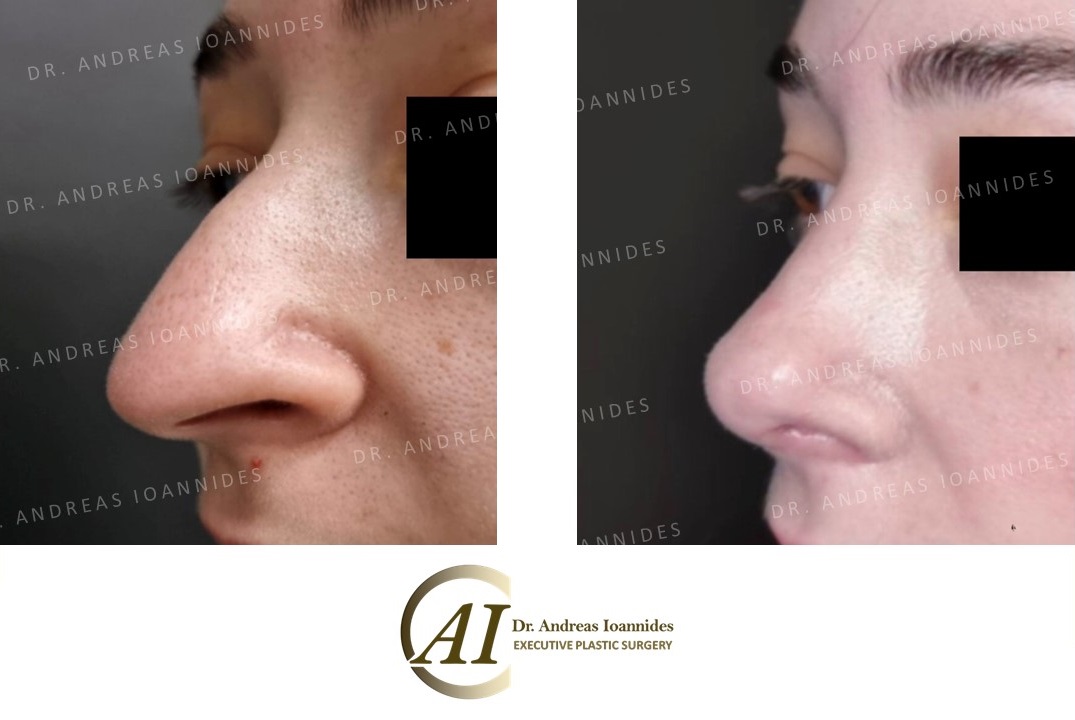
Rhinoplasty is one of the most popular plastic surgery procedures in the world, and the reason is pretty simple. Your profile sits right in the centre of your face, so even a small change to the bridge or the tip can shift how the whole face reads. Get it right, and people notice you, not your operation.
Dr Ioannides approaches each case as its own puzzle. No two faces are built the same way, and a result that flatters one person can look out of place on another. That idea, that the plan has to fit the person rather than a template, runs through everything described on this page.
Why do patients travel to Dr Ioannides
People come to this practice from across Cyprus, often after months of reading and second-guessing. A few things tend to come up again and again in their stories:
- A natural look first: The goal is a result that suits your features, not an obviously "done" appearance. Honestly, the best compliment is when friends say you look rested, without knowing why
- Breathing and beauty together: Many people want a softer profile and an airway that works. Both can usually be handled in the same operation.
- Calm, clear consultations: You get straight answers about what is realistic for your anatomy, including the times when less change is the wiser call.
- Care that does not stop at the door: Follow-up matters as much as the day of the procedure, and the team stays reachable while you heal.
The last point is underrated. Planning and aftercare often determine how happy someone is, maybe more than the hour spent in the operating room.
The signature techniques
Dr Ioannides has developed and refined a set of methods built around two priorities: gentler tissue handling and a quicker return to daily life. Each links out to its own detailed page.
High Definition Low Trauma Rhinoplasty
This is the cornerstone method. By working with finer instruments and a more conservative touch, the approach limits bruising and swelling while still letting the structures be sculpted precisely. Less disruption to the tissue tends to mean a smoother recovery and a result that settles sooner. Read more about High Definition Low Trauma Rhinoplasty.
Short Scar Nose
For people who worry about visible marks, the Short Scar Nose technique keeps incisions as small and as hidden as possible. The aim is real reshaping power with a footprint that fades into the natural creases, so the scar story is, well, barely a story at all.
Chin Surgery
Worth a mention here, because the chin and the nose work as a pair. A small or receding chin can make an otherwise fine nose look larger, so the two are often planned together. Dr Ioannides offers a few routes: a precisely sized silicone implant for a defined, lasting result, or a bloodless approach using long-lasting injectable materials, done in the office in about ten minutes under local anaesthetic with almost no downtime. The right choice depends on how much projection you need and whether you prefer a surgical or minimally invasive path. Read more about Chin Surgery.
Quick Recovery Otoplasty
Not strictly about the profile, but it often comes up in the same conversation about facial balance. Quick Recovery Otoplasty reshapes prominent or protruding ears with a focus on a short, comfortable downtime. Some patients combine it with their main procedure; others book it on its own.
The Comfort of Local Anaesthesia and Sedation
In our practice, many of our procedures are performed under local anaesthesia or a combination of local anaesthesia and deep sedation (twilight anaesthesia), aiming to minimise the impact on your body. This approach ensures a completely painless and calm experience during surgery, while eliminating the heavy sensation and nausea often associated with general anaesthesia. As a result, recovery begins immediately, allowing you to return home safely on the very same day, with the final choice of method always tailored individually during your consultation visit.
Cosmetic and functional concerns we treat
A consultation usually covers more than one thing at once. The face is a system, after all. Here is a snapshot of what Dr Ioannides commonly addresses:
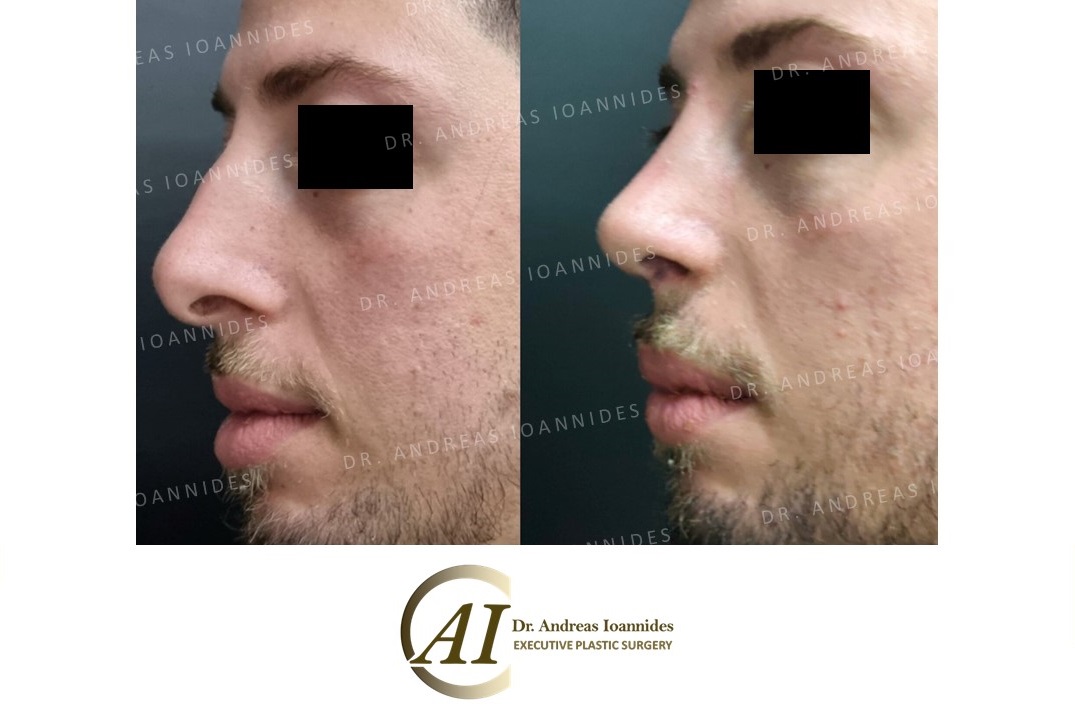
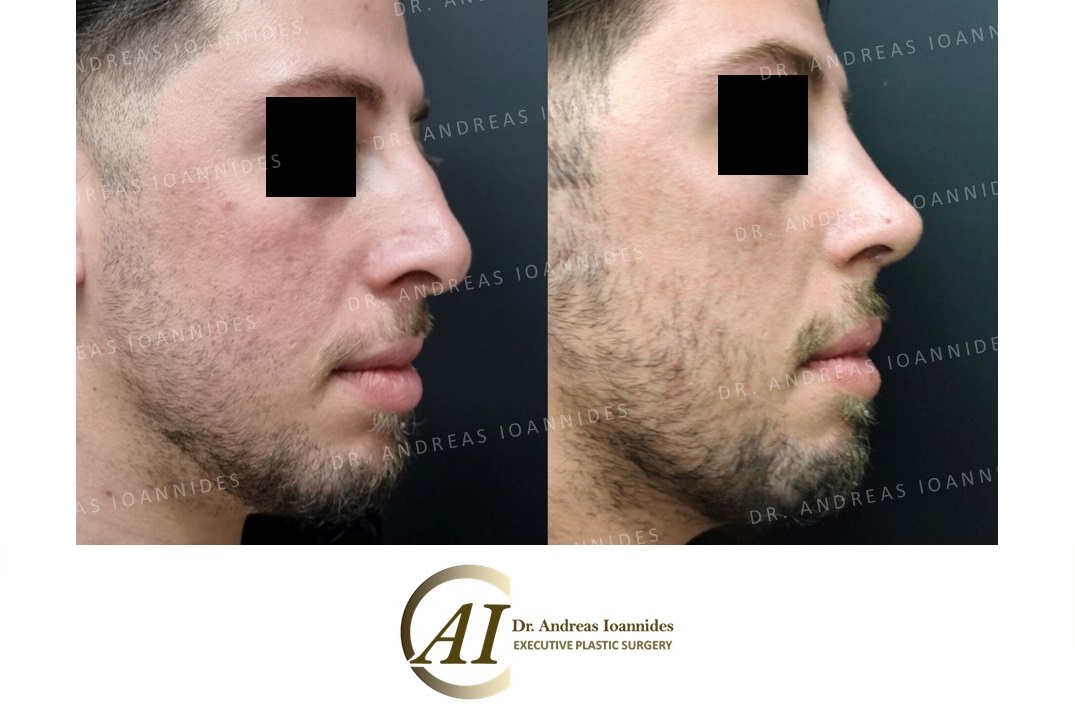
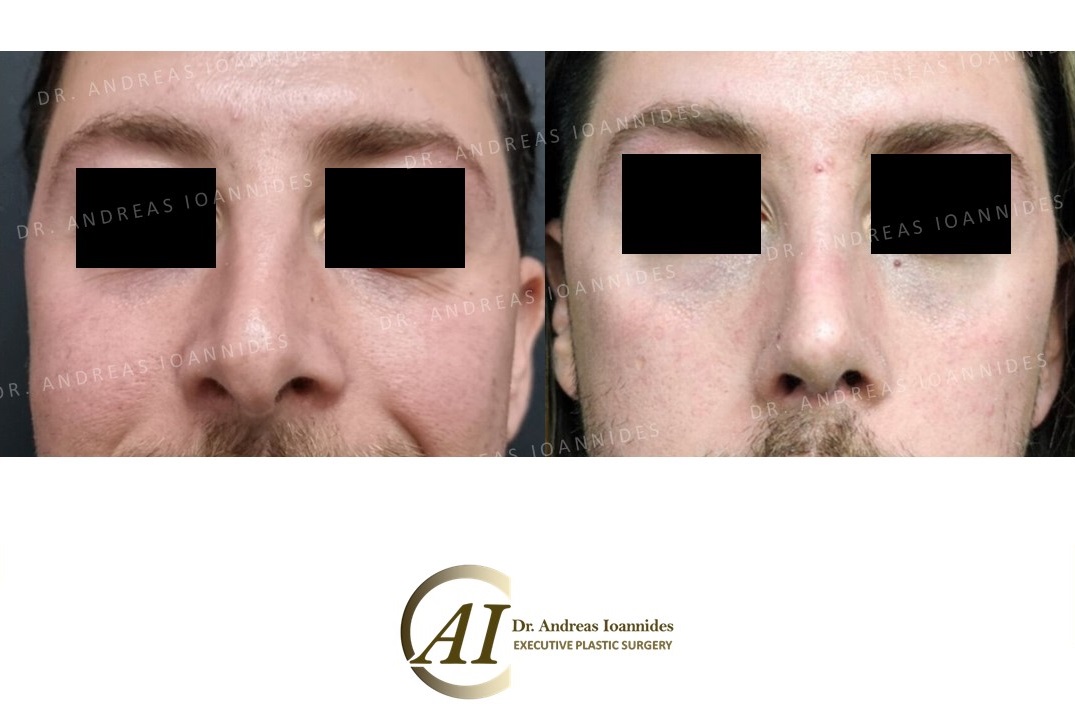
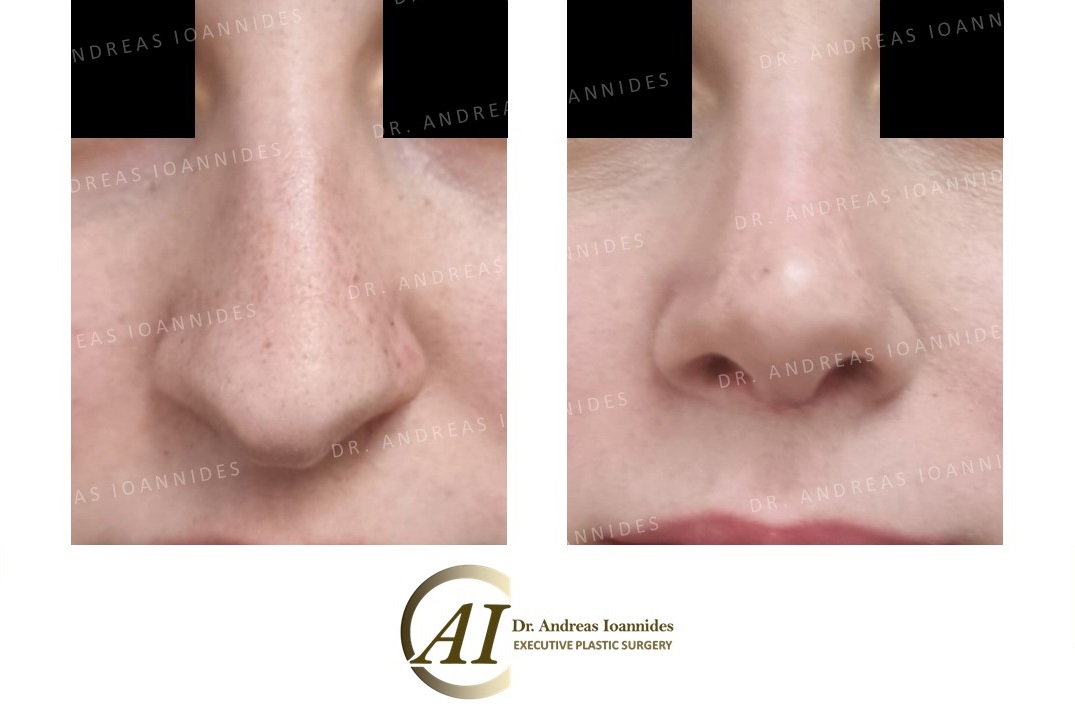
A quick word on that last row. Male rhinoplasty is its own discipline; men generally want refinement, not a dramatic change, and the angles that flatter a male face differ from the ones that suit a female one. Dr Ioannides plans accordingly.
And revision work deserves a mention too. A rhinoplasty revision is harder than a first operation, because the tissue has already been altered and scar tissue can be unpredictable. It rewards patience and a surgeon who has handled difficult cases before.
Surgical and non-surgical paths, briefly
Not everyone needs an operation. Some smaller concerns, a minor bump, a slightly low tip, respond well to filler-based shaping that takes minutes and needs almost no downtime. The trade-off is that results are temporary and the technique cannot make a structure smaller.
For lasting change to the underlying framework, surgery is the route. Open and closed methods each have their place; the choice depends on what needs to be done, not on fashion. Dr Ioannides will walk you through which fits your case during the consultation.
Who makes a good candidate?
Rhinoplasty suits adults whose facial growth has finished and who are in reasonably good health. Beyond that, a few honest checkpoints help:
- Clear, specific goals: "I want this bump gone" is easier to plan for than "I want a different face."
- Realistic expectations: Skin thickness, bone structure and healing all set limits. Good surgery respects them.
- Stable health and habits: Non-smokers heal faster; smoking is best paused well before and after.
- Emotional readiness: This is elective surgery. There is no rush, and a delay is fine if you feel unsure.
If a candidate is not quite ready, Dr Ioannides will say so. That kind of frankness protects the patient, and frankly, it protects the outcome.
Recovery at a glance
Everyone heals at their own pace, so treat these as a guide rather than a promise. Some bounce back faster; a few need a little longer.
A note on pricing
People always ask about rhinoplasty prices, and the honest answer is that the figure depends on the case. A primary cosmetic procedure, a combined functional repair and a complex secondary case are very different jobs, with different operating times and planning. Rather than quote a number that may not apply to you, the practice gives a clear, written estimate after the consultation, once the actual scope is known. No surprises later.
Two clinics, two countries
Dr Ioannides sees patients in Greece and in Cyprus, which makes follow-up easier for people on either side of the sea. In our Nicosia practice you will find modern facilities and a small team that handles your file from first call to final check. The Cyprus clinic offers the same standard of care for patients closer to home there.
Plenty of international patients build a short trip around their procedure, combining the consultation, surgery and early recovery before they travel back. The coordinator can help map out timings so the visit runs smoothly.
What patients say
Feedback from those who have trusted us consistently centers on the same themes: a calm, reassuring experience, a result that preserves their individual identity, and a team that responds promptly to messages throughout recovery. Word of mouth, particularly in Nicosia, brings a steady stream of friends and relatives of former patients through our doors. Equally important is the significant number of patients referred to us by other doctors and colleagues who trust our clinical expertise, a distinction that, alongside our patients' appreciation, stands as the truest endorsement of our work.
Frequently Asked Questions
How long until I look "normal" again after rhinoplasty?
Most people feel comfortable in public around the seven to ten day mark, once the splint is off and the worst bruising has faded. You can usually return to desk work within a week. The deeper changes take longer, though. Subtle swelling at the tip can linger for months, and the final refined shape may take up to a year to fully settle. Many patients say nobody guesses anything was done well before that point, which is the goal.
Is rhinoplasty painful?
Less than most people fear. The procedure runs under general anaesthesia, so you feel nothing during it, and modern pain relief keeps the days afterward manageable. Patients often describe pressure or congestion, similar to a bad cold, rather than sharp pain. The splint and any internal support can feel odd for the first few days. Most people stop needing strong medication quickly and manage with simple painkillers, which honestly surprises a lot of first-time patients.
What is the difference between cosmetic and functional work?
Cosmetic changes adjust the look of the profile, smoothing a bump, refining a tip, straightening a line. Functional work fixes how you breathe, often by correcting a deviated septum or opening a narrow airway. The two are not rivals; a single operation can handle both at once, which spares you a second recovery. During planning, Dr Ioannides checks the inside of your structure as carefully as the outside, so breathing is protected even when the visit is mainly about appearance.
Can a previous operation be corrected?
Yes, though it asks more of everyone involved. Revision rhinoplasty deals with tissue that has already been altered, plus scar tissue that can behave unpredictably. Cartilage grafts are sometimes needed to rebuild support. Because the margin for error is smaller, these cases reward experience and careful, conservative planning. Dr Ioannides will give an honest read on what is achievable for your specific situation, including the cases where waiting longer before reoperating gives a better, safer result.
Do I need surgery, or is there a non-surgical option?
It depends entirely on what bothers you. Non-surgical rhinoplasty uses filler to camouflage a small bump or lift a tip slightly, with almost no downtime, but it is temporary and cannot reduce the size of any structure. For lasting change to the underlying framework, surgery is the only real route. The simplest way to know is the consultation, where Dr Ioannides examines your anatomy and tells you plainly which path actually suits your goals.
Ready to Talk About Your Profile?
Book a private consultation with Dr Ioannides
Your face deserves a plan built around it, not a generic one. Contact our specialist team to arrange a private visit in Greece or Cyprus, ask your questions, and see a preview of your potential result through 3D imaging. While you are here, take a moment to explore Dr Ioannides' wider range of facial and reshaping procedures, so you can see the full picture before you decide.
Other Areas Served:
Rhinoplasty in Athens | Rhinoplasty in Limassol
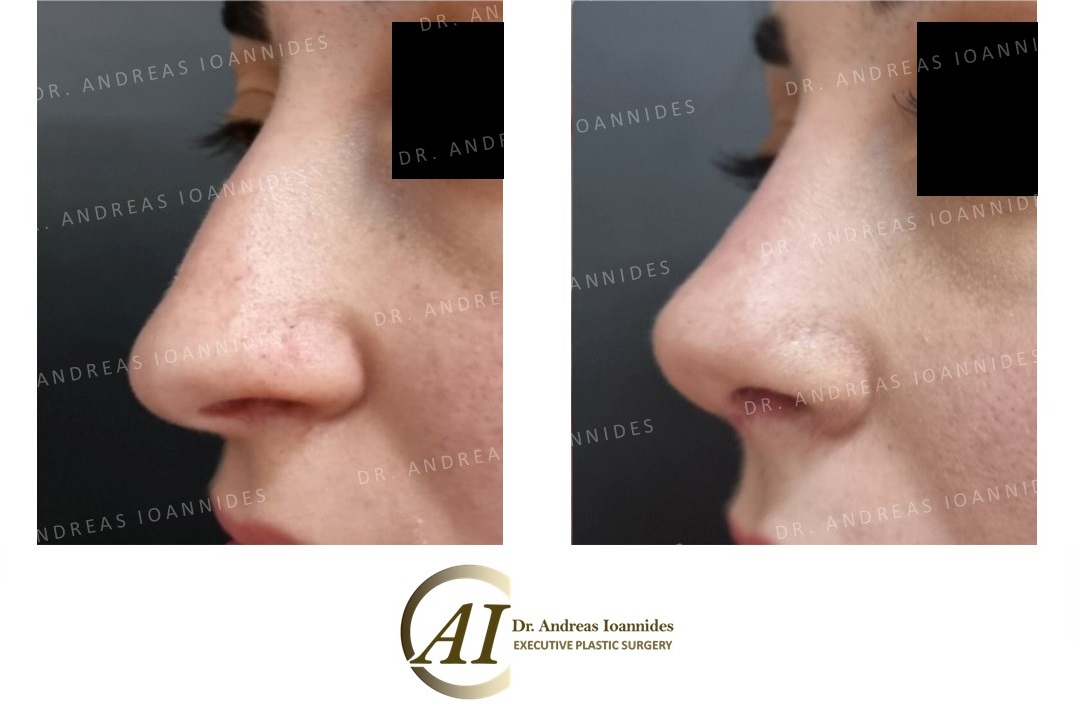
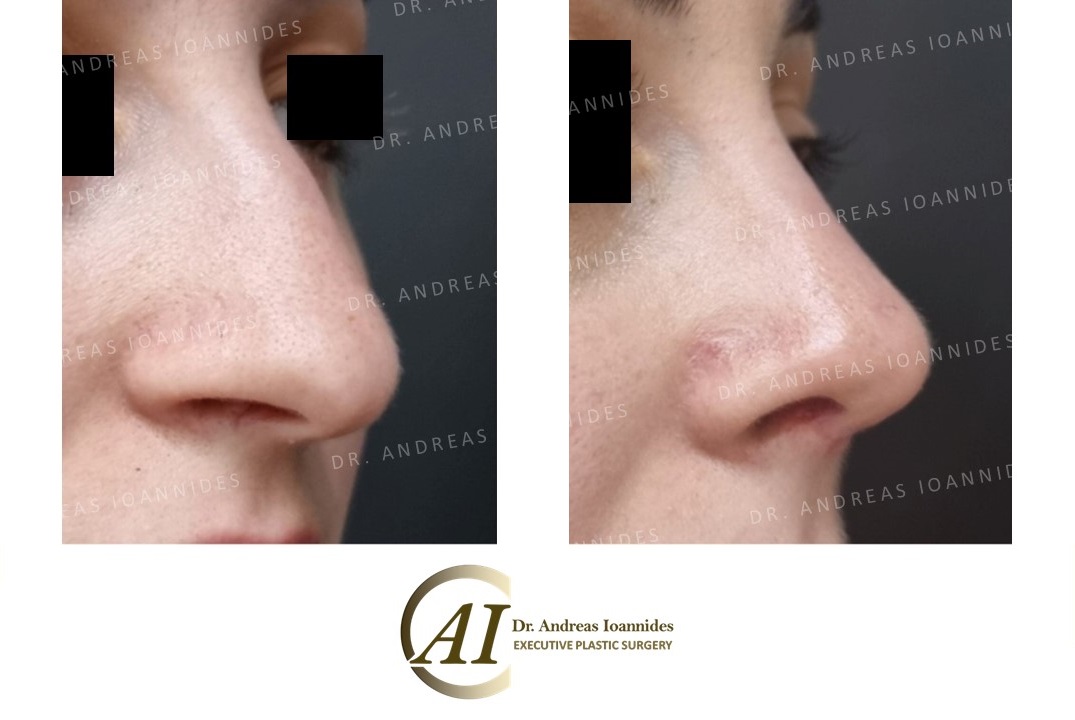
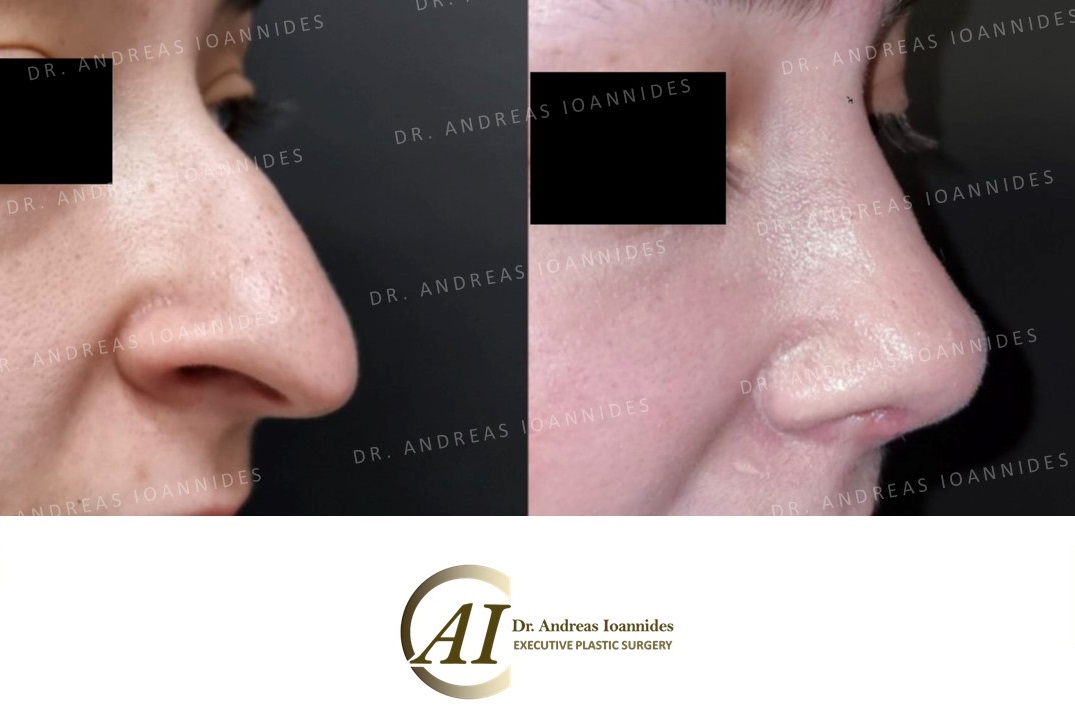
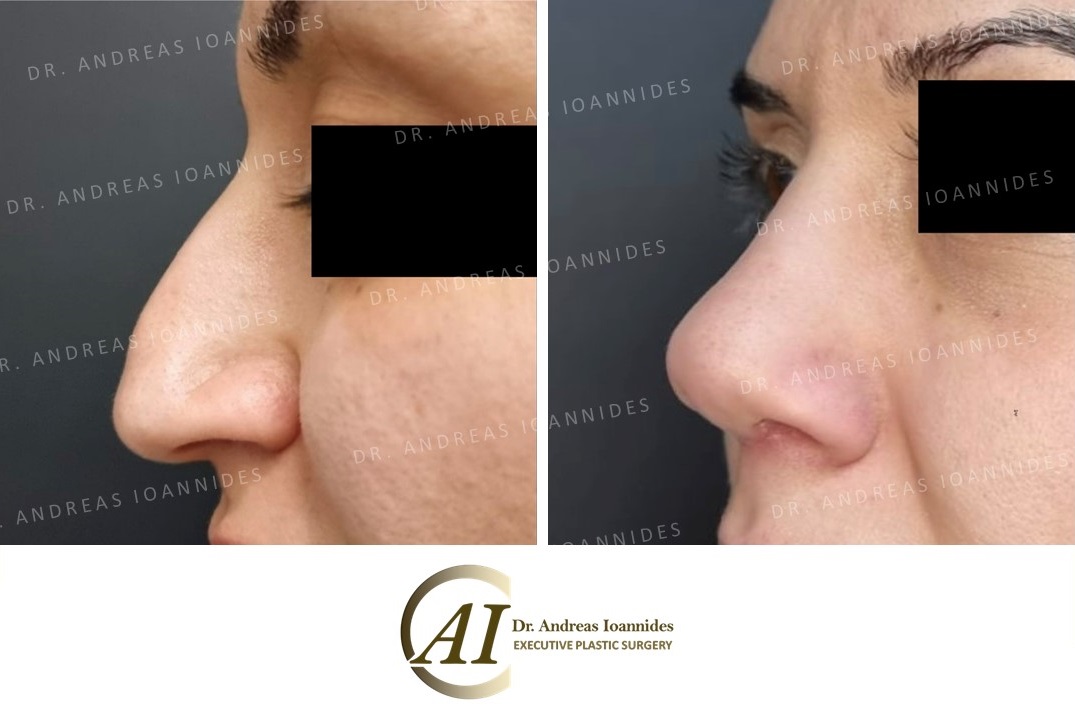
CONTACT
Dr. Andreas Ioannides
Contact us and book an appointment immediately
Choose your appointment by video call or by visiting one of our clinics!
Hello World!

Dr. Andreas Ioannides Executive Plastic Surgery is one of the most complete plastic surgery clinics and the international medical aesthetic medical centers ADVANCED AESTHETICS provide modern medical techniques and aesthetic medical treatments in Greece and Cyprus.
September and Plastic Surgery: Why Autumn Can Be a Good Time to Plan an Aesthetic Procedure
September and Aesthetic Treatments: Why It’s the Ideal Time for a Fresh Start
Thinking About Labiaplasty? 10 Things You Should Know Before Moving Forward
Labiaplasty: Everything You Need to Know About the Procedure That Improves Comfort and Confidence
Medical Tourism in Greece and Cyprus: Choosing Quality, Experience, and Safety
Rhinoplasty: Everything You Need to Know
Body Firming & Contouring – Advanced Aesthetics by Dr. Andreas Ioannides
Athens Clinic
T +30.210 9595566
Email: info@andreasioannides.com
Address: Syggrou Ave, 284, Kallithea, Zip 17673 – Athens
Cyprus Clinics
T +357.22335002
Email: info@andreasioannides.com
Athenium International Medical Institute
Address: Giannitson 9 Strovolos, Nicosia 2027, Cyprus
Address: Thiseos 1, Lemesos 3025, Zip 4004 – Cyprus
Copyright © 2022