


Some decisions take years to arrive at. A change in shape after pregnancy, a lifelong feeling of imbalance, or simply the wish to fill clothes differently, these thoughts often sit quietly for a long time before someone finally books a consultation. If you have reached that point, the aim of this page is to explain things clearly, without pressure, so you can weigh up whether the procedure is right for you.
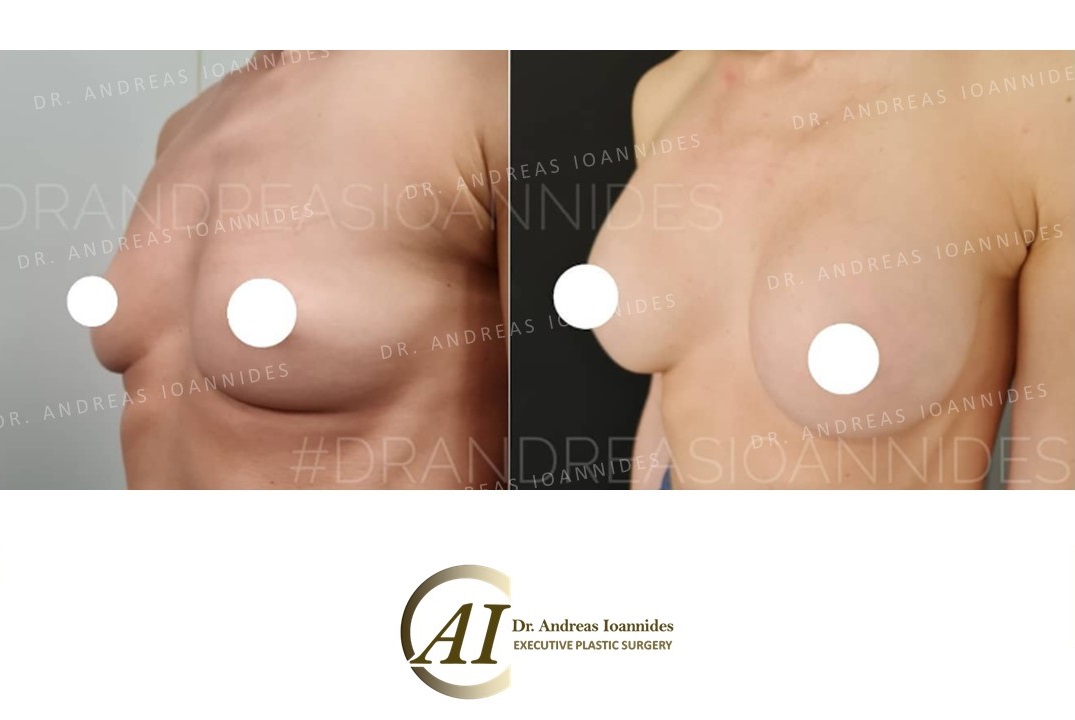
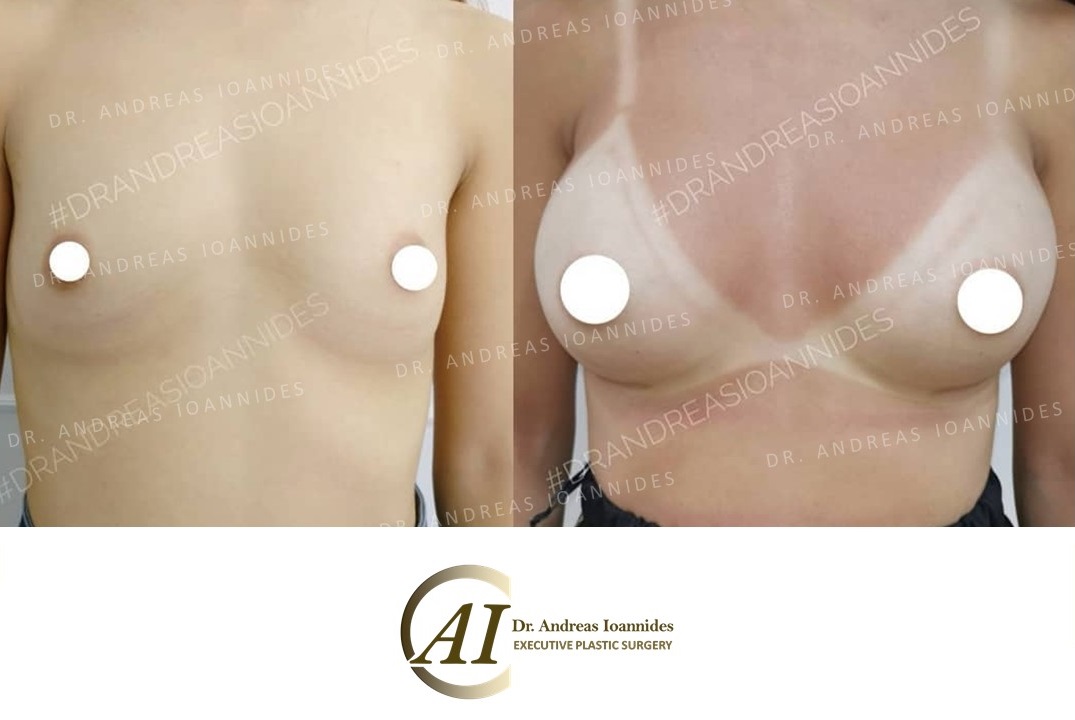
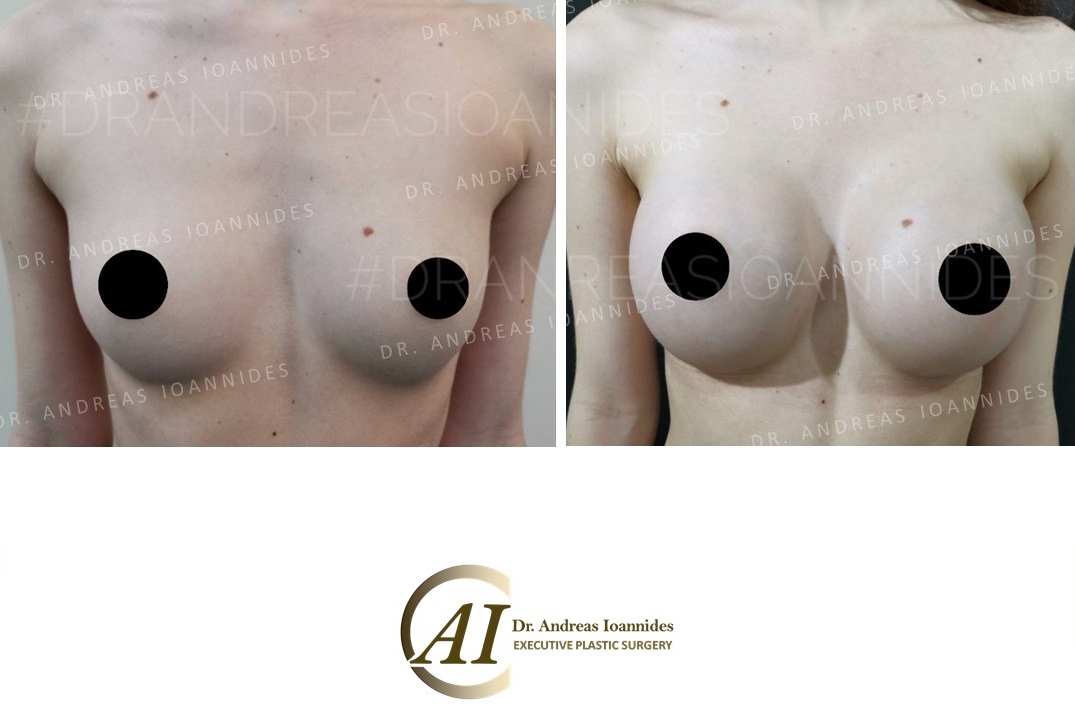
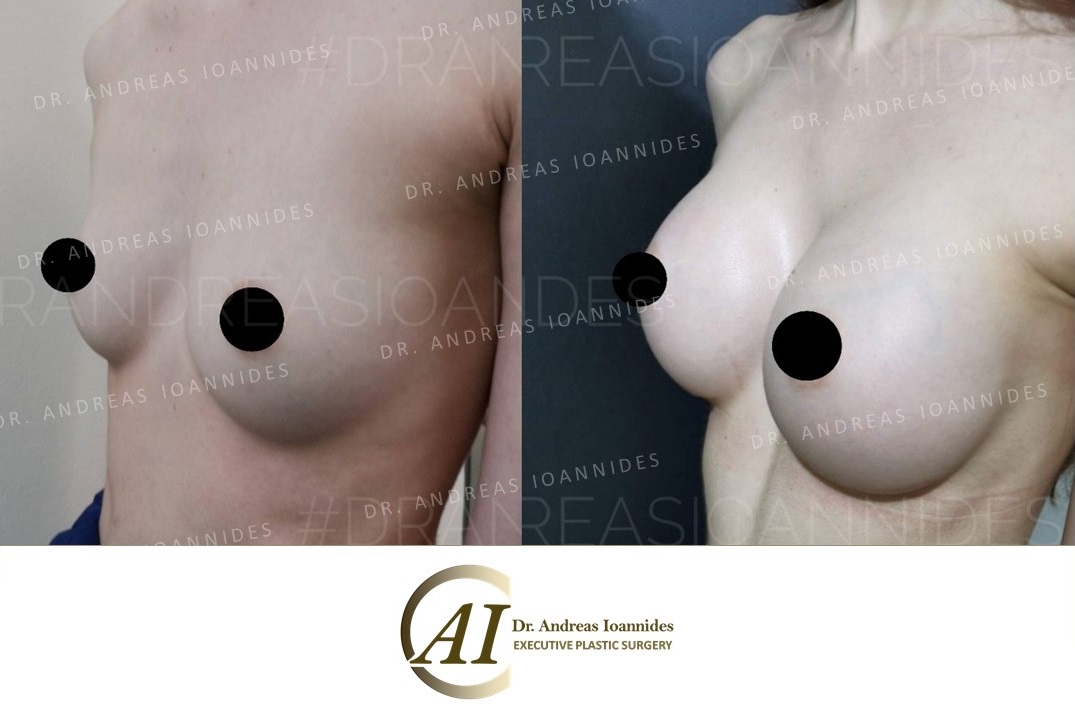
Breast augmentation is one of the most requested procedures in aesthetic plastic surgery worldwide, and the reasons women choose it are as individual as the results they hope for. Dr Andreas Ioannides approaches each case on its own terms, because a shape that suits one woman's frame can look wrong on another. The goal here is not a generic "done" look. It is a natural, balanced result that still feels like you.
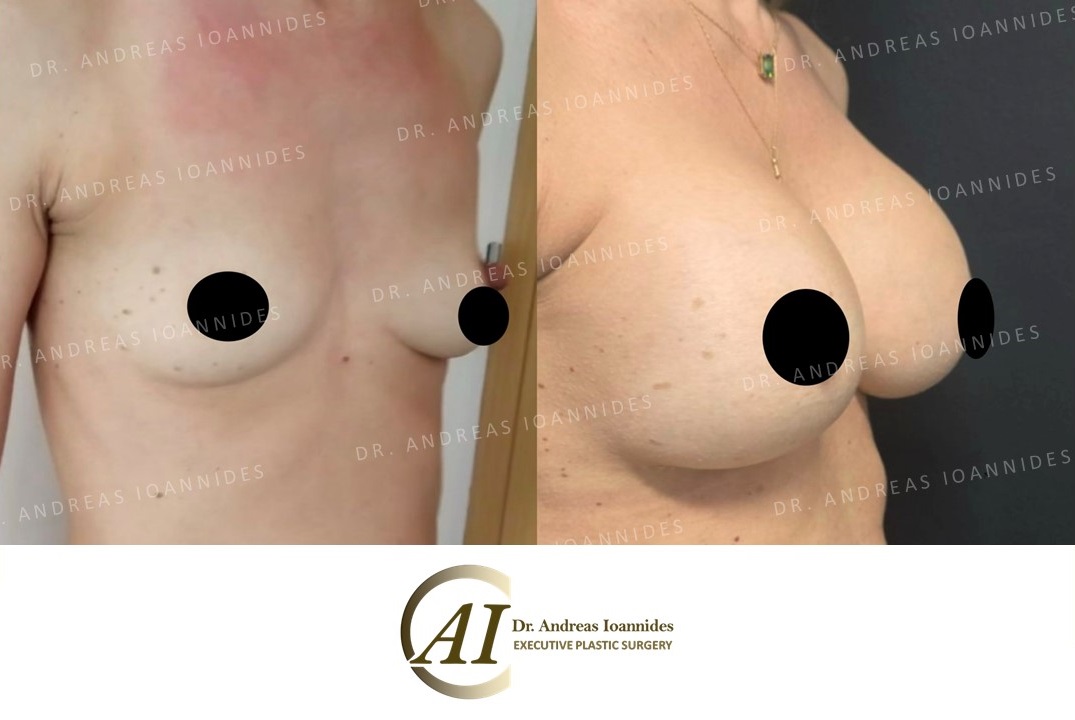
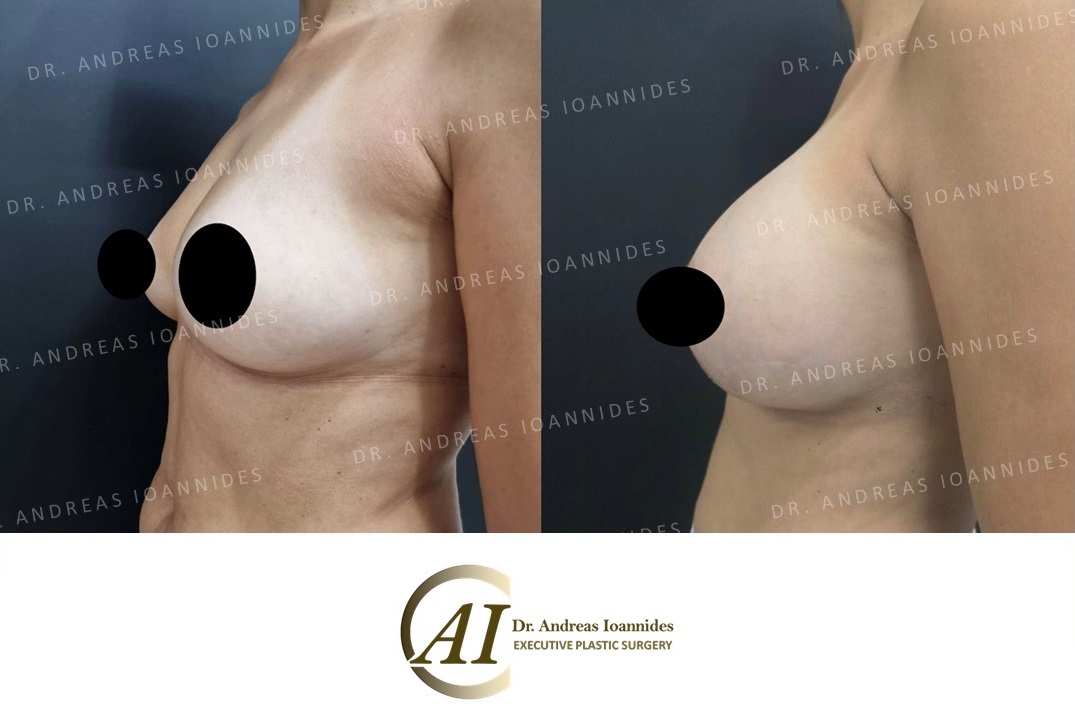
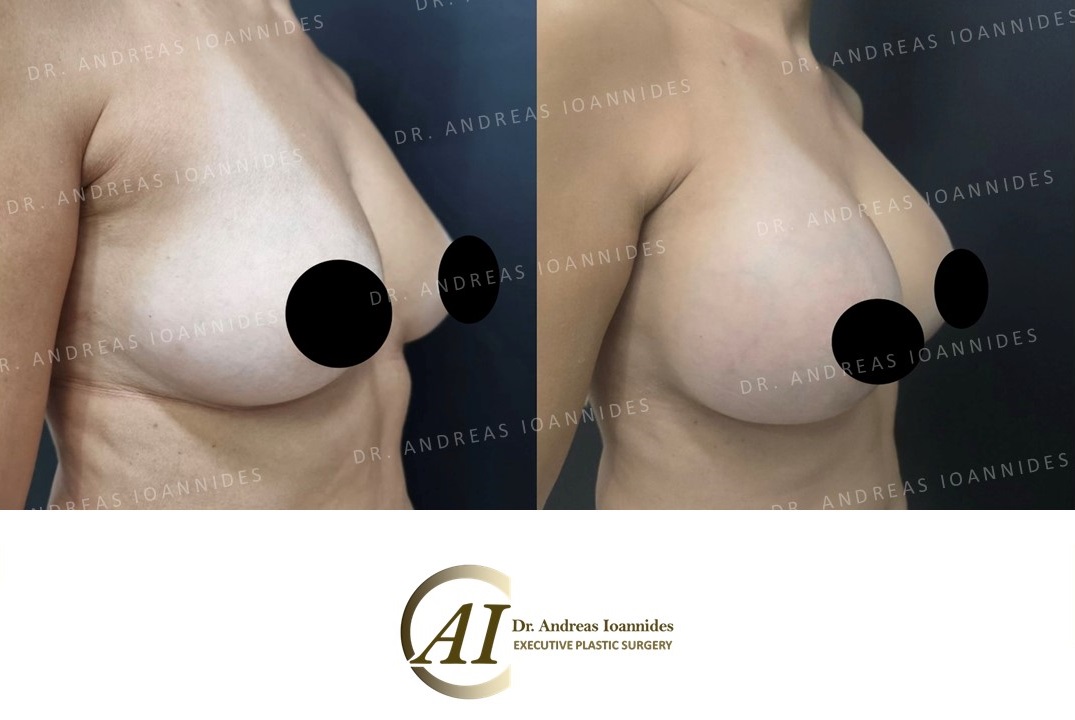
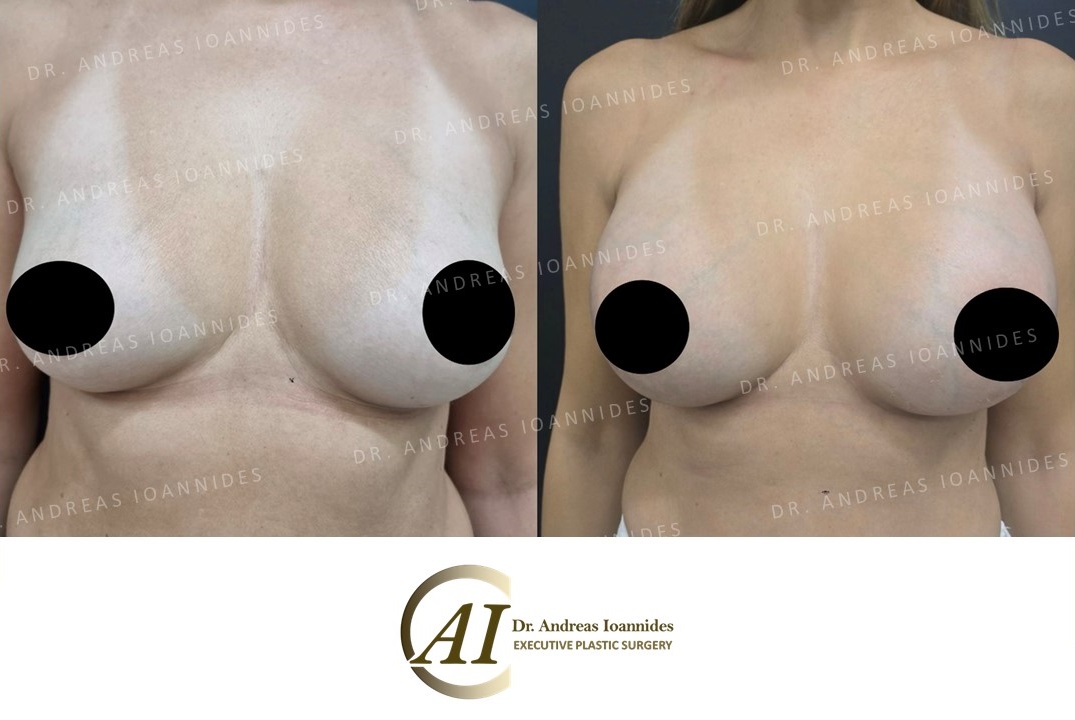
What breast enlargement is and who it helps
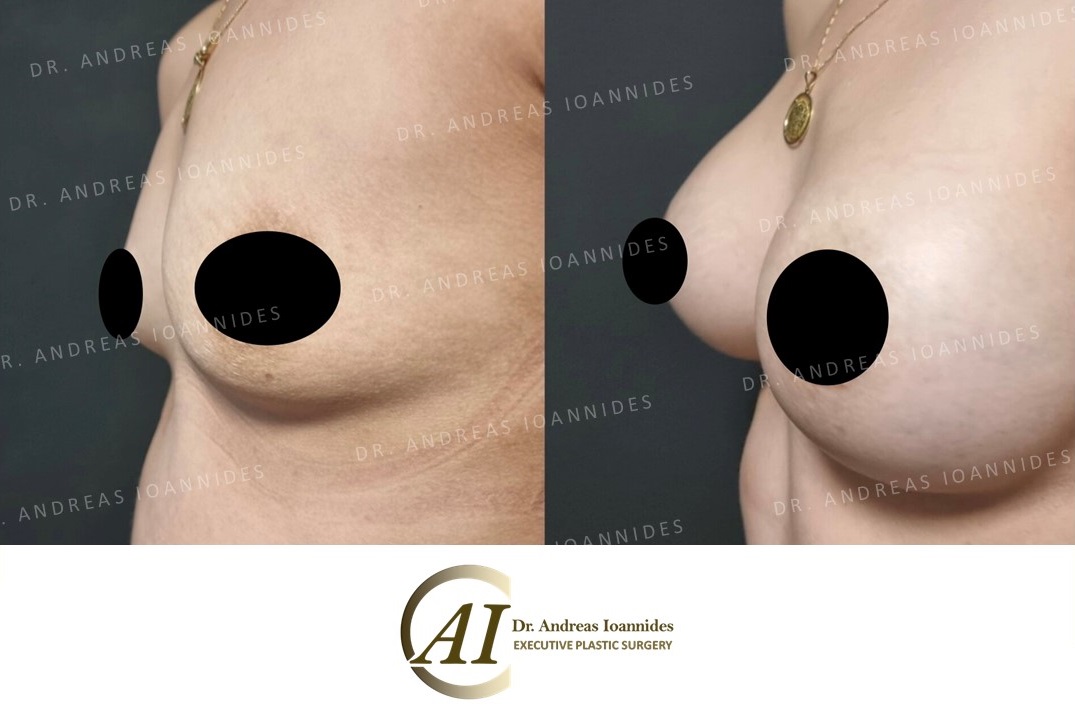
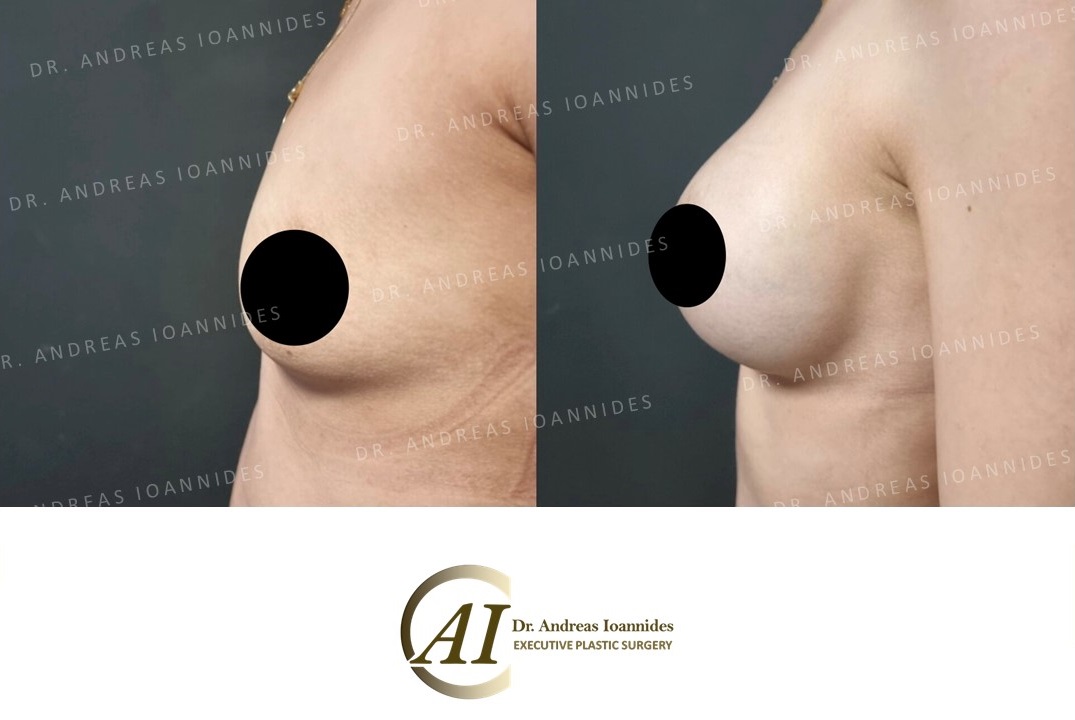
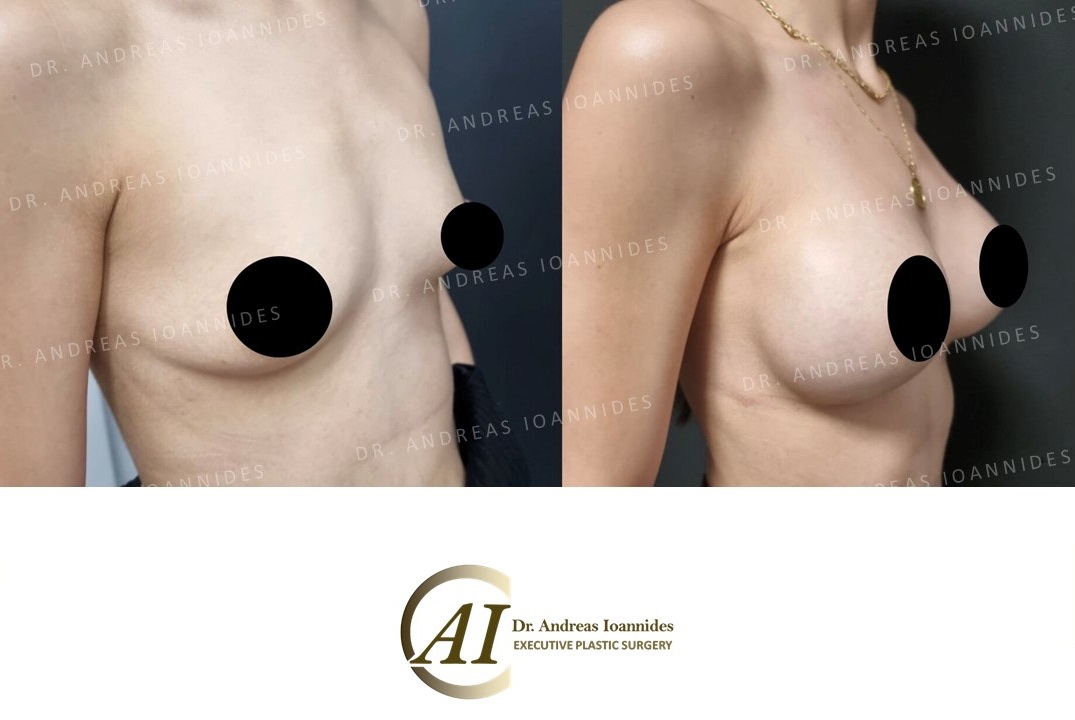
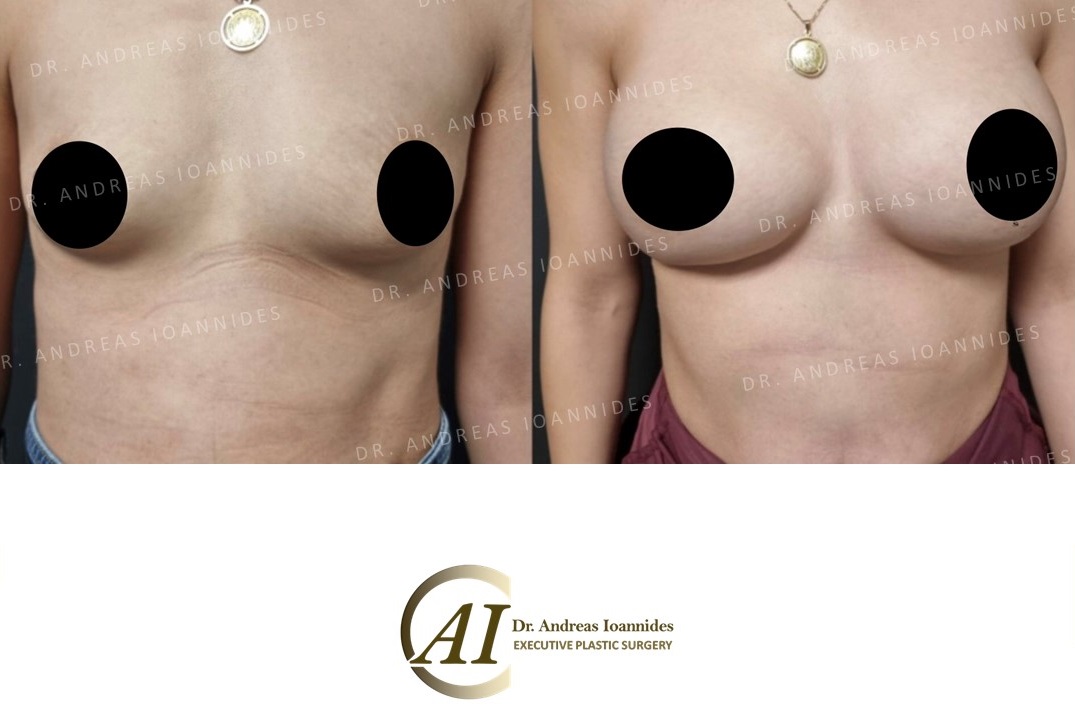
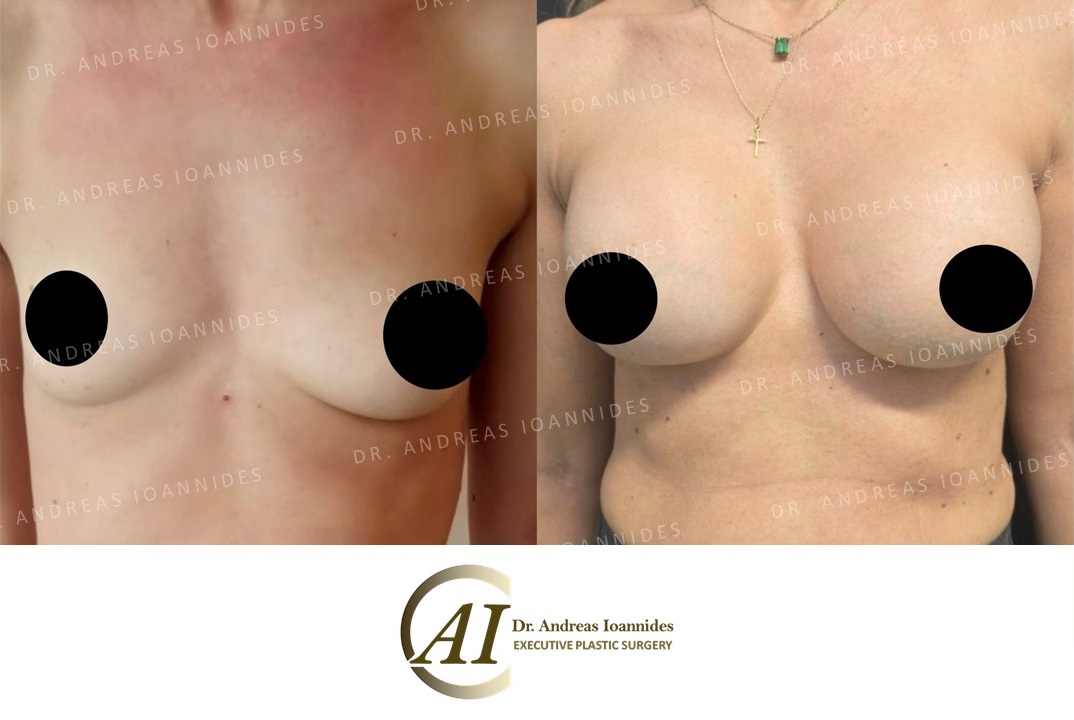
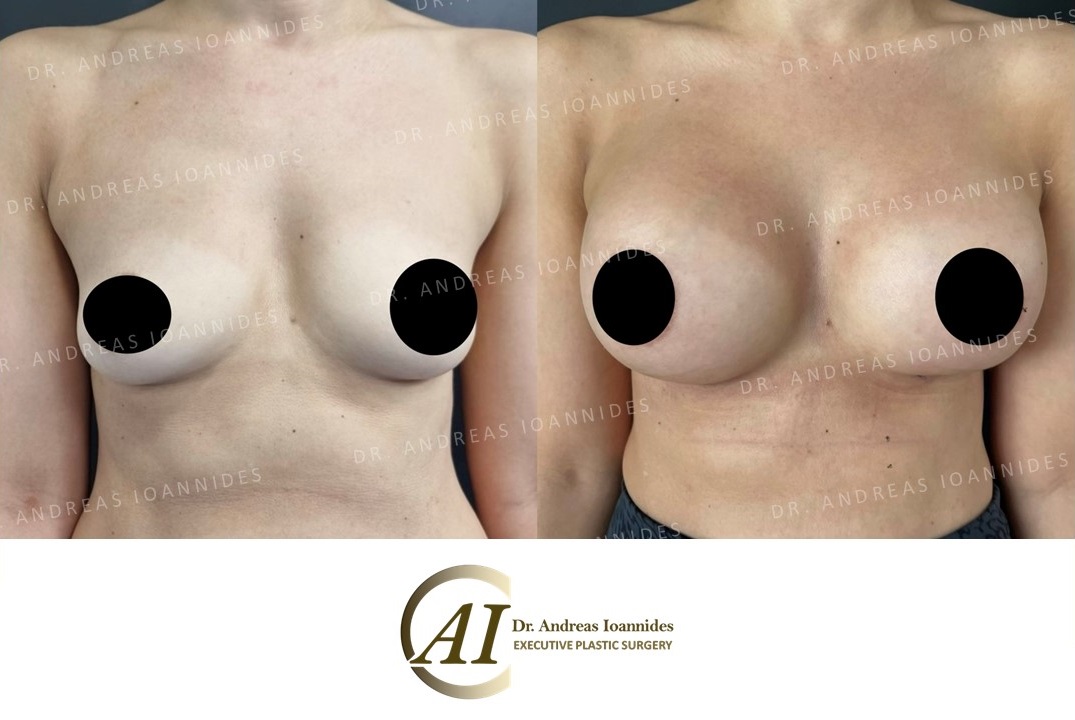
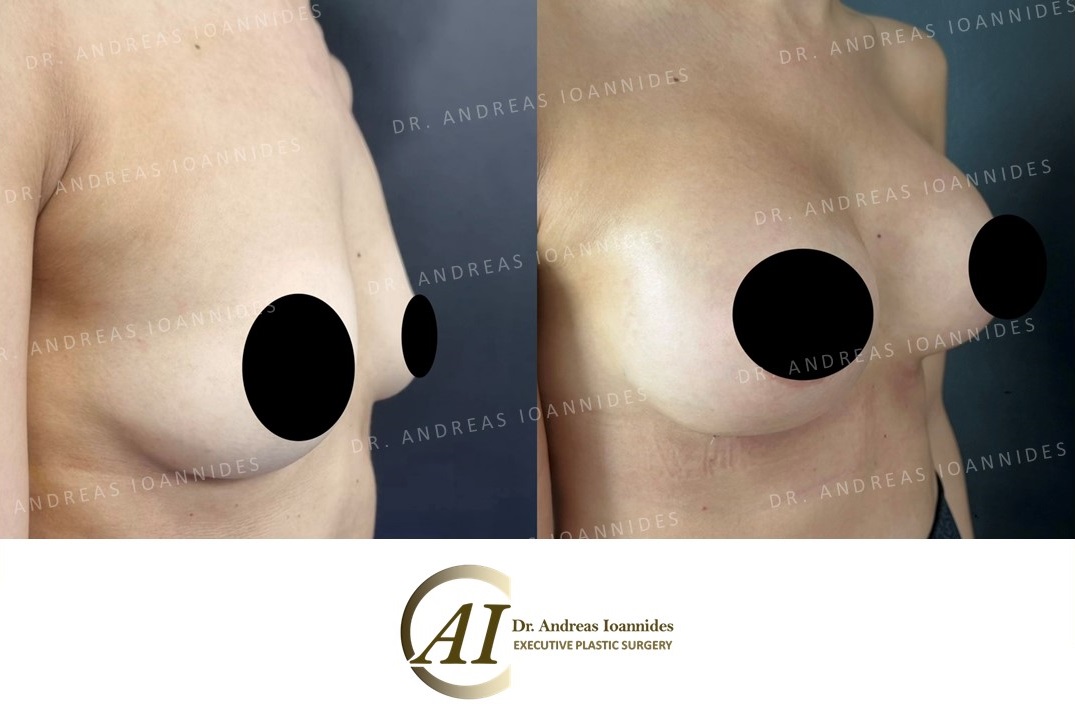
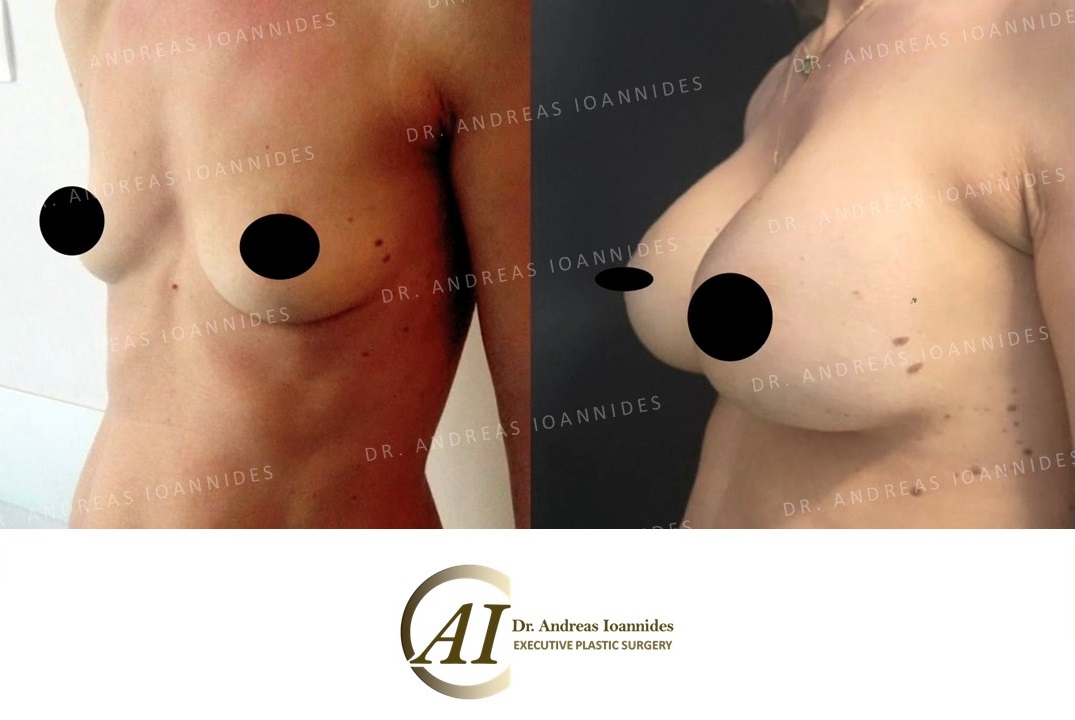
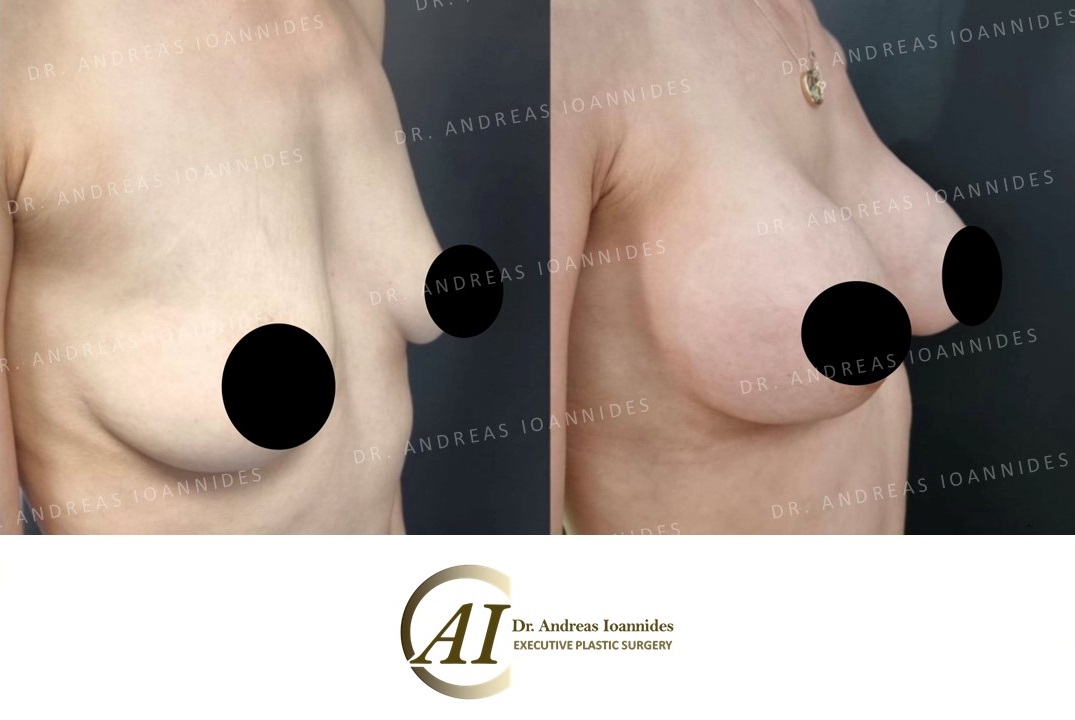
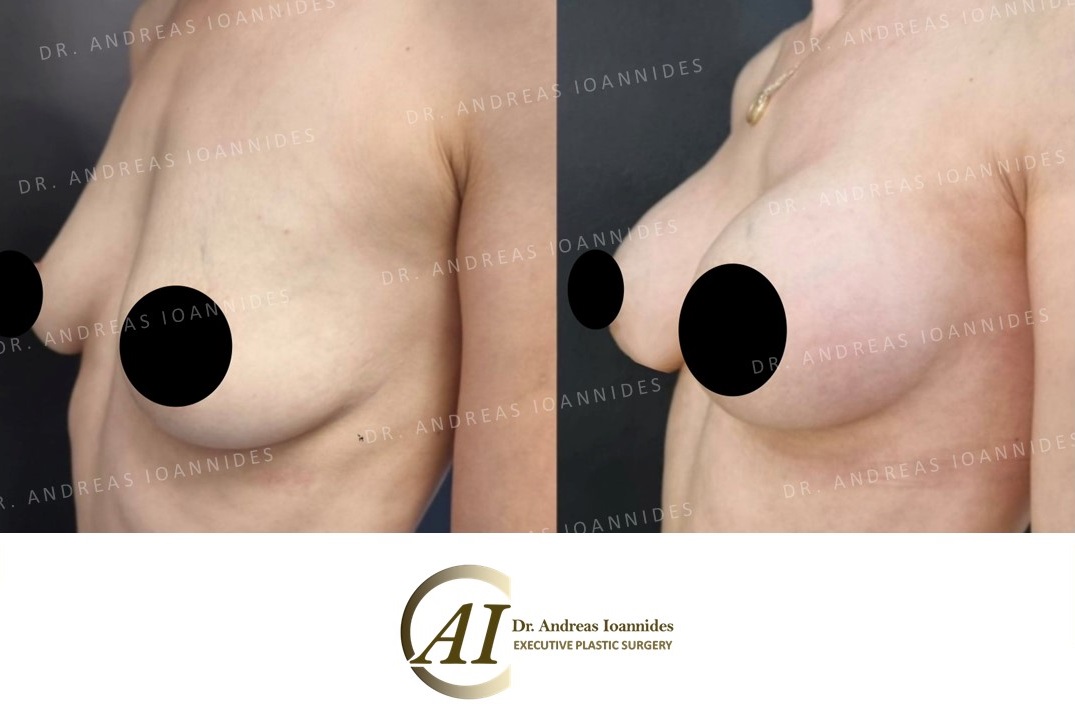
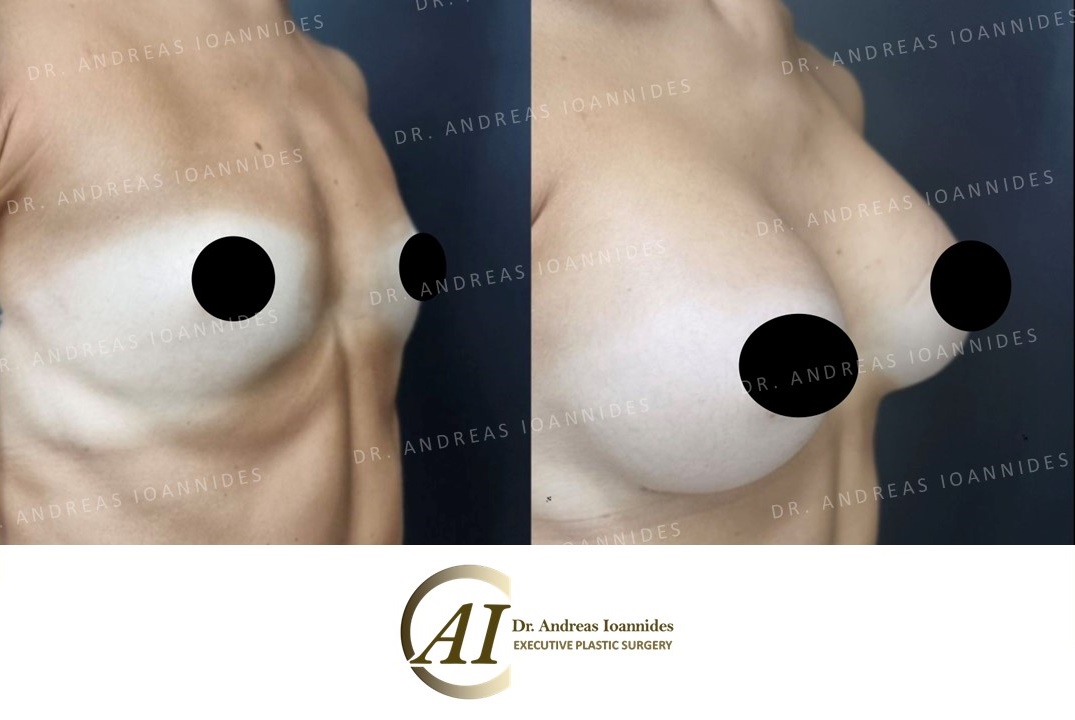
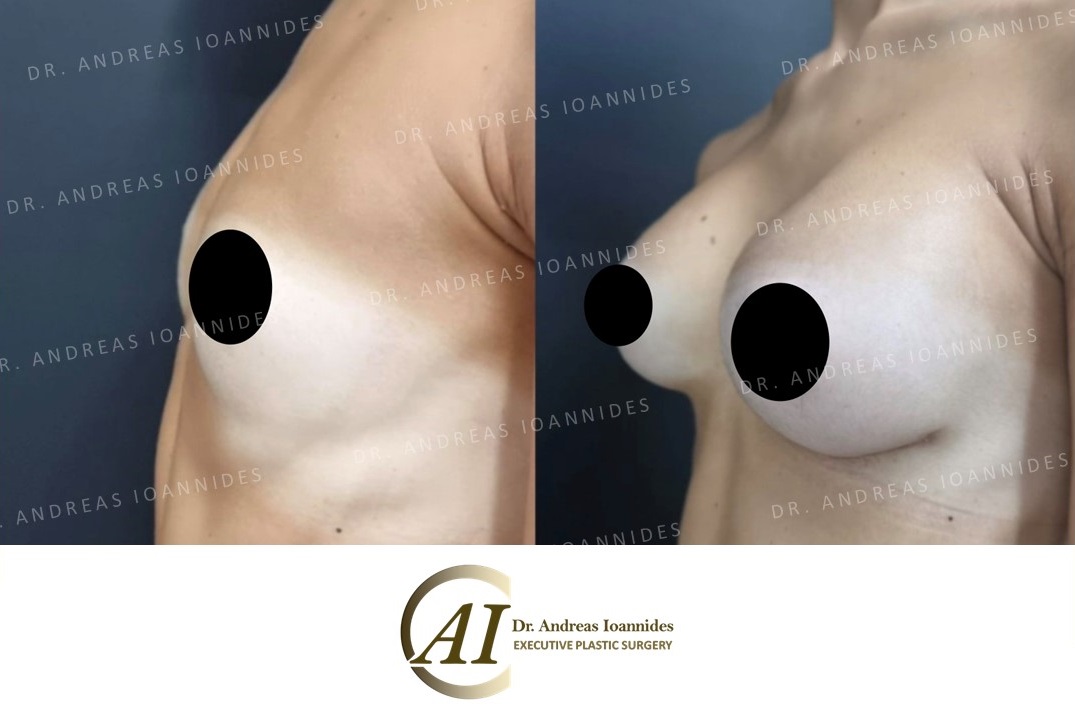
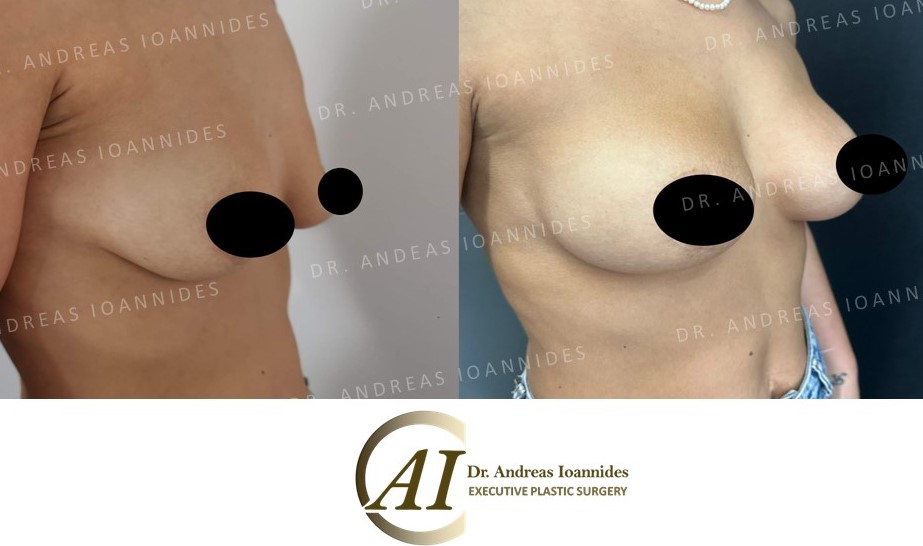
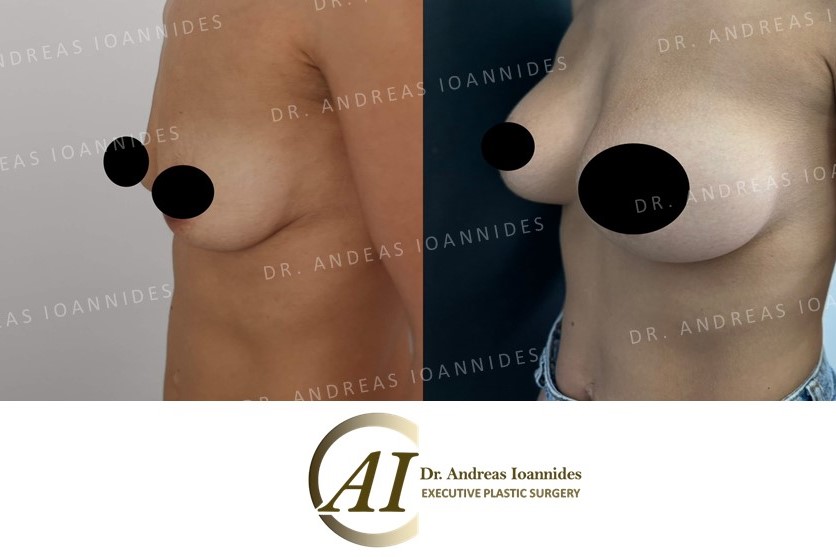
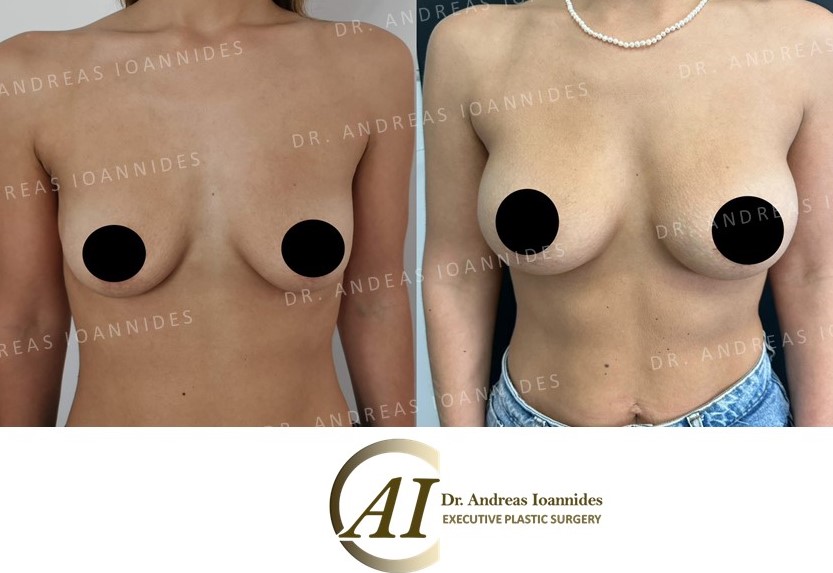
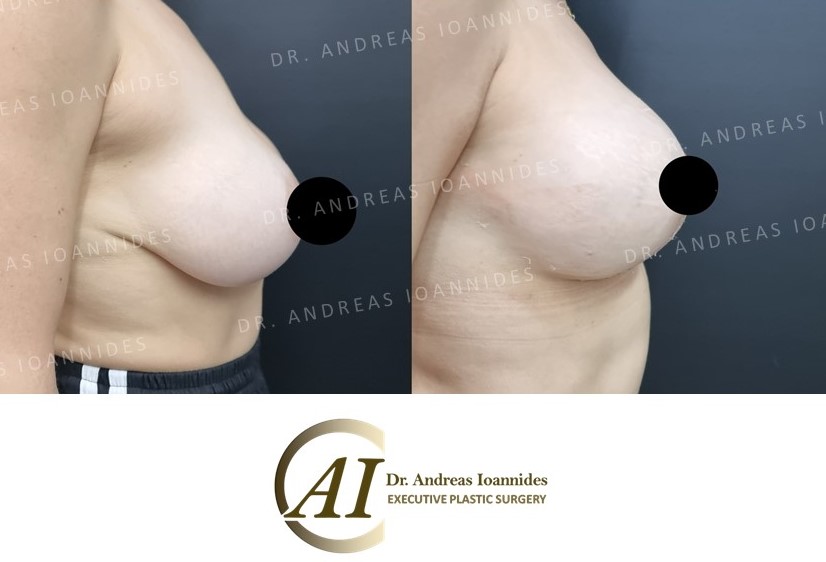
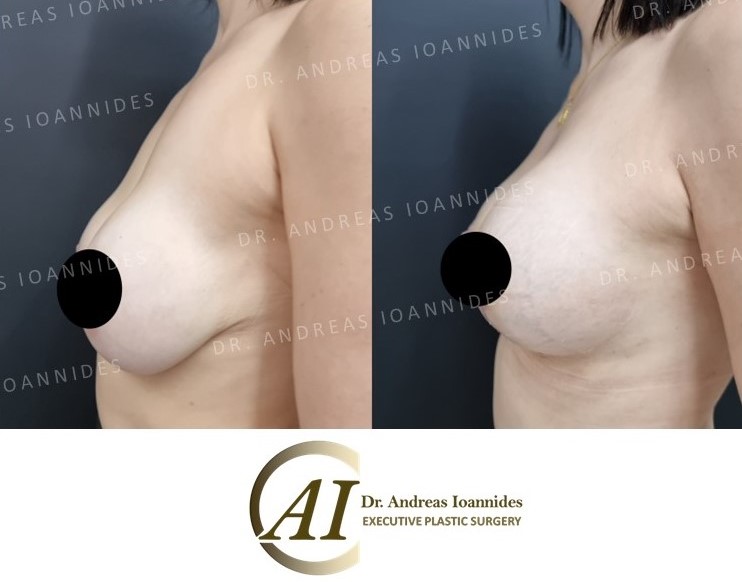
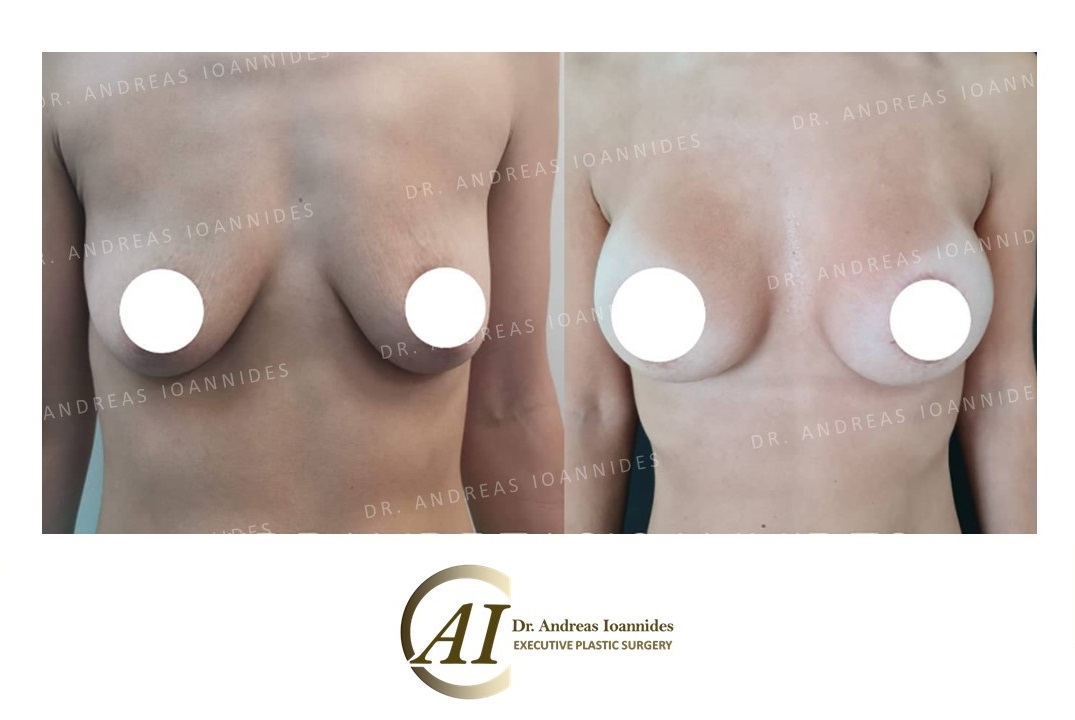
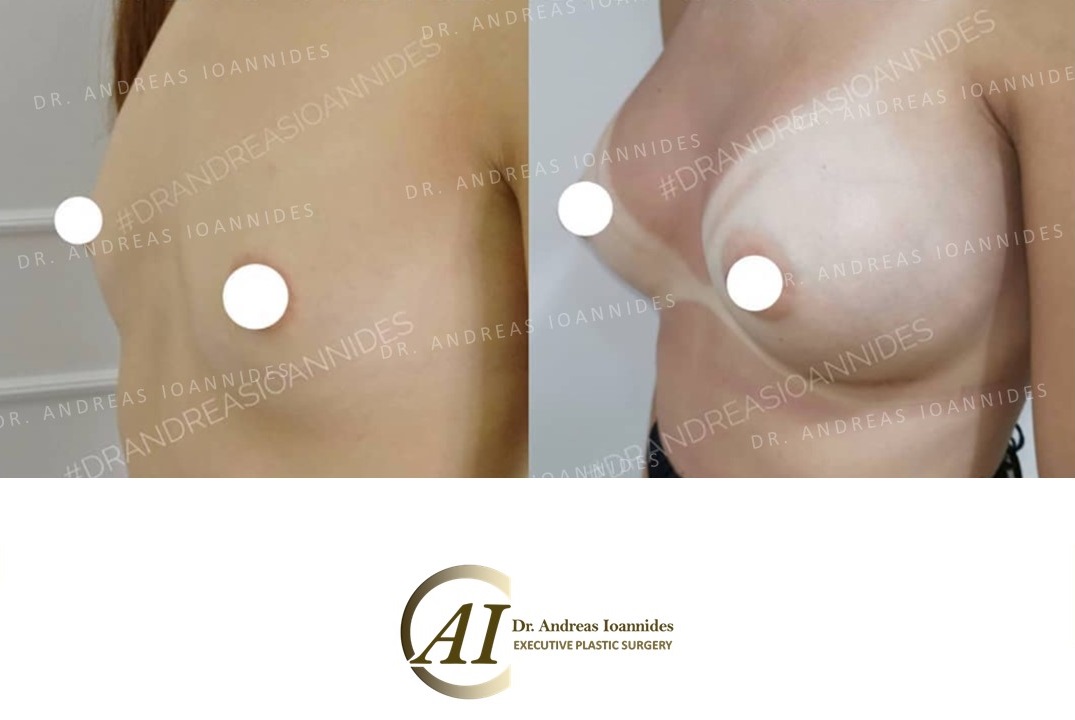
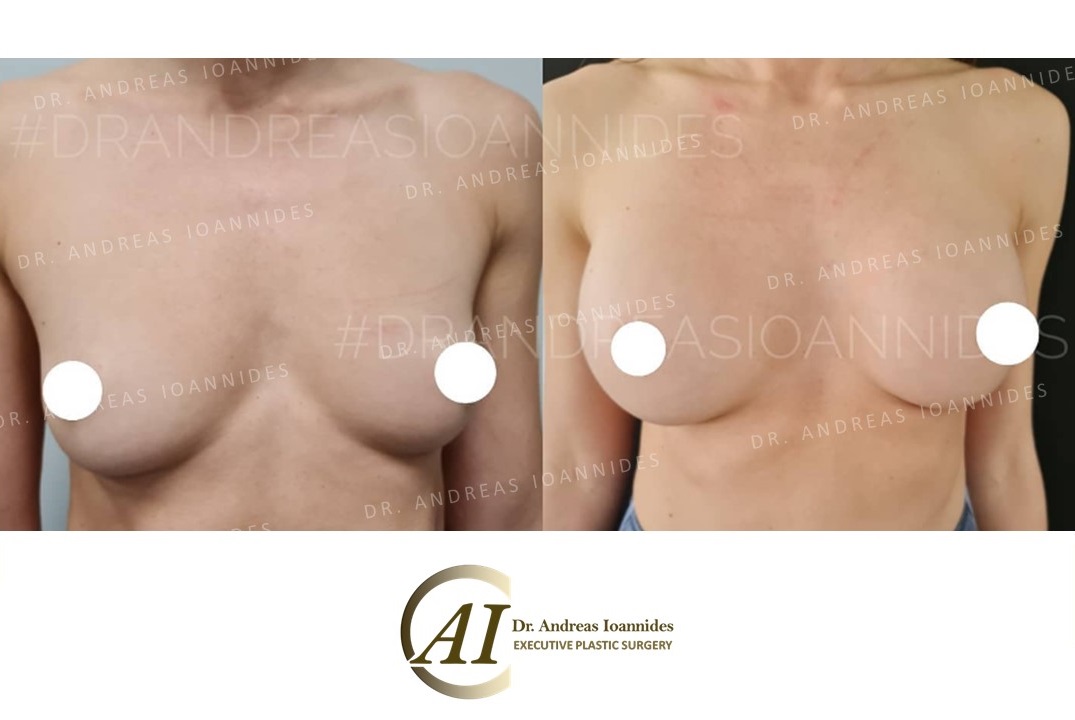
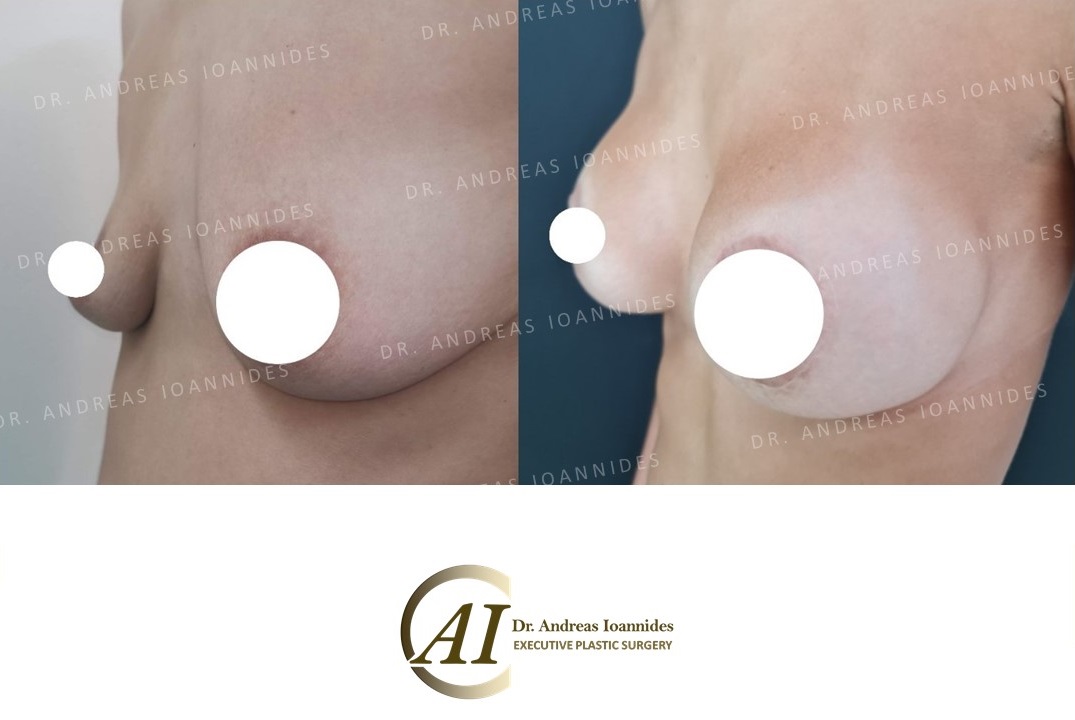
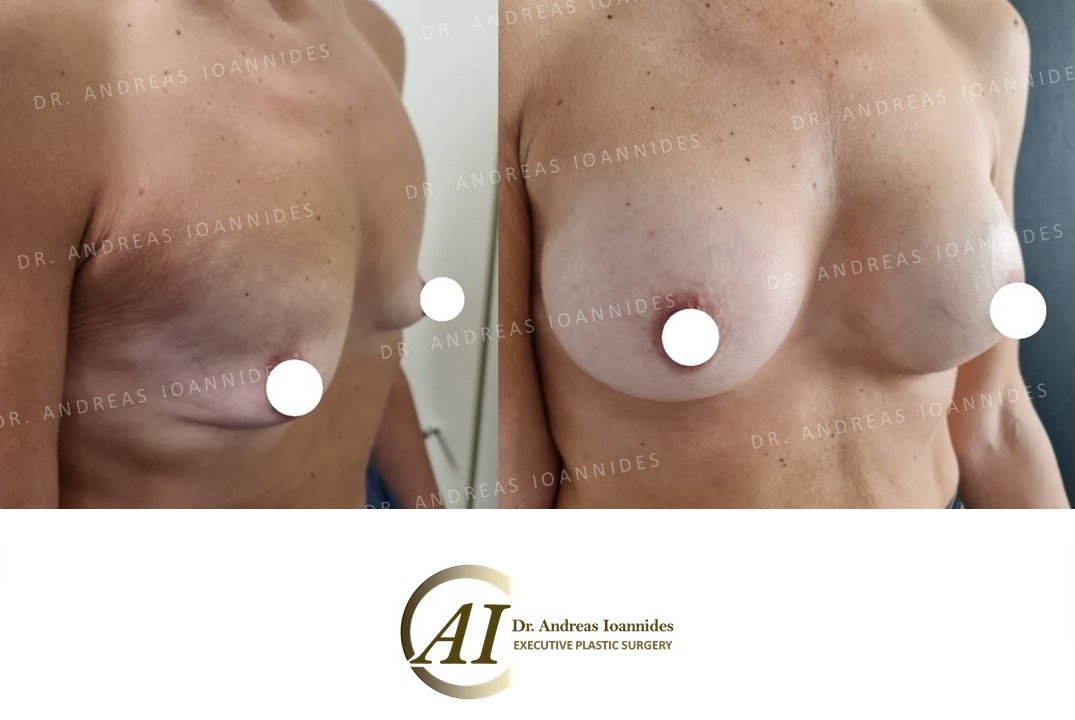
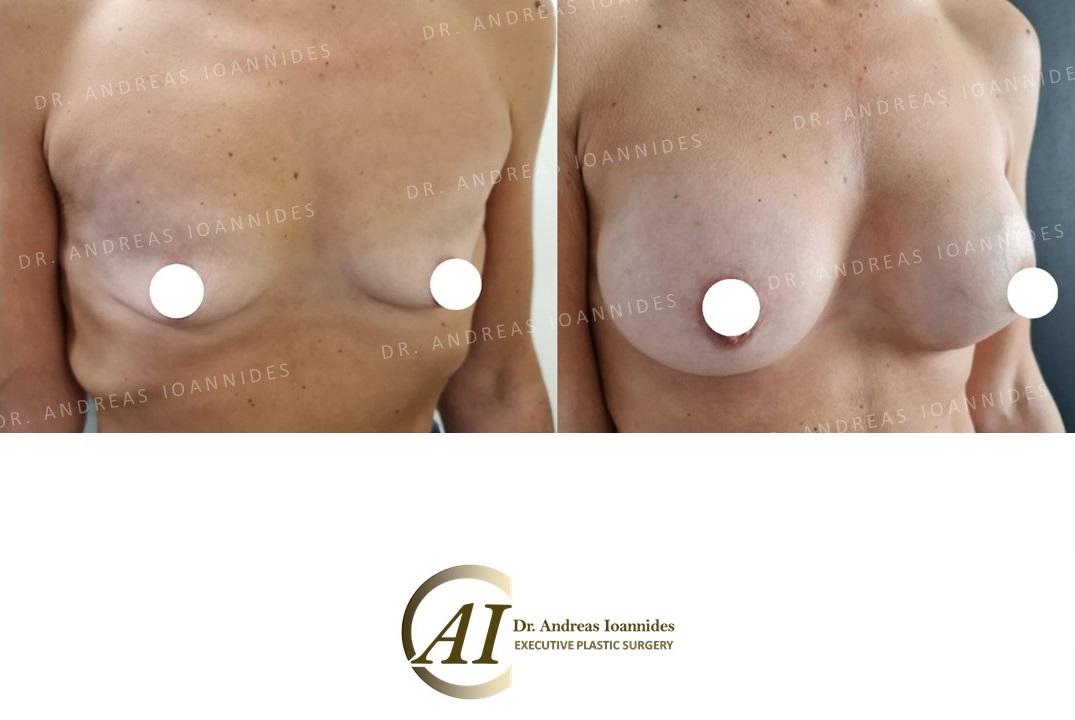
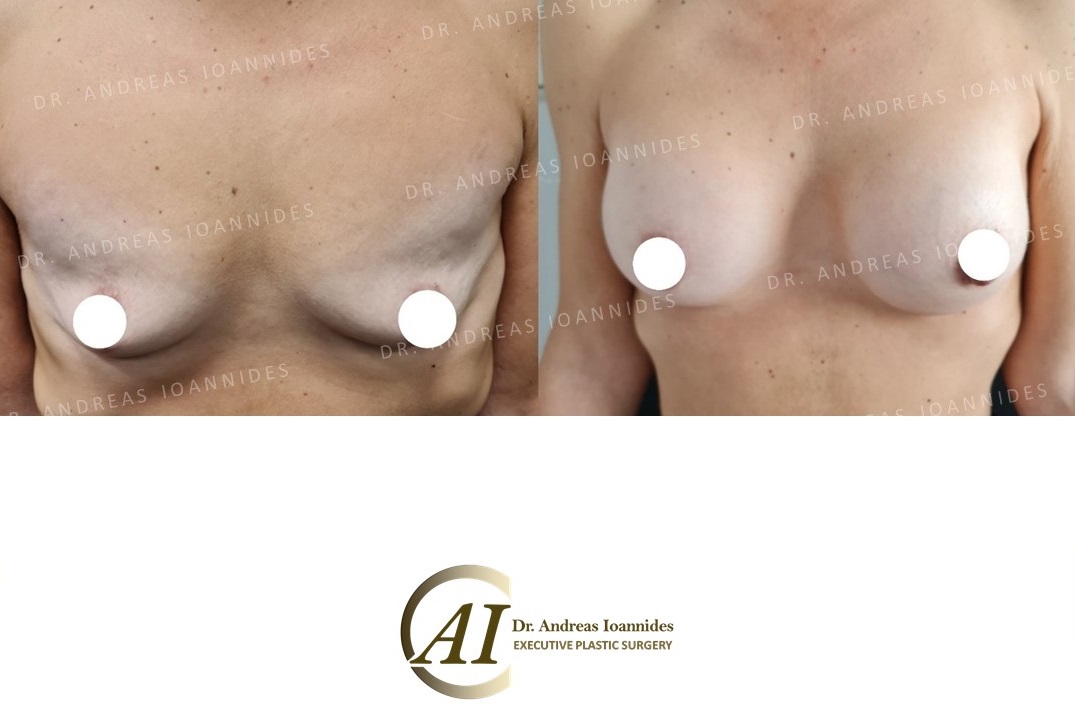
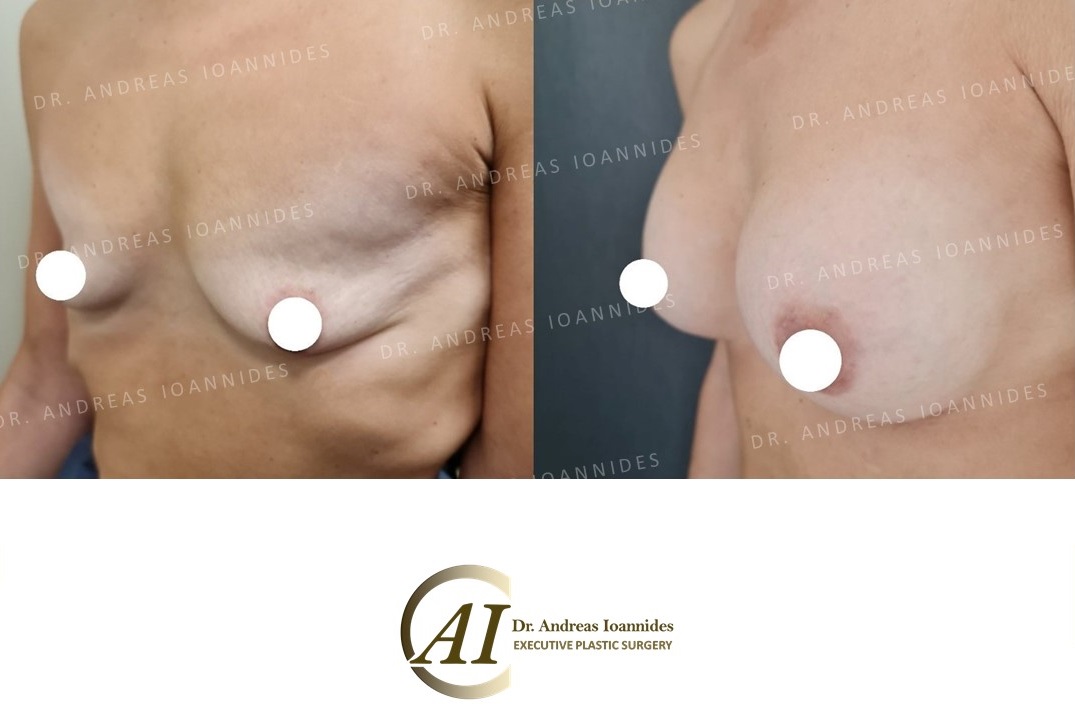
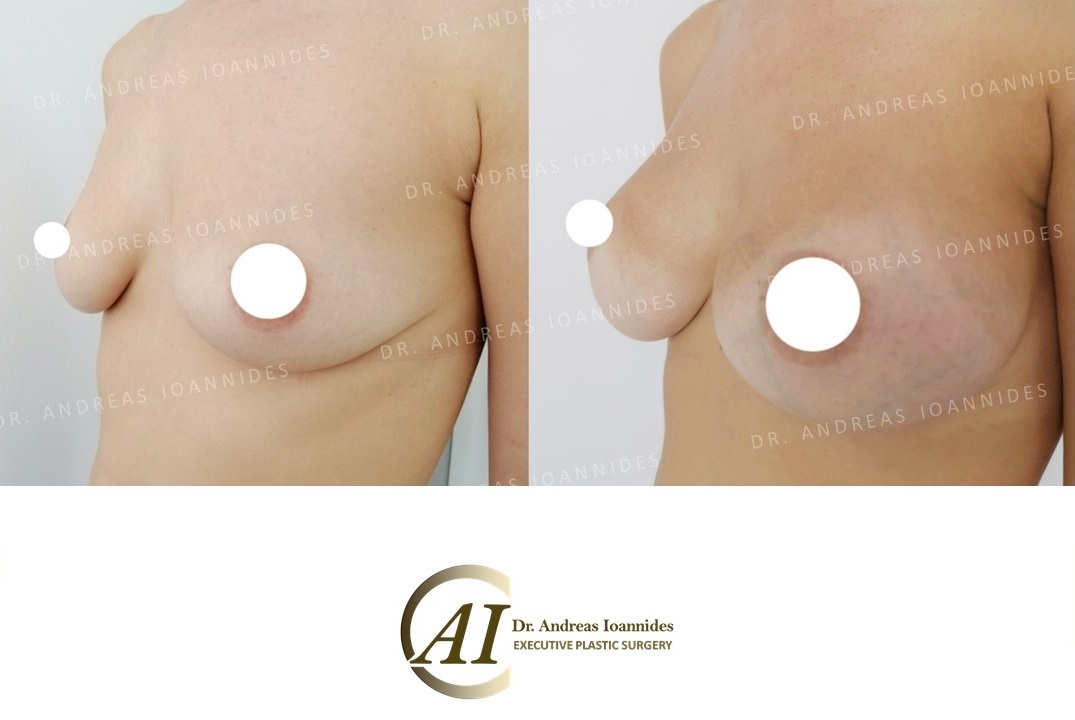
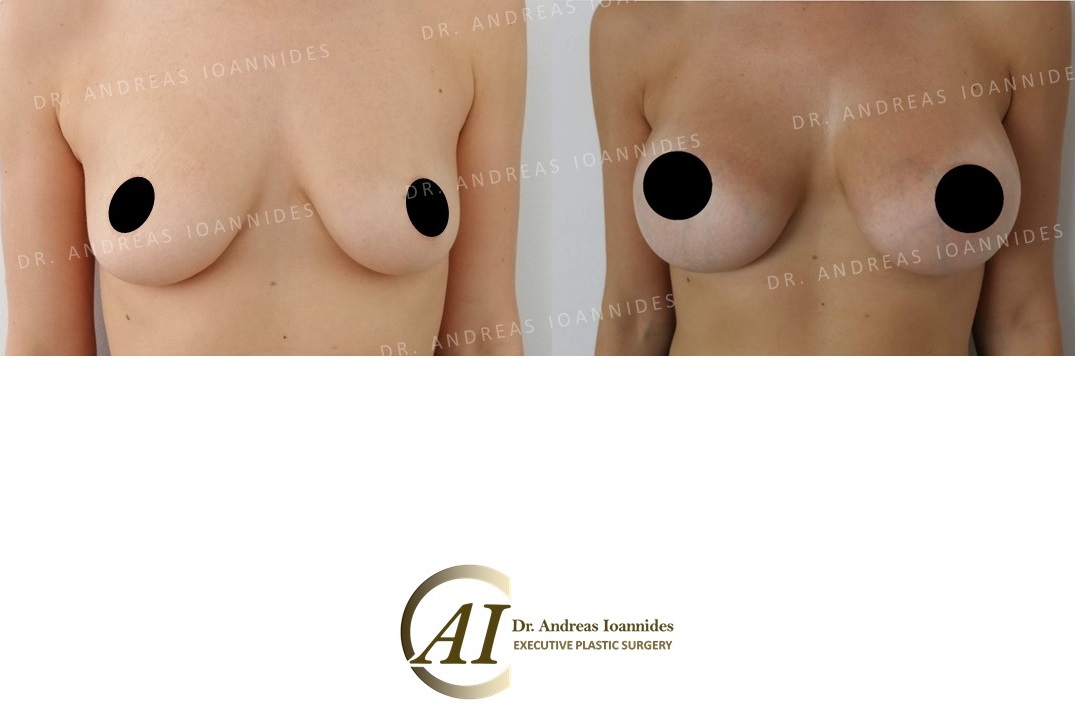
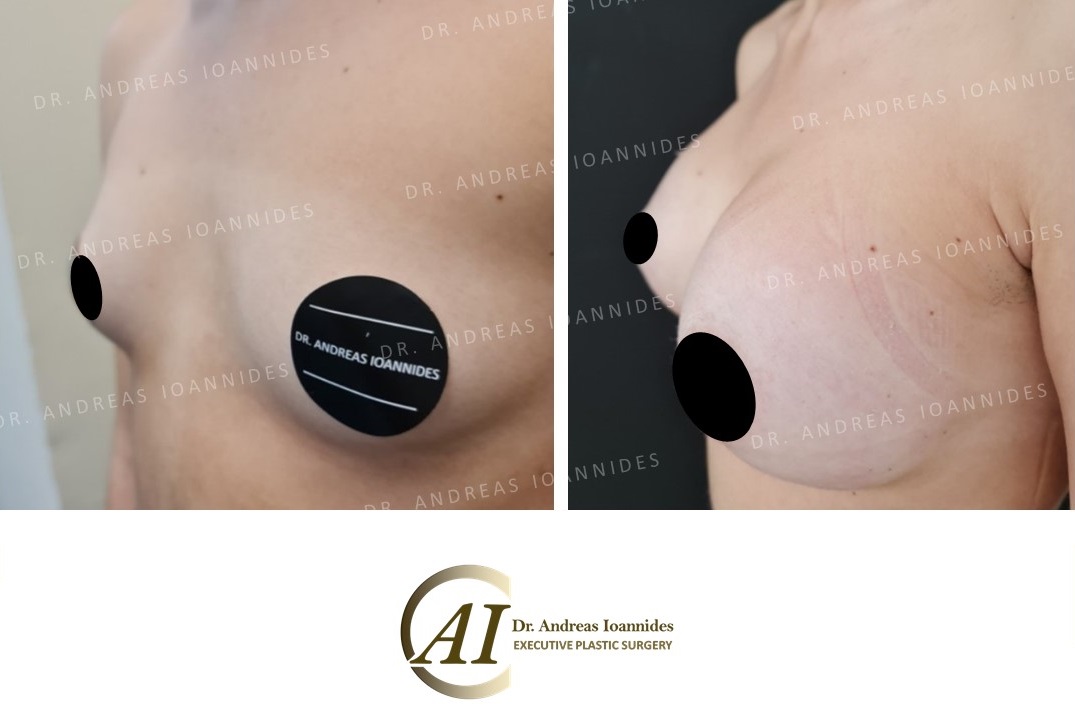
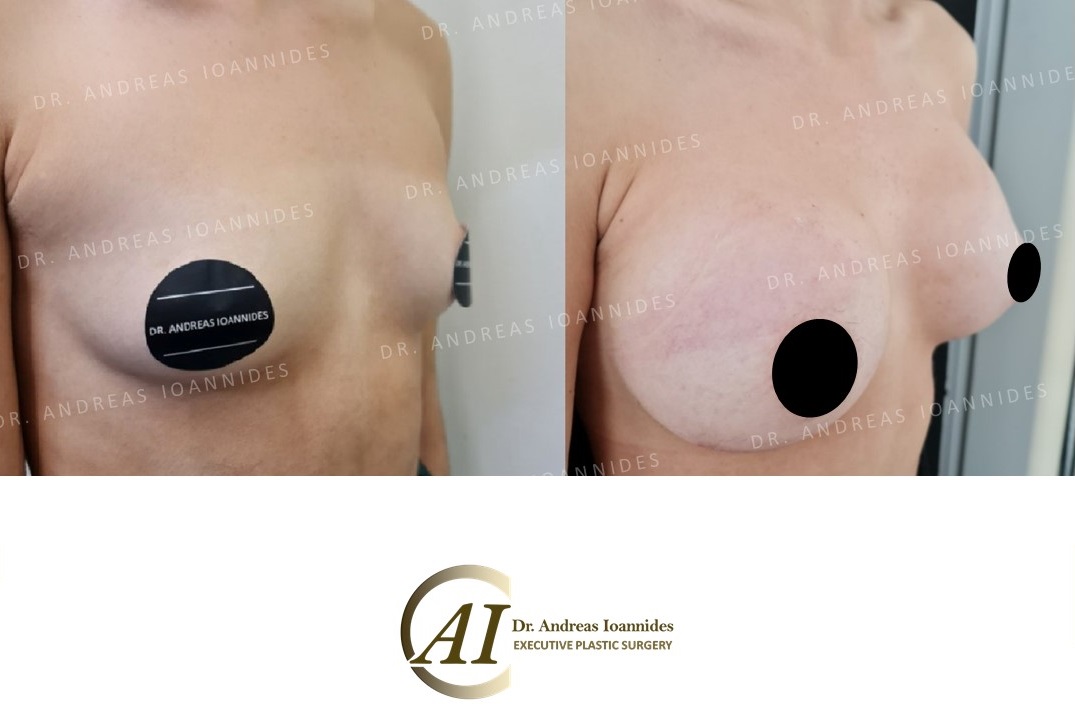
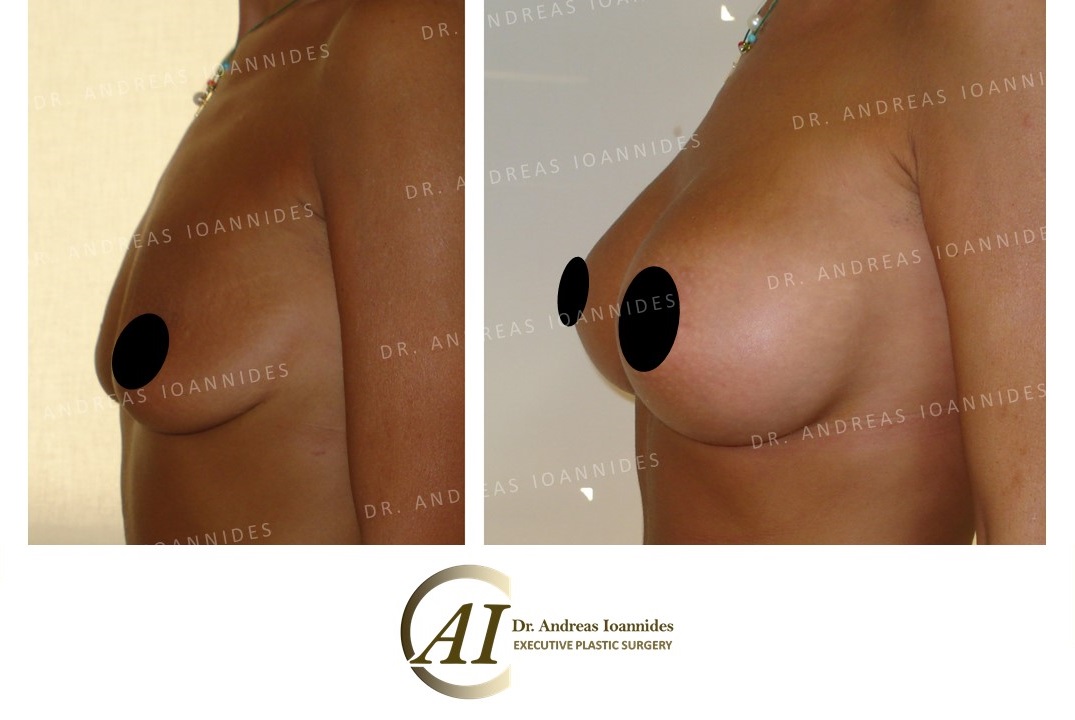
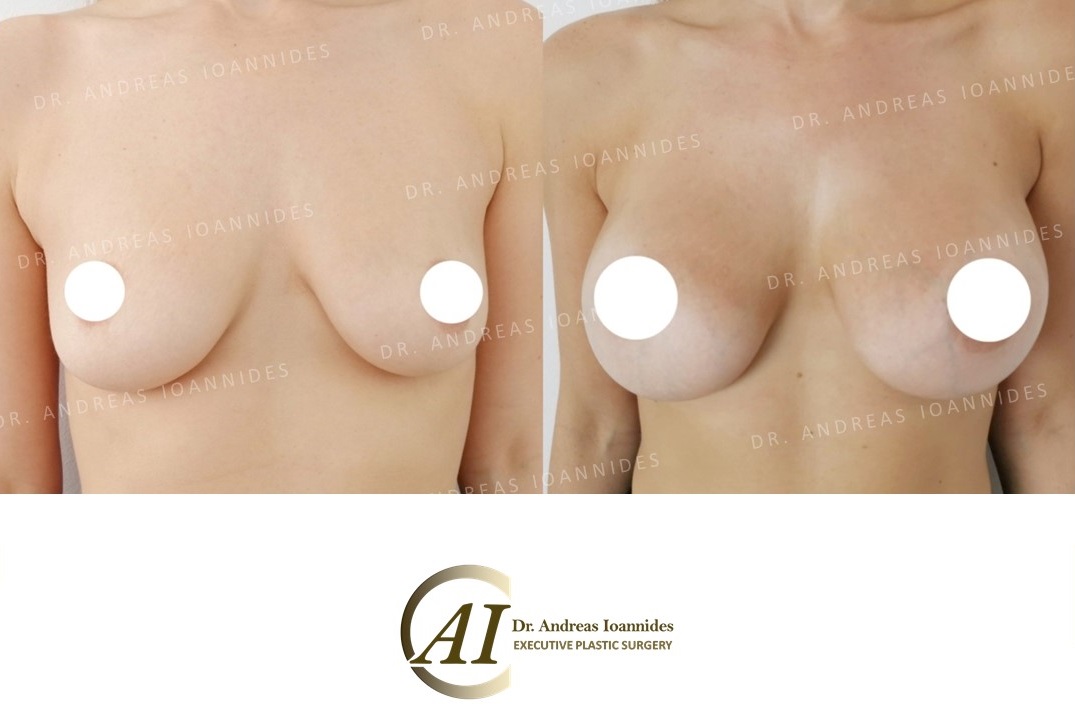
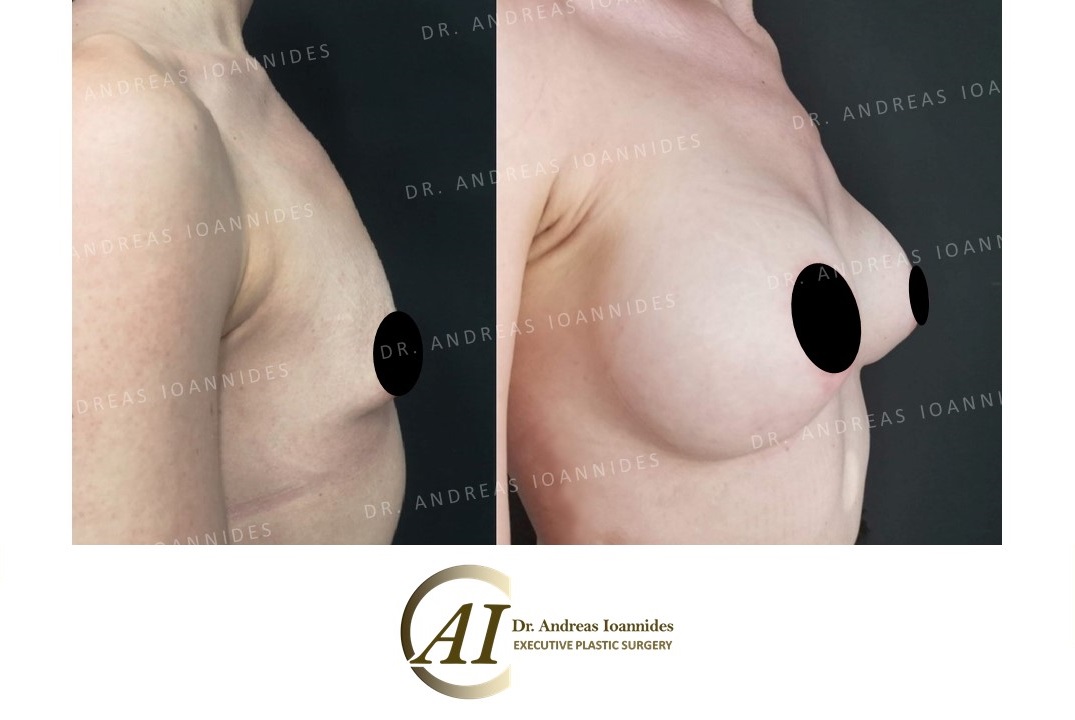
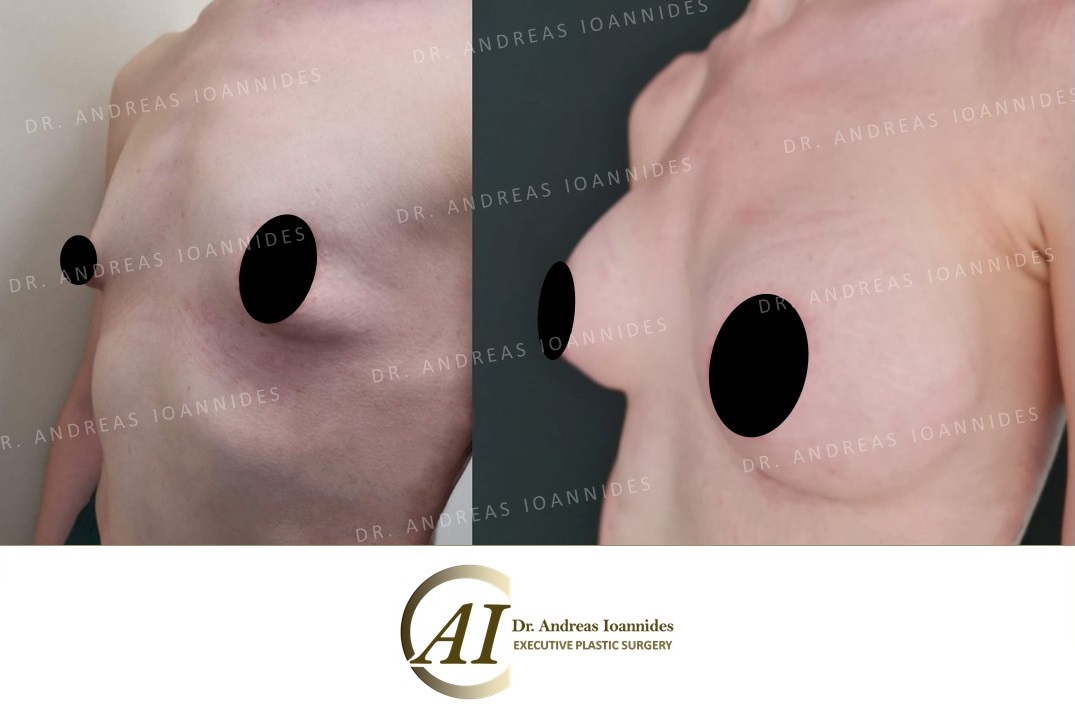
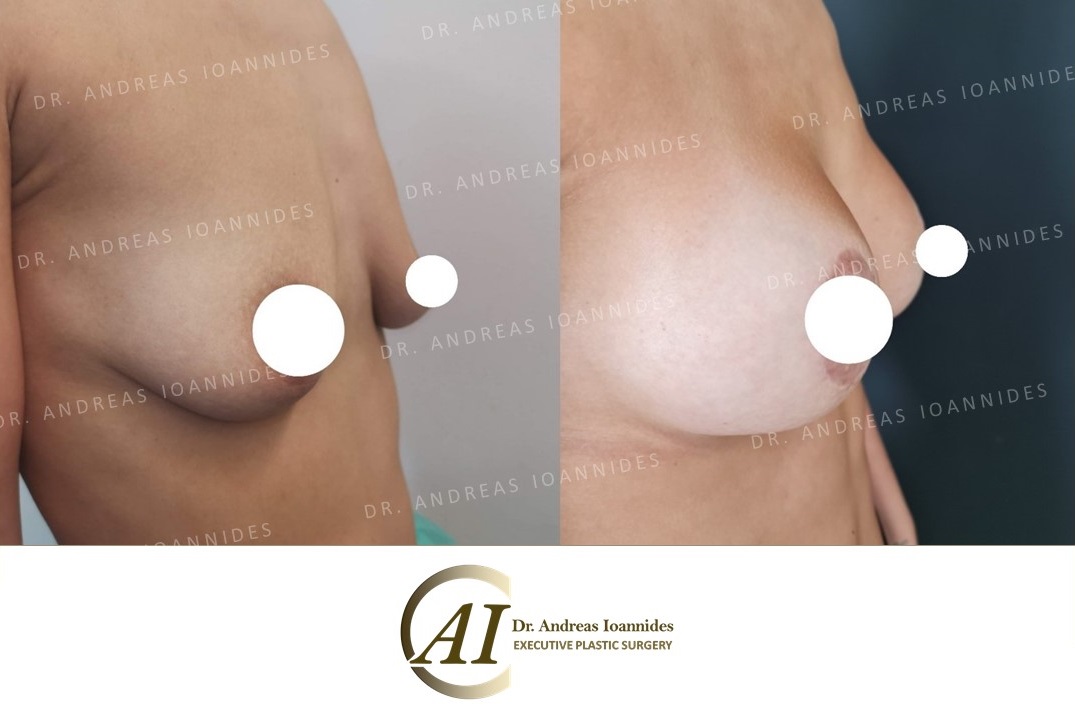
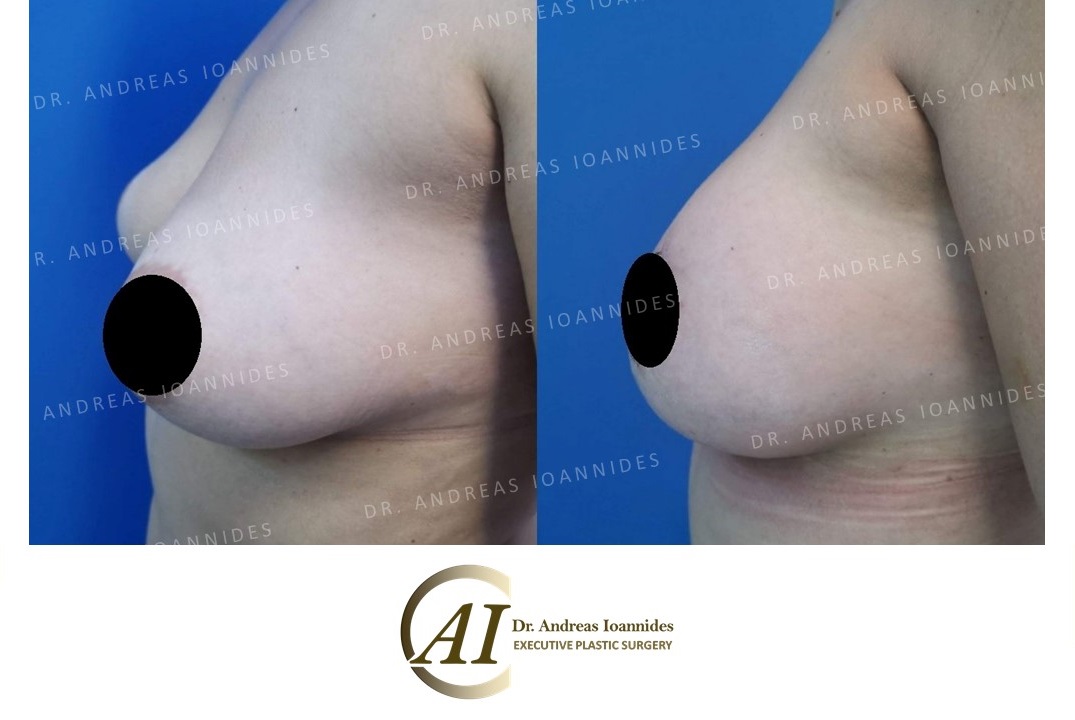
At its simplest, the operation increases the size and improves the shape of the breasts using implants placed through small, carefully positioned incisions. That is the mechanical part. The human part, why someone actually wants it, matters just as much.
Women come to this Nicosia practice for a range of reasons, and none of them need justifying:
- Volume that was never there: A naturally small bust that has always felt out of proportion with the rest of the body.
- Change after pregnancy or breastfeeding: Loss of fullness, especially in the upper part of the breast, once the body settles.
- Weight loss: A drop in volume that leaves the breasts feeling deflated.
- Asymmetry: A noticeable difference in size or shape between the two sides.
- Reconstruction and correction: Rebuilding shape after previous surgery or other changes.
- Confidence: Wanting clothes to fit better, or simply feeling more comfortable in your own skin.
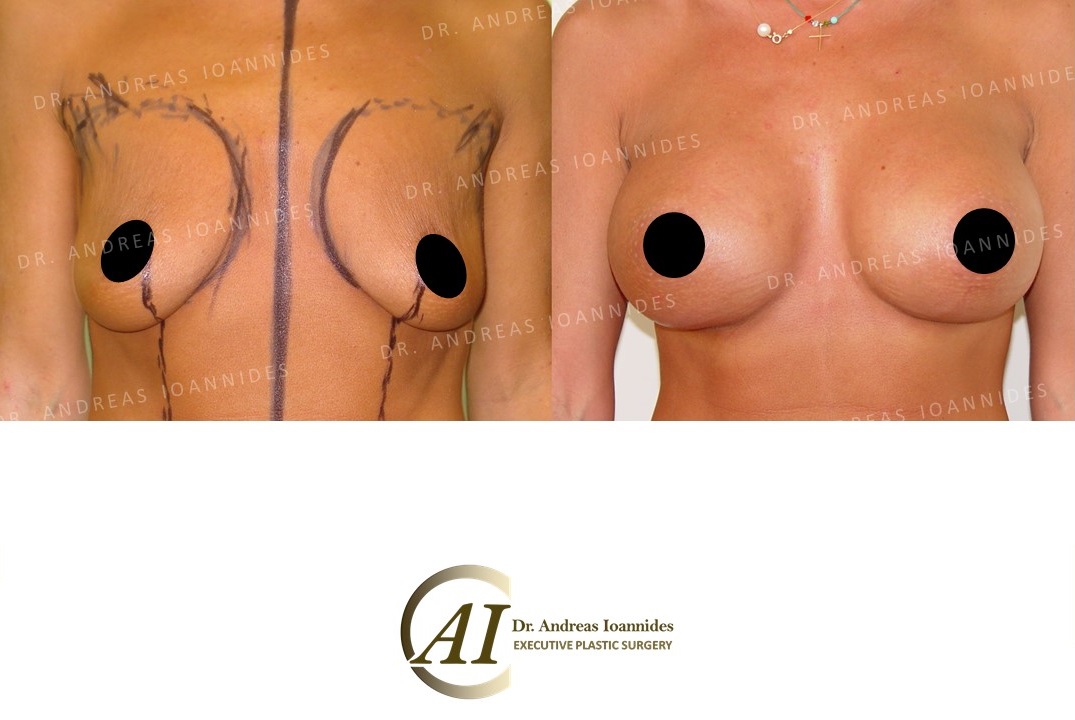
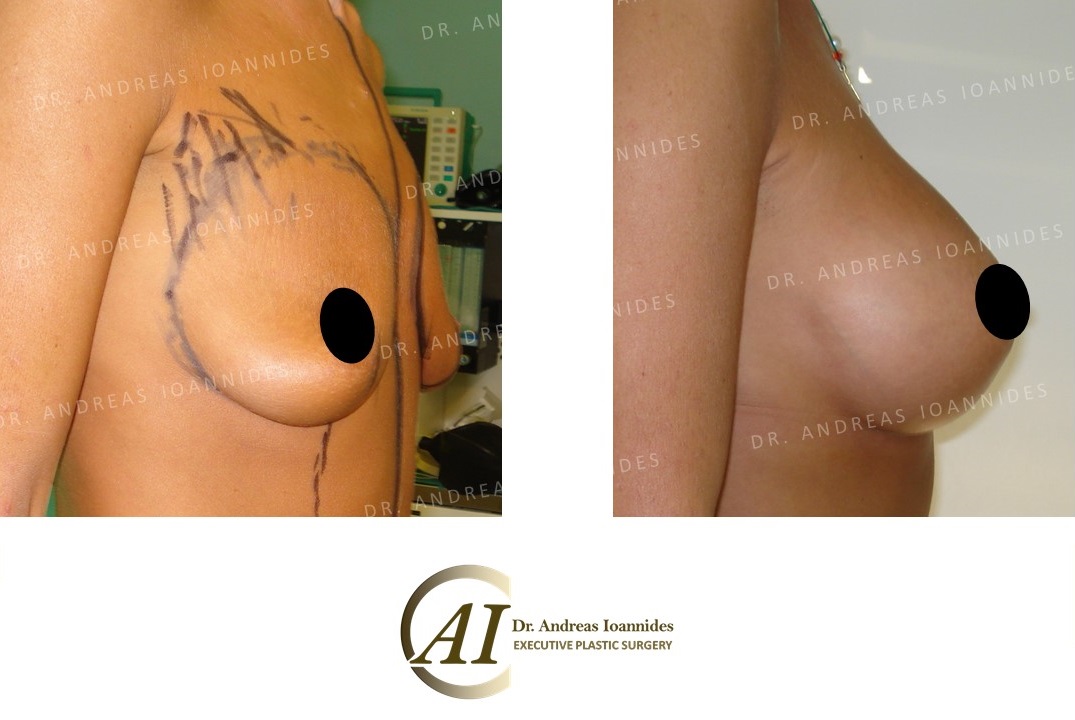
It is worth being honest about one thing early on. Enlargement adds volume and improves contour, but it does not lift a breast that has dropped significantly. Where there is notable sagging, a lift, sometimes combined with implants, is the more suitable route. That distinction is one of the first things assessed at consultation, and it saves a lot of disappointment later.
A quick word on expectations
There is no single "correct" breast size or shape, whatever social media suggests. What matters is proportion to your frame, your ribcage width, your existing tissue, and what you actually want to see in the mirror. A good result should look like it belongs to you, not like it was ordered from a catalogue.
The options: implants, placement and incisions
This is where people tend to have the most questions, understandably. There are several choices to make, and while that can feel overwhelming at first, each one is discussed and matched to your body during planning. You are not expected to decide alone.
Implant type and material
Modern breast implants are filled with either cohesive silicone gel or saline. Most women today choose silicone, because it tends to feel more like natural tissue and holds its shape well. The outer shell comes in different surfaces, smooth, rough (textured), or a newer silk finish, and implants are made in round or teardrop (anatomical) shapes.
There is no universally "best" implant. The right one depends on your anatomy, your goals, and how much natural tissue you already have to cover it. During your consultation, sizers and, where available, imaging help you picture the outcome before anything is decided.
A note on implant surfaces
The shell surface is easy to overlook, yet it influences how the implant behaves in the body:
- Smooth surface: The most traditional option, soft to the touch, though the implant can move more freely within its pocket.
- Rough (textured) surface: Designed to grip the surrounding tissue and reduce movement, historically favoured for teardrop implants to keep them oriented correctly.
- Silk surface: A newer, finely refined finish that sits between the two, and it is associated with the fewest complications of the three. For many patients, it offers a reassuring balance of a natural feel and a favourable safety profile.
Which surface suits you is decided alongside the fill, shape, and placement, since these choices work together rather than in isolation.
Where the implant sits
Placement matters as much as the implant itself. It can go:
- Under the muscle (submuscular), which often gives a more gradual, natural upper slope and can make imaging easier later.
- Over the muscle, under the gland (subglandular), which may suit women with more existing tissue.
- Beneath the muscle fascia (subfascial), where the implant is set under the thin fibrous layer covering the chest muscle rather than under the muscle itself. This adds a natural layer of coverage and support over the implant while avoiding the fuller-muscle involvement of a submuscular pocket, which can mean a gentler recovery for suitable patients.
- In a dual plane, a hybrid that combines advantages of several approaches
Each has trade-offs, and the choice is guided by your tissue, your frame, and the look you are after.
Incision options
Where the small incision is placed affects where any fine scar sits. The common routes are in the crease beneath the breast, around the lower edge of the areola, or in the armpit. The crease approach is the most frequently used because it gives direct access and hides the scar in a natural fold. Your surgeon will recommend the option that fits your anatomy and plan.
How the procedure works, from consultation to theatre
People relax once they understand the sequence, so here is how it usually unfolds.
The consultation
Everything starts here, and it is the most important appointment of the whole process. Measurements are taken, your tissue and skin quality are assessed, and your goals are discussed frankly. This is also where suitability is confirmed, and where the implant type, size, surface, placement, and incision are planned together. Bring photos of results you like, and, just as usefully, results you don't. It helps calibrate expectations quickly.
The operation
Breast augmentation is typically performed as a carefully planned surgical procedure lasting somewhere around one to two hours, depending on the specifics. The implant is placed through the agreed incision, positioned precisely, and the tissues are closed with fine sutures. Attention to symmetry and natural positioning during these steps is what separates an average result from a good one.
The comfort of local anaesthesia and sedation
In our practice, many of our procedures are performed under local anaesthesia or a combination of local anaesthesia and deep sedation (twilight anaesthesia), aiming to minimise the impact on your body. This approach ensures a completely painless and calm experience during surgery, while eliminating the heavy sensation and nausea often associated with general anaesthesia. As a result, recovery begins immediately, allowing you to return home safely on the very same day, with the final choice of method always tailored individually during your consultation visit.
For certain cases, general anesthesia remains an option, and the safest, most comfortable plan for you is agreed before surgery day rather than assumed.
Recovery, results and living with implants
Recovery after breast enlargement is usually more manageable than people expect, though it does ask for patience in the first couple of weeks.
The early days bring tightness, swelling, and a feeling of pressure across the chest, which is normal as the tissues adjust to the implant. A supportive surgical bra is worn to hold everything in position while healing begins. Most women take it easy for the first week, then gradually return to desk work and light routines.
|
Timeframe |
What to expect |
|
Days 1–3 |
Tightness, swelling, pressure, rest at home |
|
Week 1 |
Back to light routine and desk work for many |
|
Weeks 2–4 |
Swelling settling, supportive bra continued |
|
Weeks 4–6 |
Gradual return to gentle exercise, no heavy lifting |
|
Months 2–6 |
Implants settle, final shape and softness emerge |
A few practical points that come up often:
- Sleep on your back for the first few weeks to avoid pressure on the healing area.
- Avoid heavy lifting and chest exercise until cleared, usually around six weeks.
- The final shape takes time. Implants sit high at first, then "drop and fluff" into a softer, more natural position over the following months. Judging the result too early is a common mistake.
- Scars fade steadily over many months, settling into the fold or areolar edge where they were placed.
Do results last, and what about maintenance?
Modern implants are durable, but they are not necessarily lifetime devices. Many women keep theirs for well over a decade without issue, though some choose to replace or update them later, whether for a size change or simply as part of ageing. Regular self-checks and follow-up appointments keep everything monitored. Pregnancy, weight change, and time will still affect the surrounding natural tissue, as they would anyway.
Combining procedures and the wider picture
Breast surgery is often part of a broader plan rather than a single fix, and it is worth knowing what pairs well with what.
Where sagging is the main issue, a breast lift addresses position and skin, while implants add volume; the two are frequently combined for women who want both fullness and a raised shape. After pregnancy, some women look at augmentation as part of a wider set of changes, occasionally alongside body or facial work such as a facelift at a later stage, though each procedure is always weighed on its own merits and recovery. Nothing is bundled together for the sake of it.
The point is simply that a good plan looks at proportion and balance across the whole body, not just one measurement. That wider view is part of what you are paying an experienced surgeon for.
Pricing, choosing your surgeon, and travelling to Nicosia
Cost is one of the first questions almost everyone has, and the honest answer is that it depends. The technique, the implant chosen, the anaesthesia plan, and whether a lift is combined all affect the figure, so breast implants prices vary from case to case. Rather than quote a headline number that may not apply to you, the practice provides a clear, written estimate after your consultation, setting out what is included, from surgical and implant costs to follow-up.
Choosing well matters more than choosing cheaply
With this operation especially, the surgeon's judgement and experience shape the result more than any single implant. It is worth taking the time to feel comfortable, ask questions, and understand why a particular plan is recommended. A rushed, one-size-fits-all pitch is a red flag. A calm, honest consultation that sets realistic expectations is a much better sign.
Travelling to Nicosia for breast surgery
A growing number of women travel to Nicosia specifically for their procedure, and the city has become a genuine hub for medical tourism in cosmetic and plastic surgery. The appeal is easy to understand: experienced surgeons, modern private facilities, strict clinical standards, and a total cost that compares very well with the UK, Scandinavia, and much of Western Europe, all in a place people are genuinely happy to spend a week or two recovering.
For international patients, the pathway is designed to be smooth. It usually begins with a remote video consultation, so much of the planning and many questions are handled before you fly. The in-person examination and final surgical plan are confirmed once you arrive, a day or two before surgery. Because aftercare and an early review matter, most patients plan a stay of around seven to ten days, which covers the operation and a follow-up before flying home. A companion is recommended for the first day or two, mainly for comfort and practical help, and clear guidance is given on flight timing so travel is safe. Communication in English throughout, from the first message to your remote follow-up once home, is part of what makes the experience reassuring for patients coming from abroad as well as from across Cyprus.
Why choose Dr Andreas Ioannides?
As a plastic surgeon with 26 years of experience, dual board certification in Greece and Cyprus, membership of ISAPS, IPRAS and HESPRAS, and international member status at the American Association of Plastic Surgeons, Dr Ioannides brings both technical precision and an eye for natural proportion to every case. The priority is a result that suits your body and preserves your individual identity, achieved with the gentlest suitable anaesthesia and attentive aftercare. Consultations are unhurried and honest, because a good outcome starts with a plan that genuinely fits you, not a template.
What patients say
Feedback from those who have trusted us consistently centers on the same themes: a calm, reassuring experience, a result that preserves their individual identity, and a team that responds promptly to messages throughout recovery. Word of mouth, particularly in Nicosia, brings a steady stream of friends and relatives of former patients through our doors. Equally important is the significant number of patients referred to us by other doctors and colleagues who trust our clinical expertise, a distinction that, alongside our patients' appreciation, stands as the truest endorsement of our work.
Motiva® Implant Warranty
All Motiva® Implants are covered by the Always Confident Warranty® against rupture for the lifetime of the implants and by our Product Replacement Policy in the event of capsular contracture (Baker grades III and IV) for a period of 10 years.
To extend the coverage of your Motiva® breast implants, Motiva® offers an Extended Warranty Program that applies to Motiva® breast implants through an additional fee to be covered by or on behalf of the patient during the first 90 days after the initial breast surgery.
Click here:
Registser your implants here:
Frequently Asked Questions
How do I choose the right implant size?
Size is chosen together during consultation, based on your frame, ribcage width, existing tissue, and the look you want, rather than a single cup-size target. Trying sizers inside a bra, and imaging where available, helps you picture the outcome realistically. Going too large for your tissue can cause problems over time, so the aim is proportion and long-term comfort, not just numbers. Bringing photos of results you like, and dislike, speeds this up. Your surgeon guides you toward what your body can carry well.
Which implant surface is best?
There is no single answer, since it depends on your anatomy and the plan. Smooth surfaces feel soft but allow more movement; rough (textured) surfaces grip the tissue and help keep teardrop implants oriented. The newer silk surface is associated with the fewest complications of the three, which makes it an appealing option for many patients seeking a natural feel with a favourable safety profile. Your surgeon explains the trade-offs and recommends the surface that suits your tissue, chosen shape, and placement.
Are silicone implants safe?
Modern cohesive silicone implants are widely used and have a strong safety record when placed by an experienced surgeon and monitored properly. They are designed to hold their shape and feel close to natural tissue. As with any medical device, they are not risk-free or guaranteed for life, so periodic checks and follow-up are advised. Issues such as capsular contracture or, rarely, rupture can occur over many years. Your surgeon explains the current evidence, the monitoring schedule, and what to watch for during your consultation.
Can I breastfeed after breast augmentation?
In most cases, yes. When the incision and implant placement are planned with this in mind, the milk ducts and glandular tissue are usually preserved, so breastfeeding often remains possible. Certain incision choices affect this more than others, which is why it matters to mention future pregnancy plans at consultation. No surgeon can promise breastfeeding ability, since it varies naturally between women regardless of surgery, but a considered approach protects the option as far as possible. It is a sensible thing to discuss upfront.
Will there be visible scars?
Some scarring is unavoidable with any surgery, but the incisions are placed discreetly, most often in the fold beneath the breast, around the areolar edge, or in the armpit, so scars sit in naturally hidden positions. They look pink or firm at first, then soften and fade steadily over many months. Good technique and diligent aftercare, protecting the area and following scar-care advice, make a real difference to how they settle. Most women find the final scars far less noticeable than they had feared beforehand.
Will there be visible scars?
Some scarring is unavoidable with any surgery, but the incisions are placed discreetly, most often in the fold beneath the breast, around the areolar edge, or in the armpit, so scars sit in naturally hidden positions. They look pink or firm at first, then soften and fade steadily over many months. Good technique and diligent aftercare, protecting the area and following scar-care advice, make a real difference to how they settle. Most women find the final scars far less noticeable than they had feared beforehand.
How soon can I return to work and exercise?
Many women return to desk-based work within about a week, once the initial soreness eases. Light daily activity resumes gradually, but chest exercise, heavy lifting, and intense workouts usually wait around six weeks, until you are cleared. Pushing too hard early can affect healing and implant position, so patience genuinely pays off here. Recovery varies with the individual, the placement, and whether a lift was combined, so your own timeline is confirmed at follow-up rather than assumed from a general rule.
Ready to Take the Next Step?
Book a private consultation with Dr Andreas Ioannides
Your body deserves a plan shaped around it, not a template. Contact the team to arrange a private, unhurried consultation in Nicosia, ask whatever is on your mind, and get an honest assessment of your options and what is realistically achievable. While you are here, take a moment to look through Dr Ioannides' wider range of procedures, so you can choose with the full picture in mind.
Other Areas Served:
Breast Augmentation in Athens | Breast Augmentation in Limassol
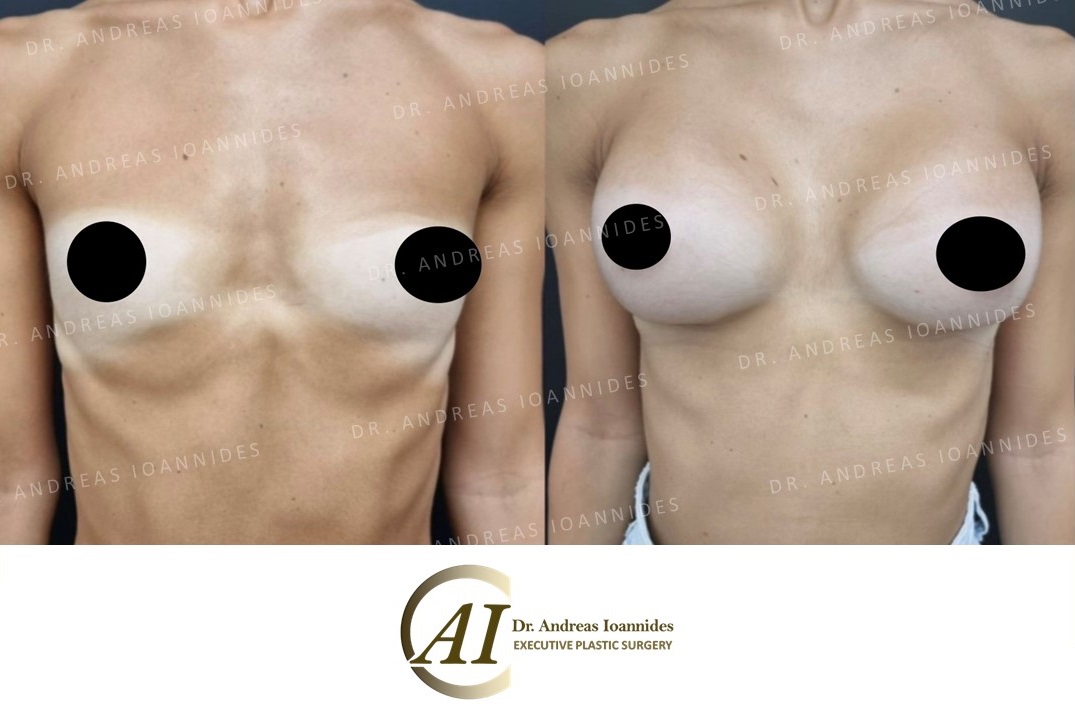
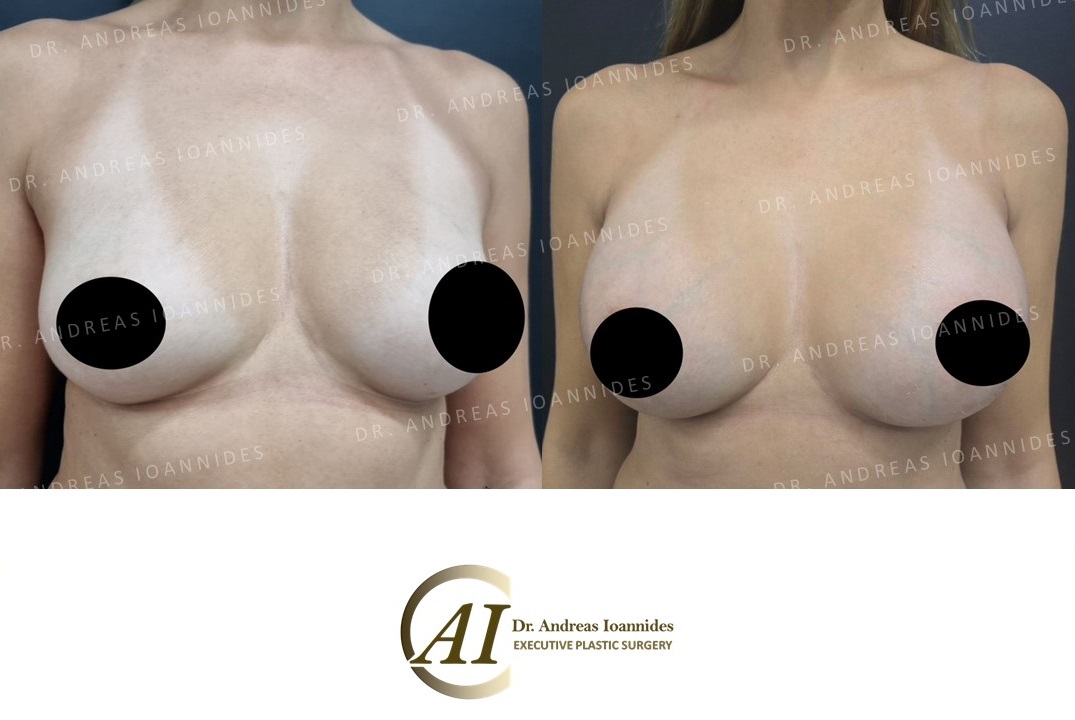
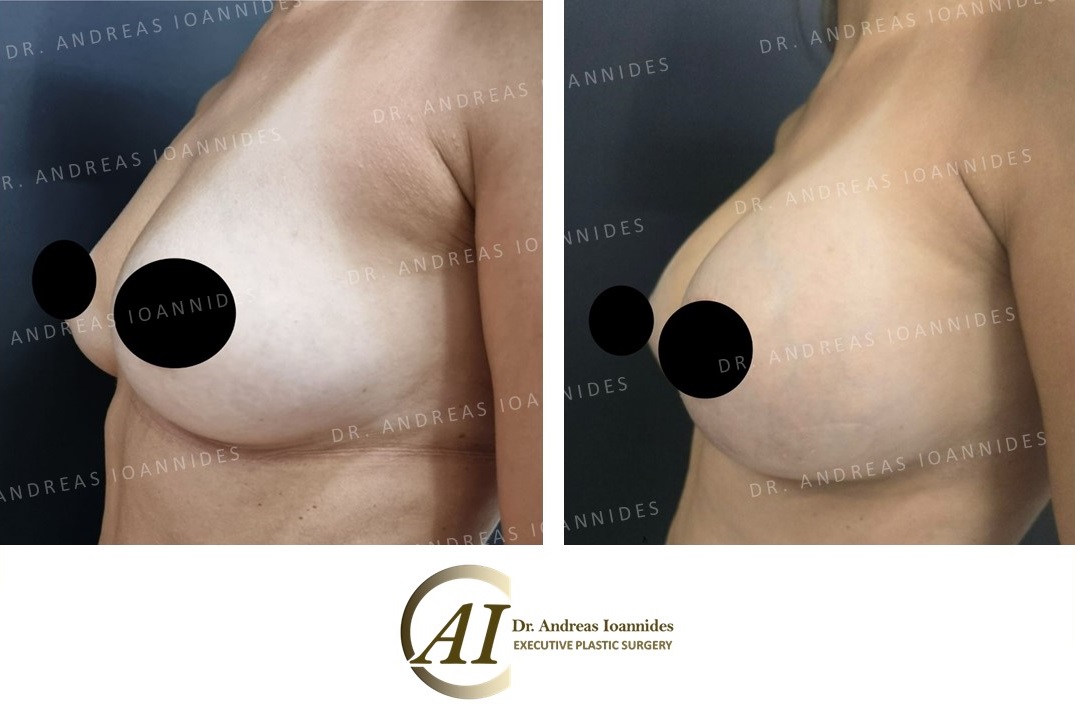
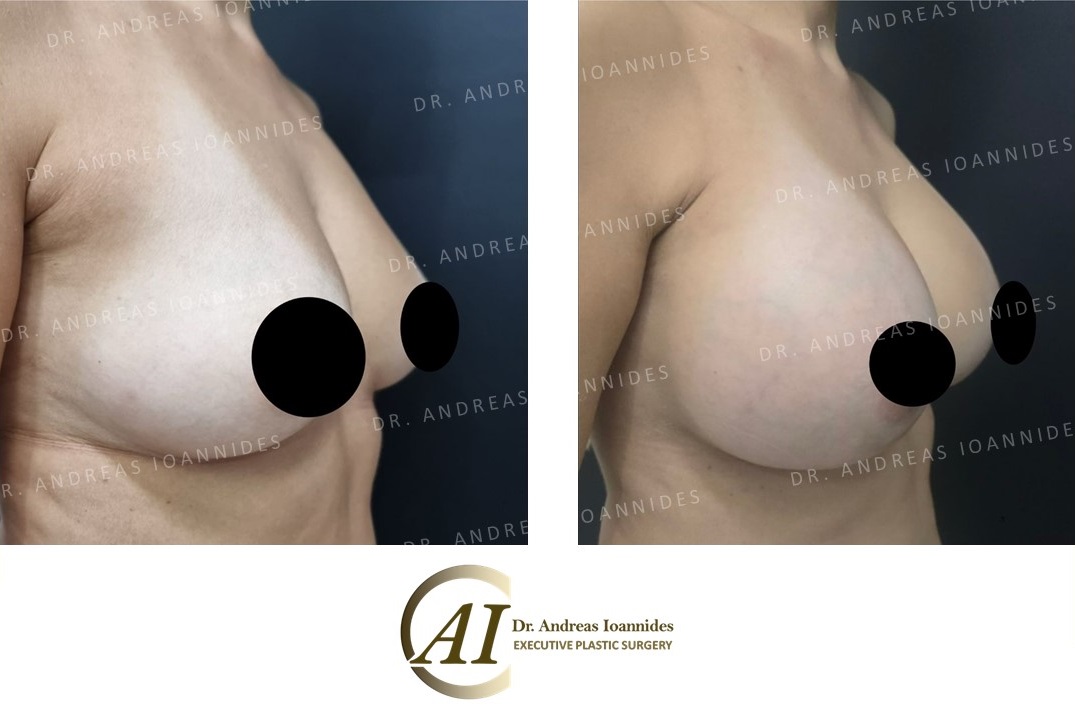
CONTACT
Dr. Andreas Ioannides
Contact us and book an appointment immediately
Choose your appointment by video call or by visiting one of our clinics!

Dr. Andreas Ioannides Executive Plastic Surgery is one of the most complete plastic surgery clinics and the international medical aesthetic medical centers ADVANCED AESTHETICS provide modern medical techniques and aesthetic medical treatments in Greece and Cyprus.
Dr. Andreas Ioannidis at the 16th Panhellenic Congress of Plastic, Reconstructive & Aesthetic Surgery
7 Common Myths About Plastic Surgery
Blepharoplasty: When Is It Indicated and What to Expect During Recovery
Rhinoplasty and Breathing: Can Aesthetics and Functionality Be Combined?
September and Plastic Surgery: Why Autumn Can Be a Good Time to Plan an Aesthetic Procedure
September and Aesthetic Treatments: Why It’s the Ideal Time for a Fresh Start
Thinking About Labiaplasty? 10 Things You Should Know Before Moving Forward
Athens Clinic
T +30.210 9595566
Email: info@andreasioannides.com
Address: Syggrou Ave, 284, Kallithea, Zip 17673 – Athens
Cyprus Clinics
T +357.22335002
Email: info@andreasioannides.com
Athenium International Medical Institute
Address: Giannitson 9 Strovolos, Nicosia 2027, Cyprus
Address: Thiseos 1, Lemesos 3025, Zip 4004 – Cyprus
Copyright © 2022