


Improving projection, symmetry and overall facial balance
The chin is a relatively small anatomical feature, yet it plays a major role in facial balance and profile harmony.
Its shape, size and projection are closely related to:
- the nose,
- the lower jaw,
- the upper jaw,
- the jawline,
- the neck contour,
- the overall proportions of the face.
For this reason, genioplasty / chin surgery should not be viewed as an isolated correction.
The goal is to create a more balanced and harmonious profile with a technique tailored to each patient’s natural anatomy.
What is genioplasty?
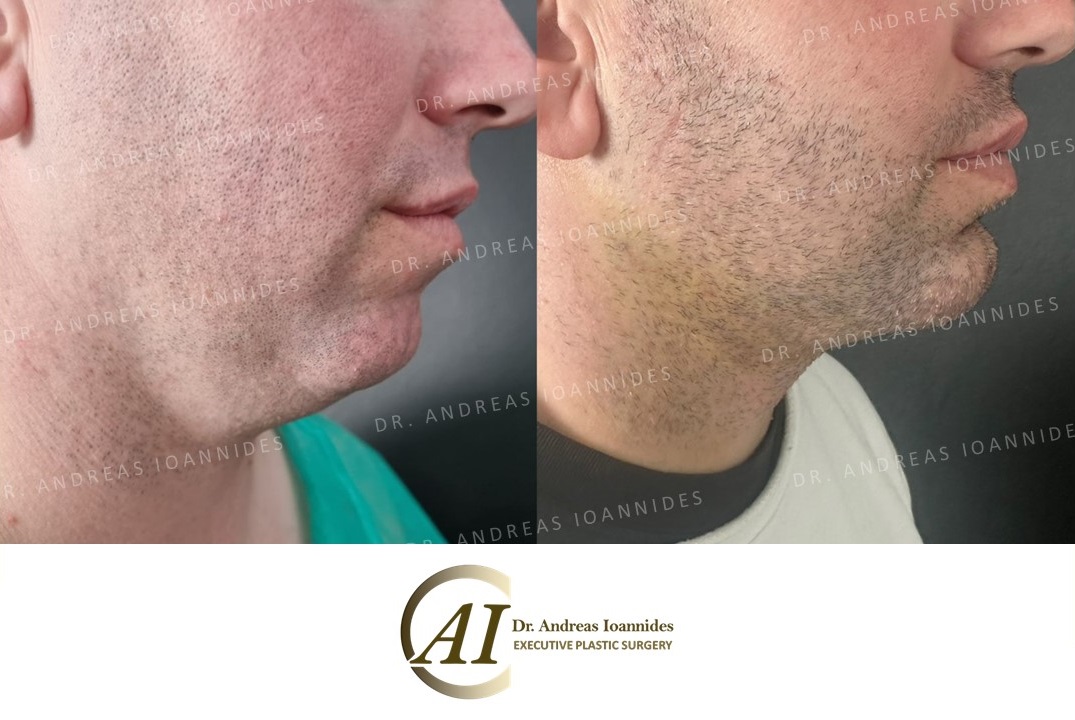
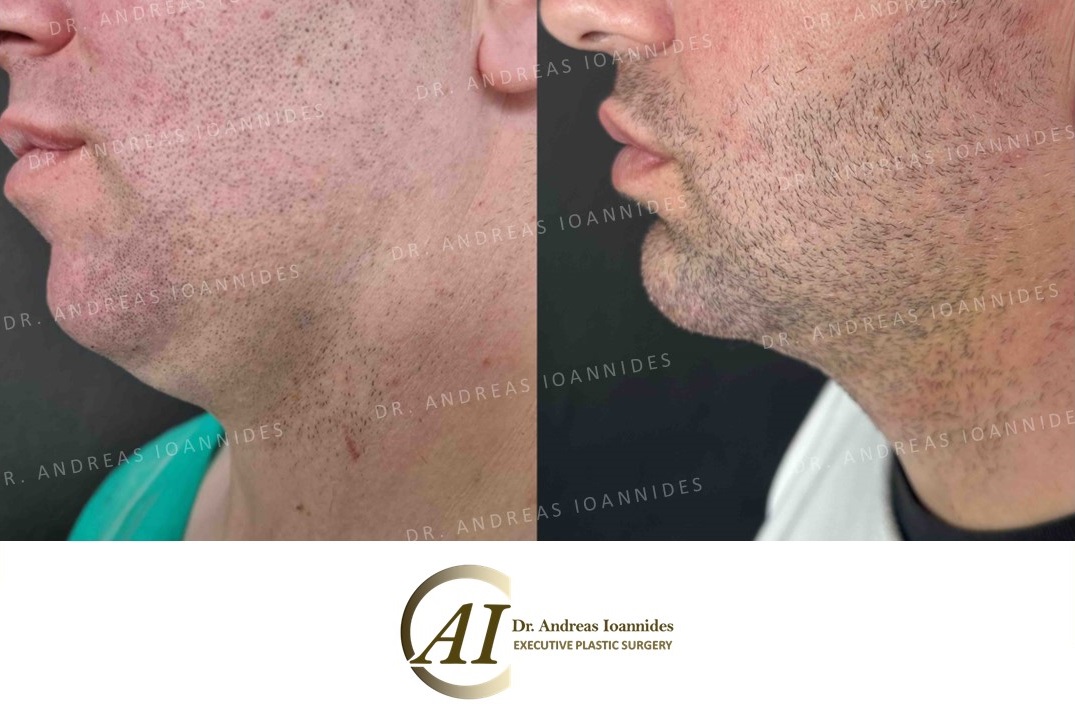
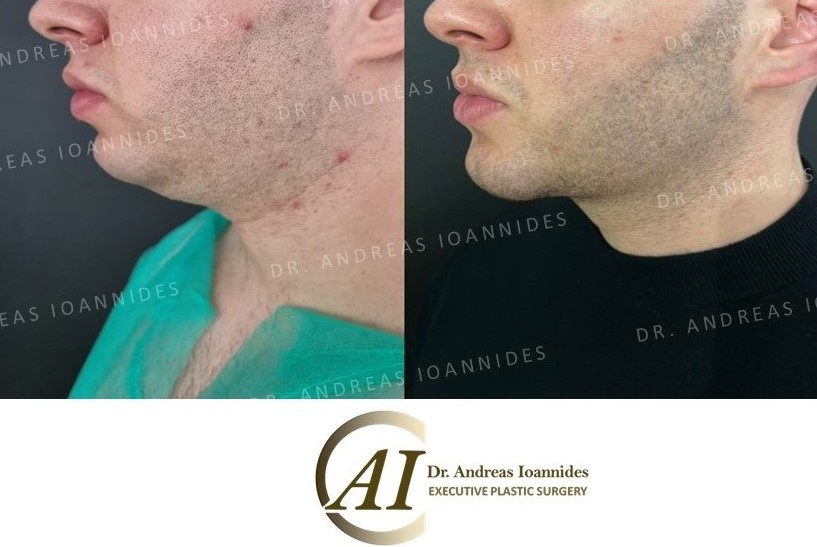
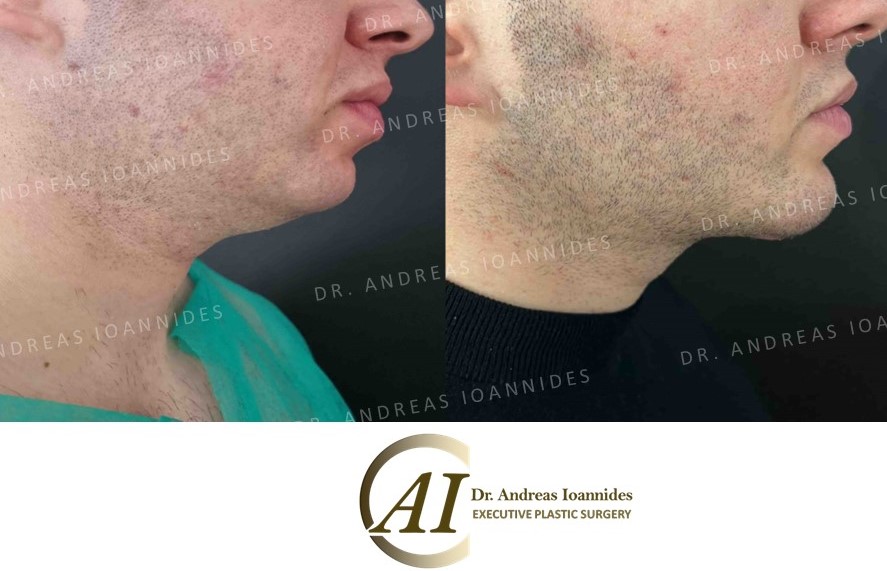
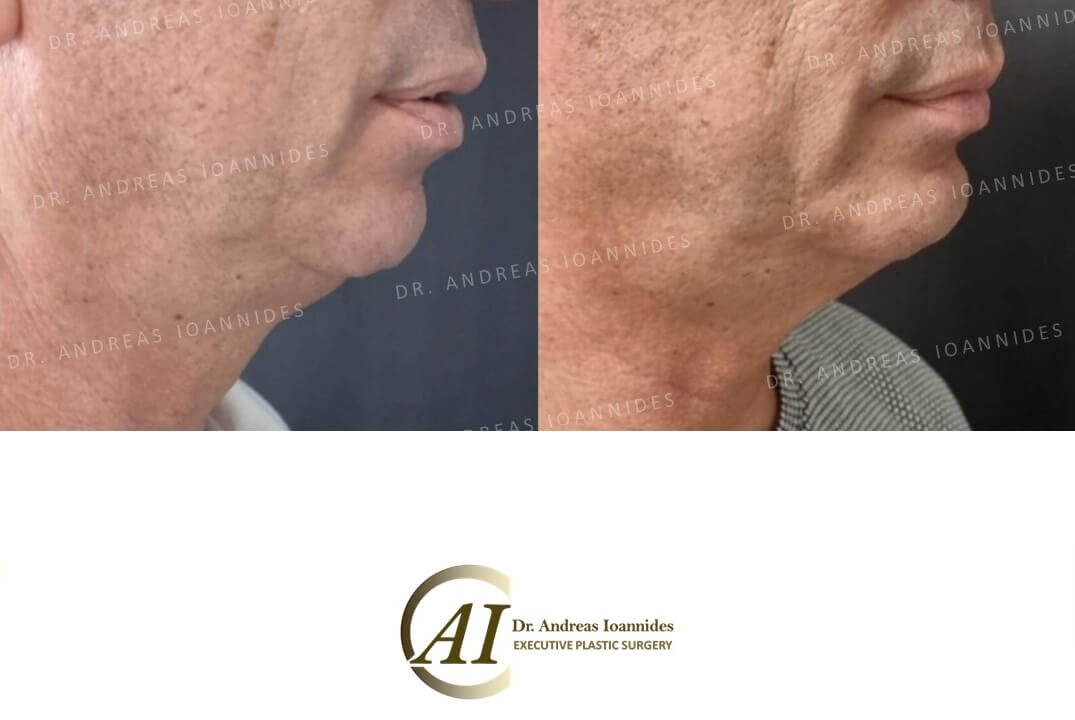
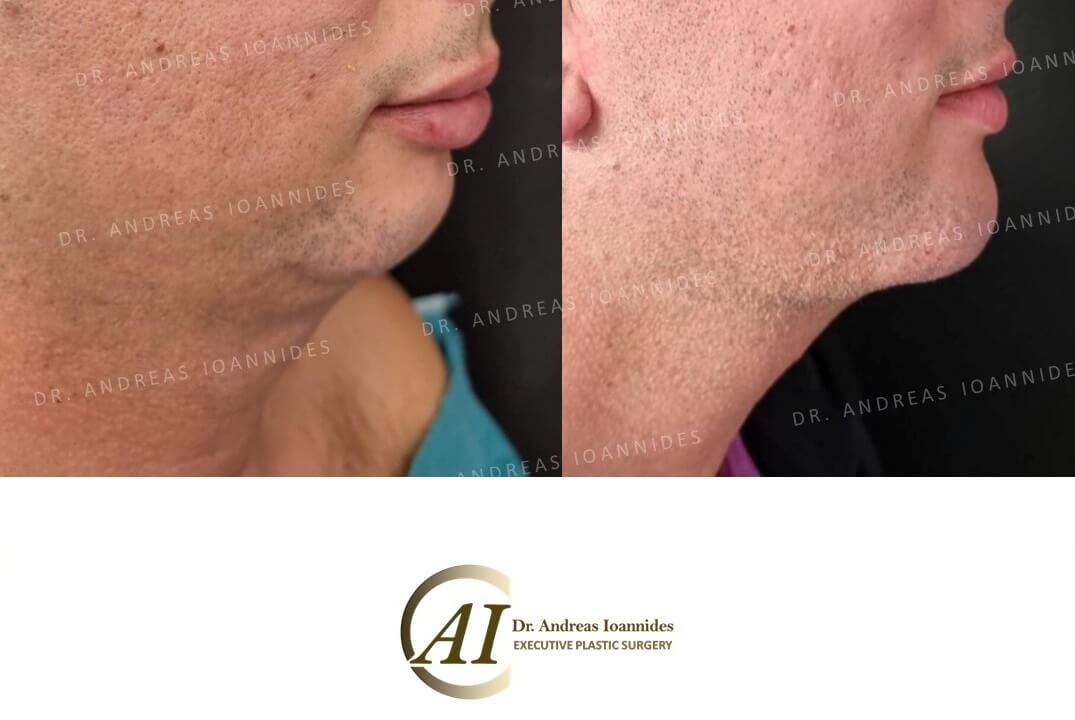
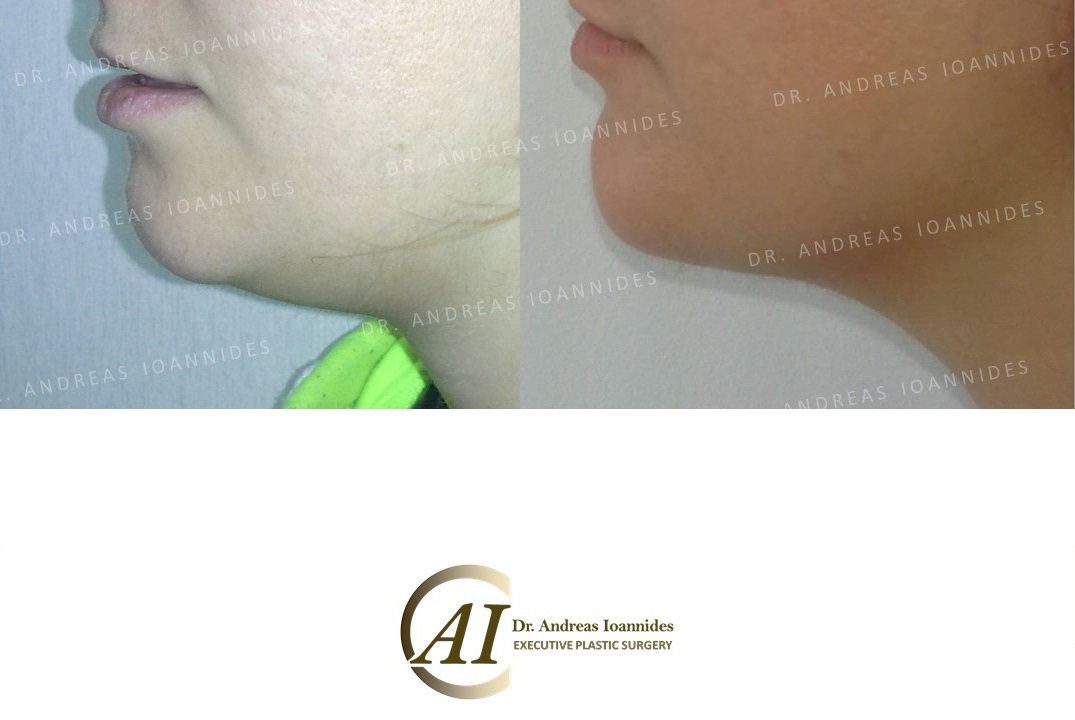
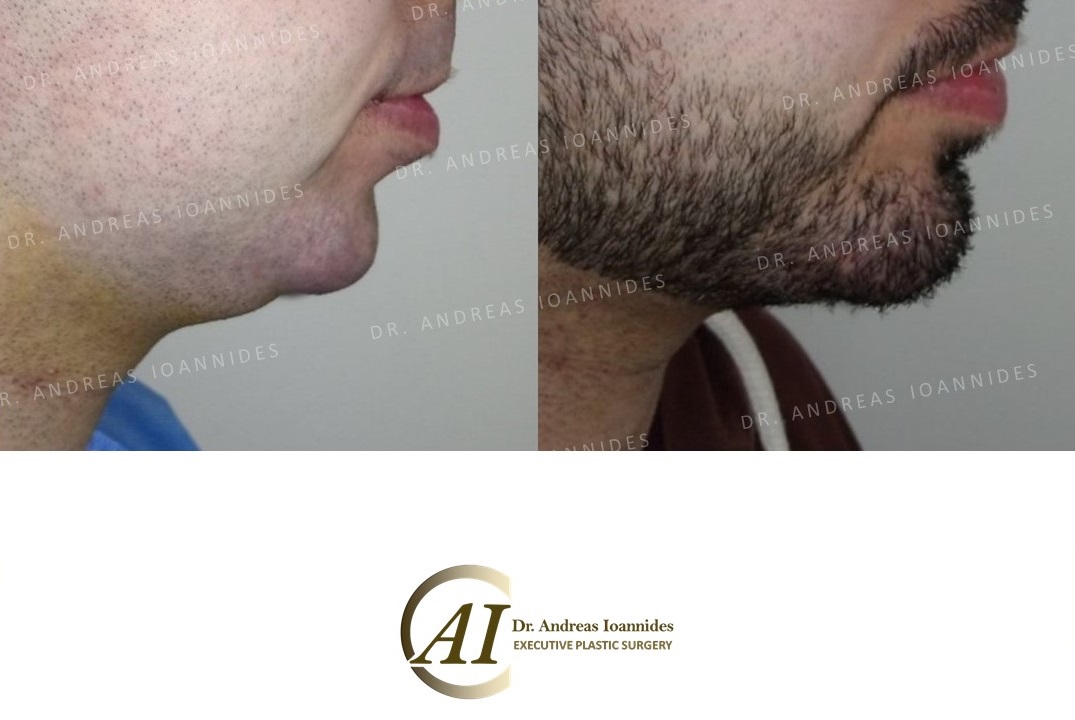
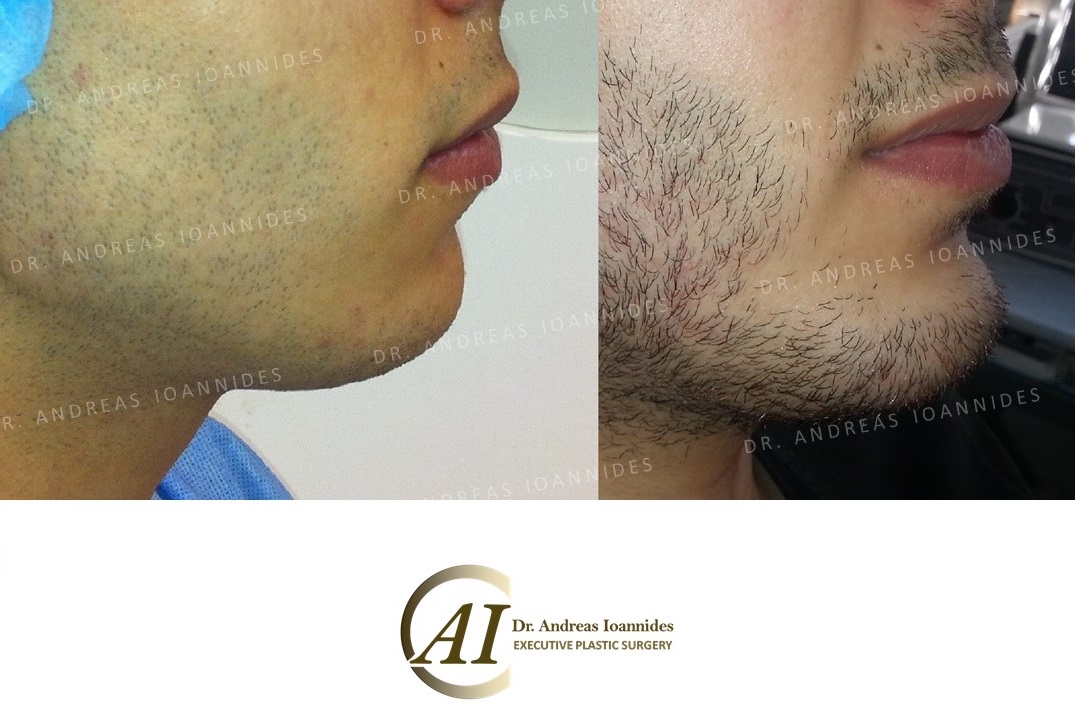
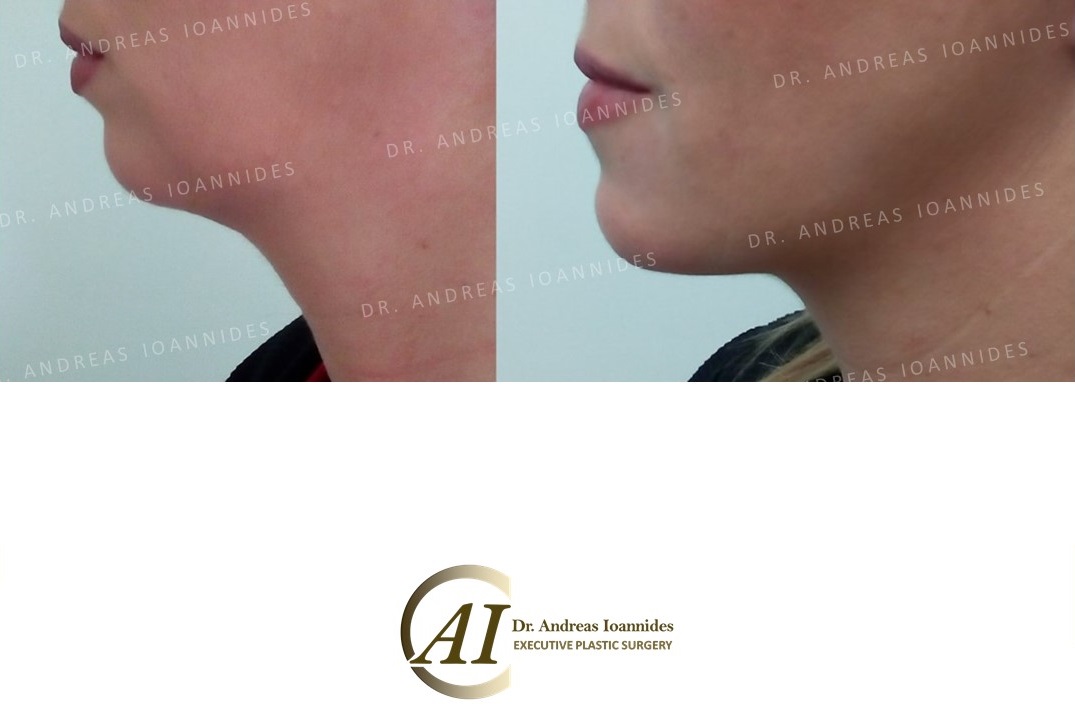
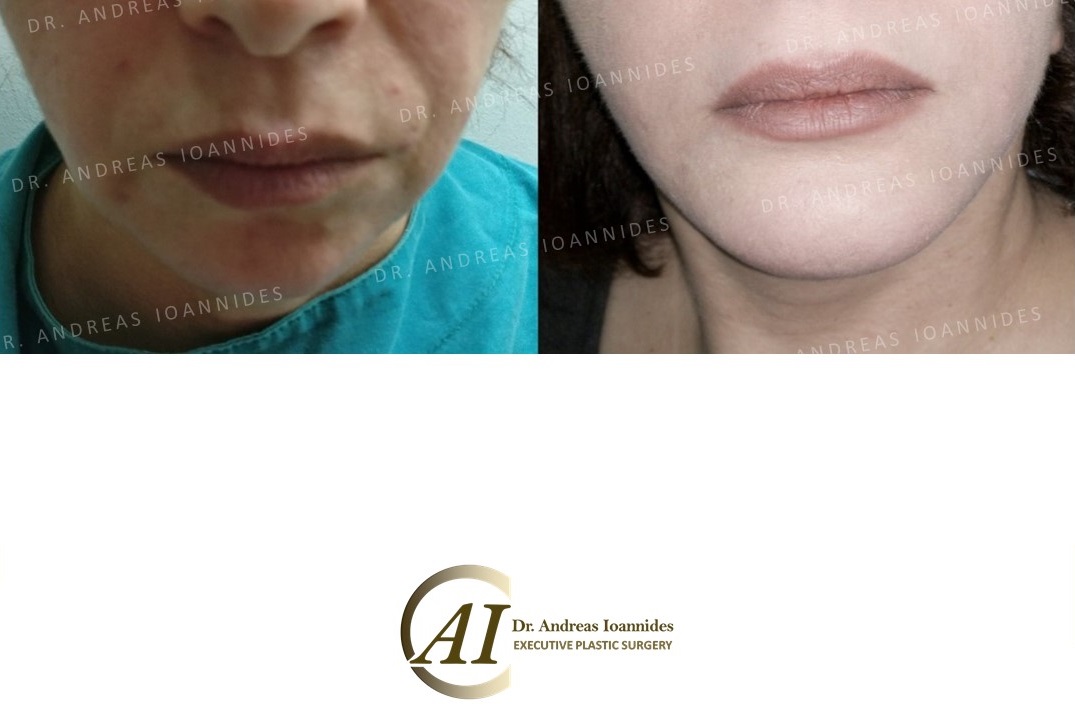
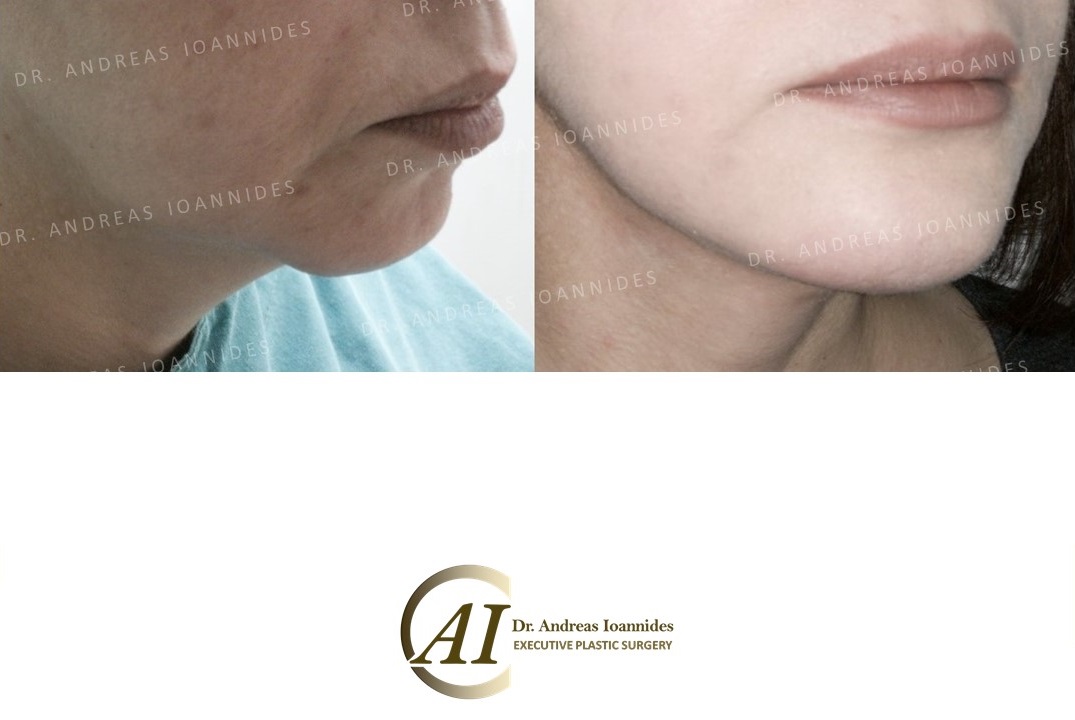
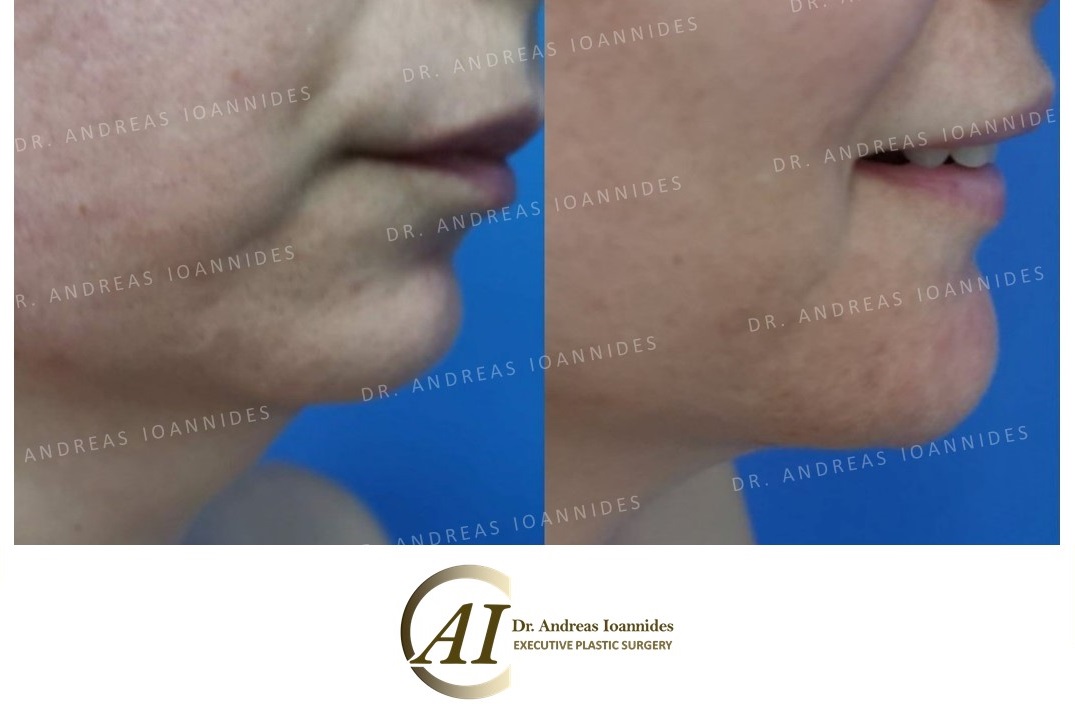
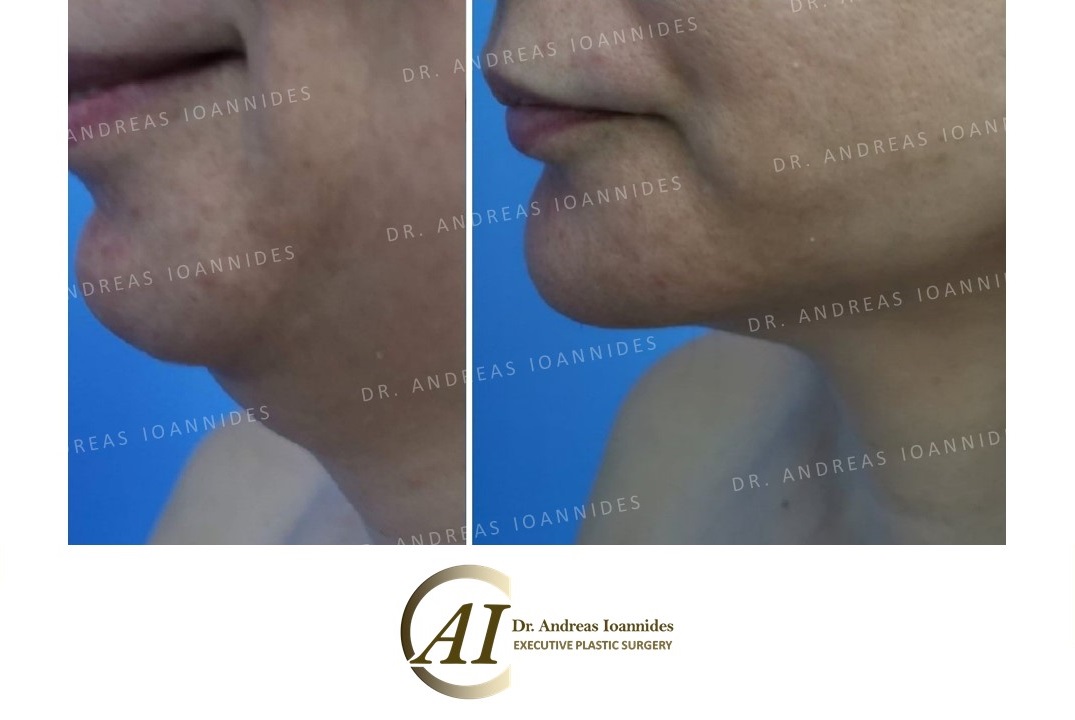
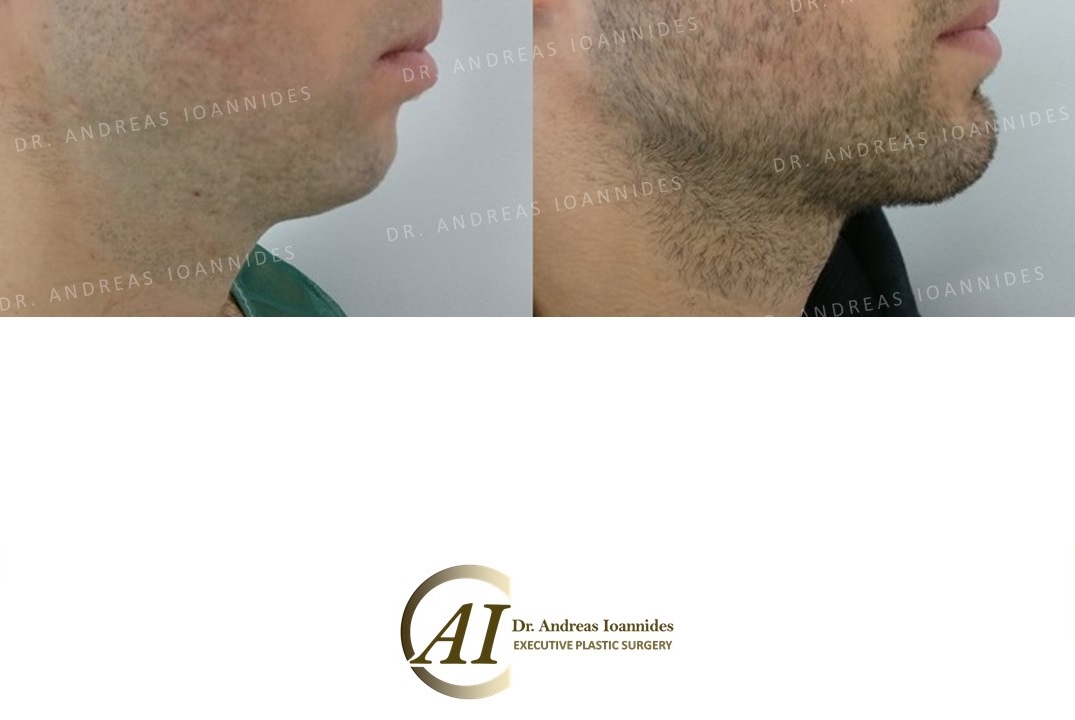
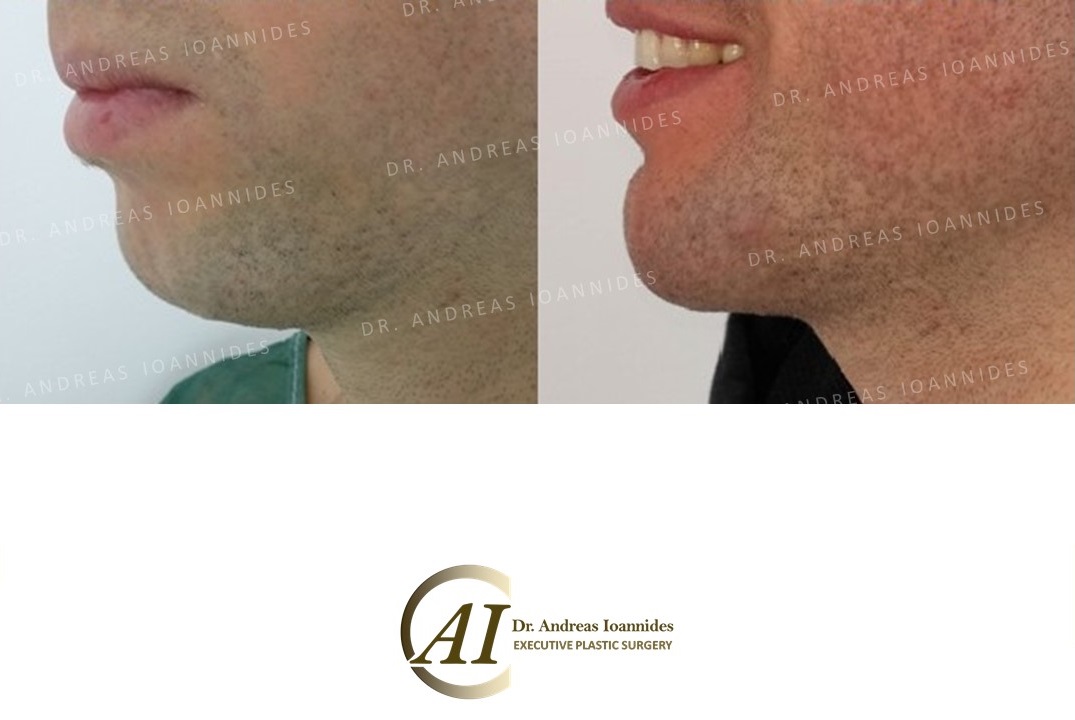
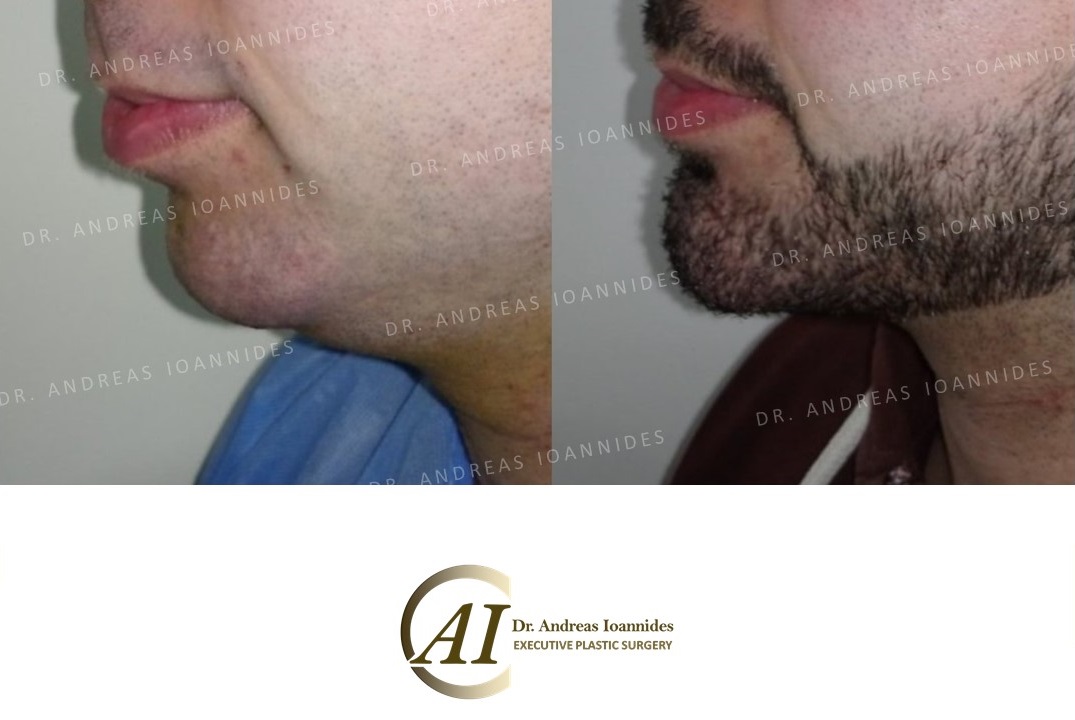
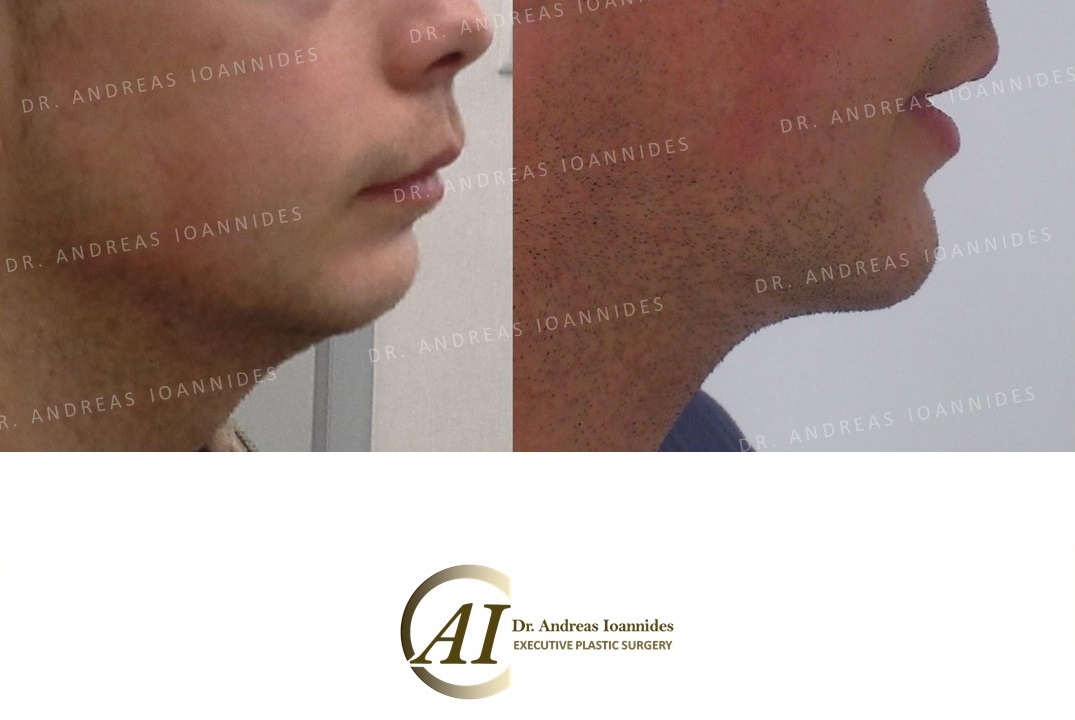
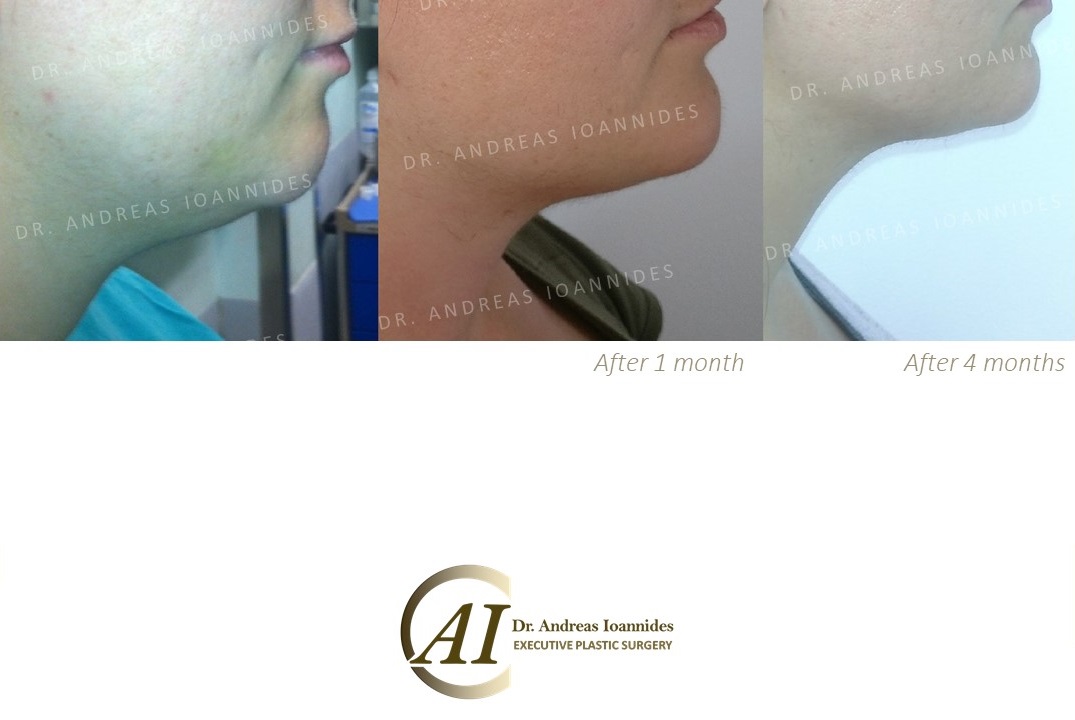
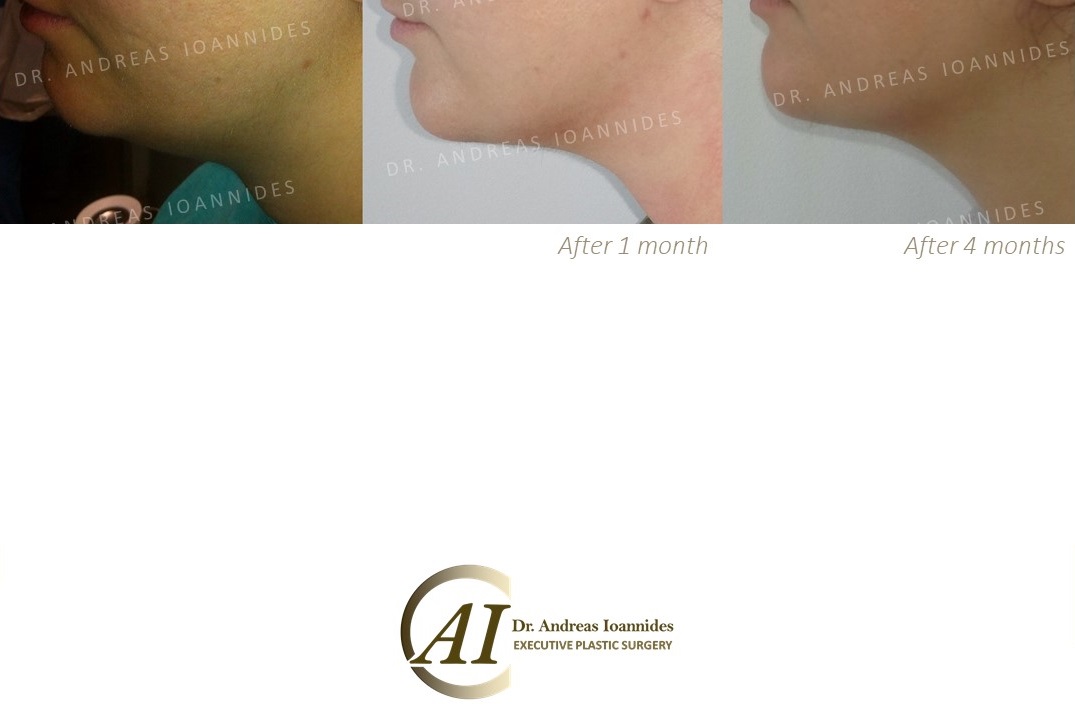
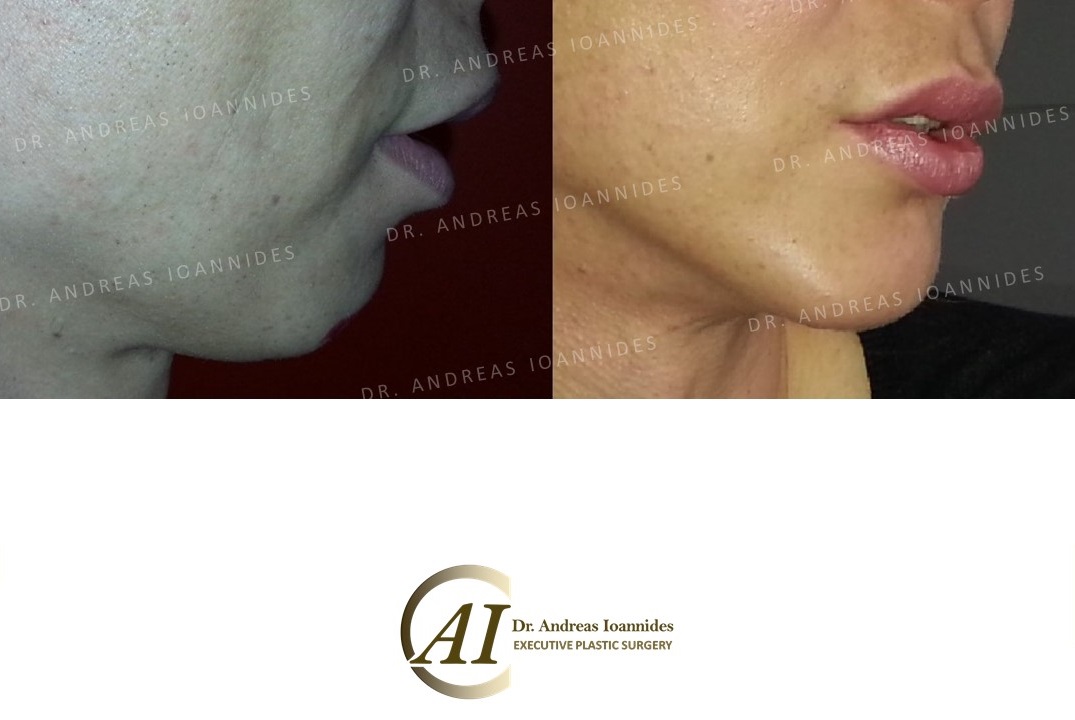
Genioplasty (Chin Surgery) includes different surgical or minimally invasive techniques used to improve:
- chin projection,
- chin length,
- chin height,
- symmetry,
- the relationship between the chin, nose and jaw.
Not every patient needs the same treatment.
In some cases, greater projection is required.
In others, the chin may need to be reduced, repositioned or reshaped.
In milder cases, a chin implant or injectable treatment may be considered.
What are the most common chin abnormalities?
Chin anatomy may vary in several ways, including:
- microgenia, when the chin is relatively small,
- hypogenia, when chin projection is reduced,
- macrogenia, when the chin is excessively prominent or large,
- vertical excess or deficiency,
- asymmetry,
- combined chin and jaw disproportion.
Correct diagnosis is essential because, in some patients, the issue involves not only the chin but also the broader relationship between the upper and lower jaws.
Who is a suitable candidate for chin surgery?
Genioplasty may be suitable for women and men who:
- have a small or recessed chin,
- have an overly prominent chin,
- have chin asymmetry,
- feel that their profile is unbalanced,
- want a better relationship between the nose and chin,
- want a more defined jawline,
- have realistic expectations from treatment.
Final suitability is determined after clinical and anatomical assessment.
Why does the chin have such a strong effect on the profile?
Facial profile balance is not determined by the nose alone.
The relationship between:
- the nose,
- lips,
- chin,
- lower jaw,
- neck,
can significantly change how the face is perceived.
A small chin, for example, can make the nose appear larger.
An overly prominent chin can make the midface appear flatter.
For this reason, assessment should consider the entire facial profile rather than the chin alone.
What treatment options are available?
The most appropriate technique depends on the type and severity of the concern.
1. Bony Genioplasty – Sliding Genioplasty
For more significant anatomical differences, a bony genioplasty may be required.
A segment of the chin bone is mobilised and repositioned:
- forward,
- backward,
- upward,
- downward,
- or in a combined direction.
This allows more precise three-dimensional correction of the chin position.
It may be appropriate when a true skeletal change is needed rather than simply adding volume.
2. Chin Augmentation with an Implant
In milder cases of microgenia or hypogenia, a specially selected chin implant may be used.
Its size and shape are chosen according to:
- the patient’s anatomy,
- existing chin projection,
- jawline,
- profile,
- desired result.
The aim is to improve projection and overall facial balance.
3. Limited Soft-Tissue Repositioning
In selected cases, a more limited surgical adjustment of the soft tissues may be appropriate.
Access may be achieved through a small incision inside the mouth, depending on the technique and indication.
This approach is suitable only for specific concerns and cannot replace bony genioplasty when true skeletal repositioning is required.
4. Non-Surgical / Injectable Chin Augmentation
For smaller aesthetic concerns, injectable chin contouring may be considered.
Appropriate fillers can temporarily improve:
- projection,
- contour,
- symmetry,
- the transition toward the jawline.
Injectable genioplasty cannot correct every form of chin deficiency and does not replace skeletal surgery when there is a significant bony discrepancy.
The result of fillers should also not be considered permanent.
Duration depends on the material used, the treatment area and individual patient factors.
Surgical or non-surgical genioplasty?
The choice depends on the actual anatomical problem.
Mild lack of projection
Filler may be considered.
Mild to moderate hypogenia
A chin implant may be suitable.
More significant skeletal discrepancy
Bony genioplasty may be required.
Asymmetry or complex deformity
A personalised surgical plan is needed and, in some cases, broader maxillofacial assessment may be appropriate.
The technique should not be chosen first. The correct diagnosis should come first.
Genioplasty or chin filler?
Chin filler can be very useful in carefully selected patients.
It offers:
- immediate contour improvement,
- no bony surgery,
- limited downtime.
However, it also has limitations.
It cannot:
- reduce an excessively large chin,
- truly reposition the bone,
- correct major jaw disproportion,
- provide the same type of long-term skeletal correction as surgical genioplasty.
Genioplasty or chin implant?
A chin implant and sliding genioplasty can both improve projection, but they do so in different ways.
Chin Implant
Adds volume over the existing bone.
Sliding Genioplasty
Repositions the patient’s own chin bone.
The choice depends on:
- the degree of correction needed,
- chin height,
- symmetry,
- lower jaw anatomy,
- the patient’s goals.
Can genioplasty be combined with rhinoplasty?
Yes.
Rhinoplasty and genioplasty may be combined in selected patients because the nose and chin strongly influence profile balance.
In some cases, correcting the nose alone may not create the desired harmony if the chin is significantly underprojected.
Likewise, improving chin projection may create a more balanced profile without requiring an excessive change to the nose.
Can it be combined with other procedures?
Depending on the patient’s needs, chin surgery may be combined with:
- rhinoplasty,
- double-chin liposuction,
- ThermiTight™,
- neck contouring,
- facelift or T.T.A. LIFT in selected cases,
- other facial harmonisation procedures.
Combined treatment should only be used when it meaningfully improves the overall balance of the face.
Why choose Dr Andreas Ioannides?
Genioplasty requires a precise understanding of three-dimensional facial anatomy.
Correct chin projection is not simply a matter of making the chin “bigger” or “smaller”.
The surgeon must assess:
- the profile,
- the nose,
- the upper and lower jaws,
- the lips,
- the jawline,
- the neck,
- facial symmetry.
Dr Andreas Ioannides, Plastic, Aesthetic & Reconstructive Surgeon, plans each procedure individually with the aim of achieving:
- natural proportions,
- appropriate projection,
- facial harmony,
- a result that does not look excessive.
The right chin is not the biggest one. It is the one that fits your face.
How is the procedure performed?
The exact procedure depends on the technique selected.
For surgical genioplasty, access may be achieved:
- from inside the mouth,
- or through another appropriate surgical approach.
In bony genioplasty, a controlled osteotomy is performed and the chin is moved into the planned position.
For chin augmentation with an implant, a pocket is created and the implant is positioned in the correct anatomical location.
The precise technique is determined during preoperative planning.
What type of anaesthesia is used?
Anaesthesia depends on the procedure.
Smaller interventions may be performed under:
- local anaesthesia,
- local anaesthesia with sedation.
More extensive bony genioplasty may require a different anaesthetic approach.
The most appropriate option is selected after full medical assessment.
How long does the procedure take?
The duration depends on:
- the technique used,
- the degree of correction,
- whether an implant is used,
- whether an osteotomy is required,
- whether it is combined with rhinoplasty or another procedure.
There is therefore no single operating time that applies to everyone.
The estimated duration is determined during preoperative planning.
What is recovery like?
After surgical chin treatment, patients may experience:
- swelling,
- bruising,
- a feeling of tightness,
- tenderness,
- temporary numbness,
- discomfort with chewing in some cases.
The intensity and duration depend on the technique used.
When intraoral incisions are used, specific oral-hygiene instructions are also provided.
When can I return to normal activities?
After smaller procedures or injectable contouring, return to normal activities may be relatively quick.
Bony genioplasty requires a longer healing period.
Return to:
- work,
- exercise,
- strenuous activity,
is determined individually.
When will I see the results?
The change in profile is usually visible early.
However, initial swelling can temporarily affect the appearance.
The result becomes clearer as:
- swelling decreases,
- the soft tissues adapt,
- healing progresses,
- the new anatomical relationship stabilises.
Final assessment is made after healing is substantially or fully complete.
How long do the results last?
The duration depends on the technique.
Bony Genioplasty
The skeletal repositioning is designed to provide a long-lasting result.
Chin Implant
The result is also long term, provided the implant remains in the correct position and no complication develops.
Fillers
The result is temporary and requires repeat treatment once the material has been absorbed.
Are there risks?
As with any surgical or injectable procedure, there are potential risks.
Depending on the technique, these may include:
- infection,
- haematoma,
- asymmetry,
- changes in sensation,
- implant displacement,
- insufficient or excessive projection,
- scarring,
- the need for revision surgery.
Injectable techniques also carry specific risks related to filler placement and vascular anatomy.
Potential risks are discussed in detail before treatment.
How much does genioplasty cost?
The cost of chin surgery varies depending on the technique used.
The final price may be influenced by:
- the type of genioplasty,
- whether an osteotomy is required,
- whether an implant is used,
- the type of anaesthesia,
- the duration of surgery,
- whether it is combined with rhinoplasty or another procedure,
- whether hospital or clinic stay is required.
Injectable chin augmentation has a different cost depending on the material and the amount required.
For this reason, the exact price can only be determined after a personal consultation.
Facial balance is the goal
Genioplasty by Dr Andreas Ioannides
The success of chin surgery is not judged by the chin alone.
It is judged by whether the entire face appears more balanced.
Dr Andreas Ioannides assesses the chin as part of the overall architecture of the face.
The aim is:
- appropriate projection,
- a more balanced profile,
- better harmony with the nose,
- a more defined lower jaw,
- a natural result.
We do not change one feature in isolation. We improve the balance of the entire face.
Would you like to know which chin treatment is right for you?
During your personal consultation, Dr Andreas Ioannides will assess:
- chin projection,
- chin length and height,
- symmetry,
- the lower jaw,
- the nose,
- the profile,
- the relationship with the neck,
- your desired result.
The most appropriate option can then be determined:
bony genioplasty, chin implant, injectable chin augmentation, rhinoplasty with genioplasty or a combined facial harmonisation approach.
Frequently Asked Questions About Chin Surgery
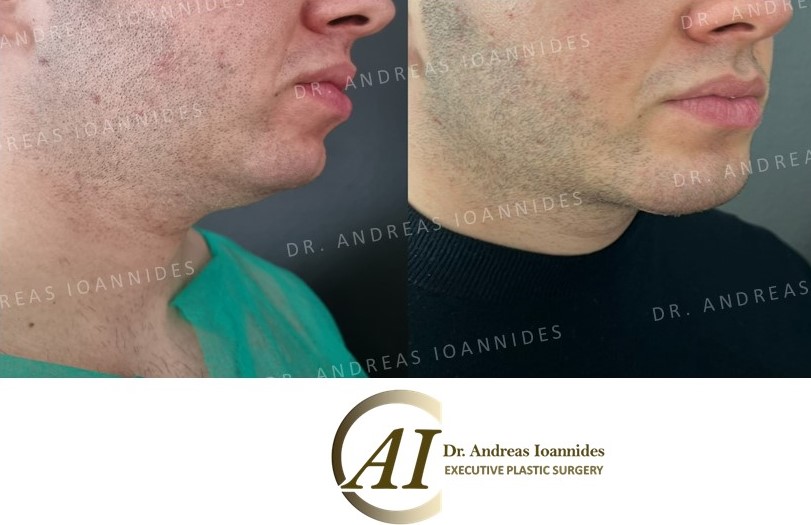
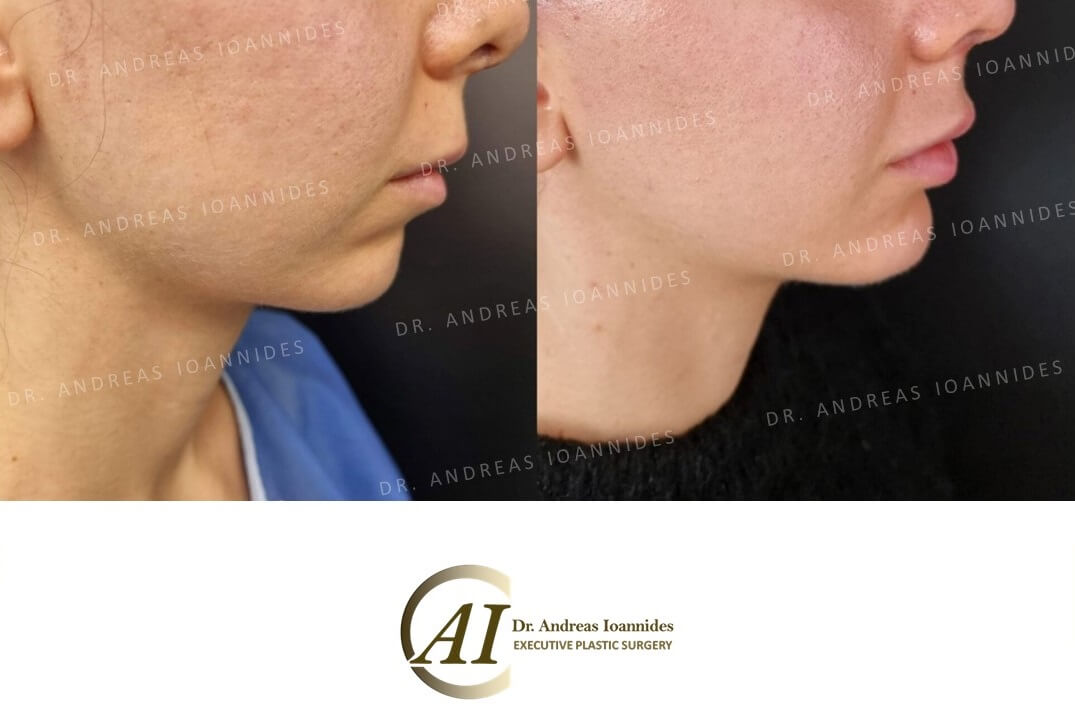
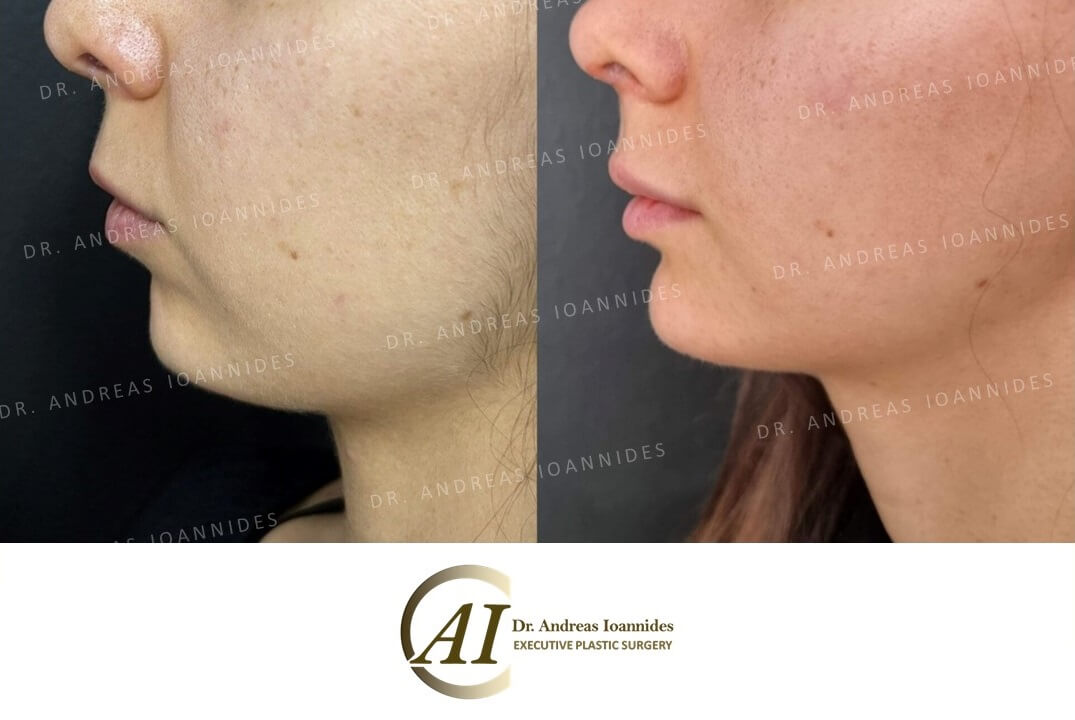
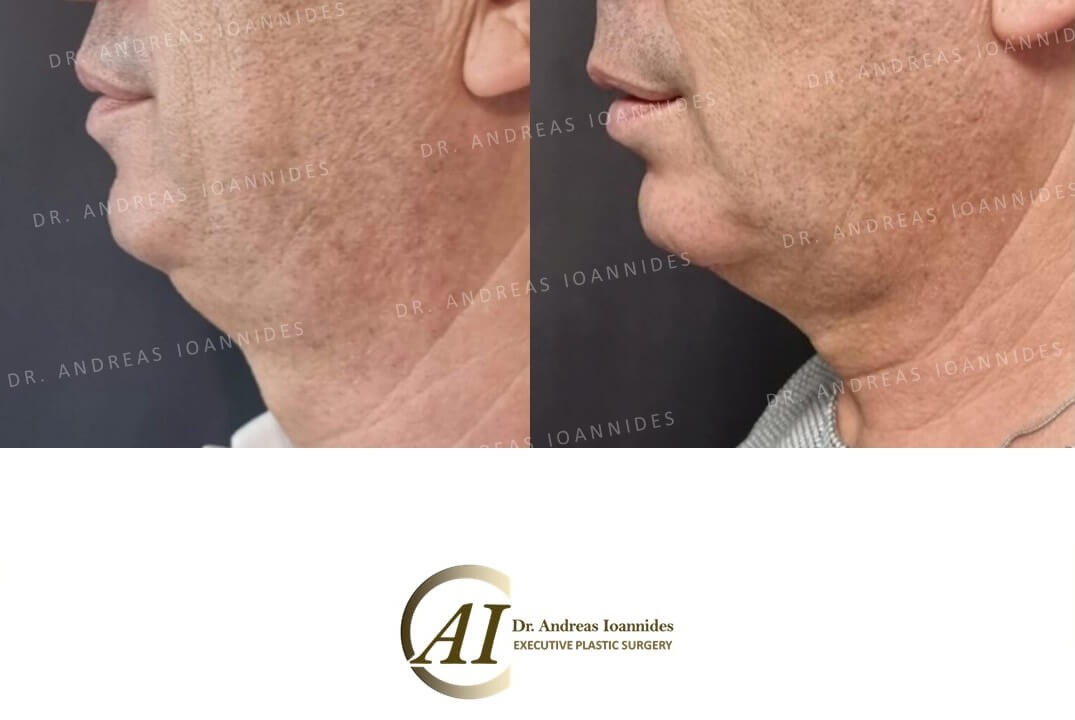
Genioplasty is a surgical or, in selected cases, injectable procedure designed to improve the size, projection, height or symmetry of the chin.
Microgenia refers to a chin that is anatomically small or underdeveloped.
Hypogenia refers to reduced chin projection in relation to the rest of the face.
It is a bony chin procedure in which a segment of the chin bone is moved into a new planned position.
It depends on the anatomy and the correction required. An implant adds volume, while bony genioplasty repositions the patient’s own bone.
In mild cases, yes. In significant hypogenia or skeletal deformity, fillers cannot provide the same degree of correction.
Yes. The combination may significantly improve profile balance in appropriately selected patients.
In many techniques, access can be achieved from inside the mouth. The exact incision location depends on the surgical technique.
Bony genioplasty and chin implants provide long-lasting results. Injectable fillers are temporary.
The cost depends on the technique, whether an implant or osteotomy is required, anaesthesia and whether other procedures are combined. The exact price is determined after a personal consultation.

CONTACT


Dr. Andreas Ioannides
Contact us and book an appointment immediately
Choose your appointment by video call or by visiting one of our clinics!

Dr. Andreas Ioannides Executive Plastic Surgery is one of the most complete plastic surgery clinics and the international medical aesthetic medical centers ADVANCED AESTHETICS provide modern medical techniques and aesthetic medical treatments in Greece and Cyprus.
Dr. Andreas Ioannidis at the 16th Panhellenic Congress of Plastic, Reconstructive & Aesthetic Surgery
7 Common Myths About Plastic Surgery
Blepharoplasty: When Is It Indicated and What to Expect During Recovery
Rhinoplasty and Breathing: Can Aesthetics and Functionality Be Combined?
September and Plastic Surgery: Why Autumn Can Be a Good Time to Plan an Aesthetic Procedure
September and Aesthetic Treatments: Why It’s the Ideal Time for a Fresh Start
Thinking About Labiaplasty? 10 Things You Should Know Before Moving Forward
Athens Clinic
T +30.210 9595566
Email: info@andreasioannides.com
Address: Syggrou Ave, 284, Kallithea, Zip 17673 – Athens
Cyprus Clinics
T +357.22335002
Email: info@andreasioannides.com
Athenium International Medical Institute
Address: Giannitson 9 Strovolos, Nicosia 2027, Cyprus
Address: Thiseos 1, Lemesos 3025, Zip 4004 – Cyprus
Copyright © 2022