


Mesotherapy with Biomimetic Peptides for pigmentation, uneven skin tone and improved radiance
Hyperpigmentation, uneven skin tone and loss of brightness can make the skin appear dull, tired and less uniform.
These changes may be associated with:
- sun exposure,
- photoageing,
- hormonal factors,
- post-inflammatory hyperpigmentation,
- natural ageing,
- uneven melanin production,
- a combination of different factors.
Mesotherapy with Biomimetic Peptides is an injectable treatment used with the aim of improving skin quality, brightness and overall skin appearance.
Depending on the specific treatment protocol and product formulation, it may target:
- pigmentation,
- uneven skin tone,
- dullness,
- reduced skin quality,
- early signs of photoageing,
- hydration and texture.
The goal is not to “whiten” the skin. The goal is to create a more even, luminous and healthier-looking complexion.
What is Hyperpigmentation?
Hyperpigmentation is the increased presence of melanin in selected areas of the skin.
It may appear as:
- sun spots,
- isolated dark marks,
- uneven skin tone,
- post-inflammatory pigmentation,
- melasma,
- photoaged areas.
Excess melanin production may be influenced by ultraviolet radiation, hormonal factors and inflammatory processes.
For this reason, the correct treatment should begin with identifying the type and cause of pigmentation.
What are Biomimetic Peptides?
Biomimetic peptides are short chains of amino acids designed to mimic or influence selected biological signals in the body.
Depending on the peptide and product, they may be used to support:
- cellular function,
- skin renewal,
- fibroblast activity,
- collagen production,
- overall skin quality,
- selected mechanisms related to pigmentation.
Peptides are a broad category of compounds and they do not all have the same effect. Their impact on pigmentation depends on the specific molecular structure and mechanism of the product used.
What is Mesotherapy for Hyperpigmentation?
Mesotherapy is a technique in which small amounts of selected active ingredients are injected intradermally into the treatment area.
The aim is to deliver the ingredients directly into the skin layer where they are intended to act.
Depending on the formulation, the treatment plan may aim to improve:
- uneven tone,
- brightness,
- hydration,
- texture,
- skin quality,
- selected pathways involved in melanogenesis.
Mesotherapy may be used as part of a broader skin-brightening and pigmentation-management plan in appropriately selected patients.
How does Pigmentation develop?
Melanin production is a complex biological process.
It is influenced by:
- melanocytes,
- enzymes involved in melanogenesis,
- hormonal signals,
- inflammatory pathways,
- ultraviolet exposure,
- genetic predisposition.
When this process becomes overactive or uneven, areas of darker pigmentation may develop.
This is why hyperpigmentation often requires a combination of treatment and daily photoprotection.
How can Mesotherapy with Biomimetic Peptides help?
Depending on the product used, the treatment protocol may aim to:
- regulate selected pathways involved in melanin production,
- improve skin quality,
- support cellular renewal,
- improve hydration,
- increase radiance,
- create a more even-looking complexion.
It would not be appropriate to promise complete correction of every form of hyperpigmentation.
The result depends mainly on:
- the type of pigmentation,
- the depth of pigmentation,
- the underlying cause,
- skin phototype,
- daily sun exposure,
- the specific treatment product.
What role does Hyaluronic Acid play?
In some mesotherapy formulations, biomimetic peptides may be combined with hyaluronic acid.
In this context, hyaluronic acid may contribute mainly to:
- hydration,
- improved elasticity,
- smoother texture,
- a plumper and more luminous skin appearance.
Its role here is different from that of a volumising facial filler.
Which areas can be treated?
Depending on the indication, treatment may be applied to:
- the face,
- cheek area,
- selected areas of pigmentation,
- the under-eye area when appropriate,
- other photoaged areas according to the treatment protocol.
The under-eye area requires particularly careful assessment because of its delicate anatomy.
Mesotherapy for Sun Spots and Pigmentation
Not all dark spots have the same depth or underlying mechanism.
In selected cases, mesotherapy may be used as part of a broader skin-brightening programme.
In other cases, the treatment plan may require:
- medical skincare,
- chemical peels,
- laser treatments,
- light-based treatments,
- other depigmenting therapies.
The correct choice depends on the type of pigmentation.
Mesotherapy for Melasma
Melasma is a complex and often recurrent form of hyperpigmentation.
It is not simply a superficial dark spot.
It may be associated with:
- hormonal factors,
- sun exposure,
- genetic predisposition,
- vascular changes,
- photoageing.
Mesotherapy may be considered as part of selected treatment protocols, but melasma usually requires a long-term and combination-based approach.
Daily photoprotection is an essential part of treatment.
What does Skin Brightening mean?
Skin brightening does not mean changing the natural colour of the skin.
It means improving:
- uniformity,
- radiance,
- texture,
- hydration,
- overall freshness.
Brighter-looking skin reflects light more evenly because the surface is smoother, the tone is more uniform and the skin quality is improved.
Who is a suitable candidate?
Treatment may be suitable for women and men with:
- mild pigmentation,
- uneven skin tone,
- photoageing,
- dull skin,
- early dark spots,
- reduced radiance,
- a desire to improve overall skin quality.
Final suitability is determined after personal assessment.
When is Mesotherapy not enough?
In more pronounced or deeper pigmentation, a different or combined approach may be required.
Depending on the case, this may include:
- medical peels,
- laser,
- topical depigmenting protocols,
- photoageing treatments,
- a combination of therapies.
Different treatments may target different stages of melanin production and distribution, which is why combination strategies are often useful.
How is the treatment performed?
After assessing the skin, small and controlled intradermal injections of the selected product are performed.
The procedure may take approximately 15–20 minutes, depending on:
- the treatment area,
- the extent of treatment,
- the number of injection points.
How many sessions are required?
The number of treatments is personalised.
In many protocols, an initial course of approximately 2–3 sessions may be recommended.
However:
- the interval between sessions,
- the total number of treatments,
- the need for maintenance,
depend on the specific product and the skin’s response.
The same schedule should not be used automatically for every patient.
When will I see results?
The improvement is usually gradual.
Patients may begin to notice:
- increased radiance,
- better hydration,
- smoother texture,
- a more even tone,
during the treatment course.
Pigmentation changes may require more time and depend on the depth and cause of the pigmentation.
Is there downtime?
Downtime is usually limited.
Temporary effects may include:
- redness,
- mild swelling,
- bruising,
- small bumps at the injection points,
- tenderness.
These usually settle gradually.
What should I avoid after treatment?
After treatment, photoprotection is especially important.
Patients are generally advised to:
- use high-protection sunscreen daily,
- avoid intense sun exposure,
- avoid excessive heat for the period recommended by the physician,
- avoid rubbing or irritating the treated area,
- follow the personalised skincare protocol.
Ultraviolet exposure can contribute both to the development and recurrence of hyperpigmentation.
Is the treatment safe?
Mesotherapy is a medical injectable procedure and is not completely risk-free.
Possible temporary reactions may include:
- redness,
- swelling,
- bruising,
- tenderness,
- inflammatory reaction,
- allergic reaction,
- infection,
- post-inflammatory hyperpigmentation in selected cases.
Correct product selection, technique and patient selection are therefore important.
Can it be combined with other treatments?
Yes.
In many patients, the best result may require a combination approach.
Depending on the concern, treatment may be combined with:
- medical skincare,
- chemical peels,
- laser,
- photoageing treatments,
- skin rejuvenation,
- other biostimulatory treatments.
Combination therapy is used only when there is a clear indication.
Why choose Dr Andreas Ioannides?
Hyperpigmentation should not be treated with the same “brightening treatment” in every patient.
Dr Andreas Ioannides, Plastic, Aesthetic & Reconstructive Surgeon, evaluates:
- the type of pigmentation,
- the depth of pigmentation,
- skin phototype,
- photoageing,
- skin quality,
- previous treatments,
- history of recurrence,
- the desired result.
A personalised protocol can then be designed.
We do not treat every dark spot in the same way. We treat the mechanism behind it.
How long do the results last?
Duration depends on:
- the cause of hyperpigmentation,
- skin type,
- sun exposure,
- hormonal changes,
- skincare,
- consistency with photoprotection.
Pigmentation may recur, particularly in patients with a predisposition or ongoing sun exposure.
For this reason, patients may need:
- maintenance,
- daily skincare,
- repeat treatments.
How much does the treatment cost?
The cost of Mesotherapy with Biomimetic Peptides varies according to the personalised treatment plan.
The final price depends on:
- the product used,
- the treatment area,
- the number of sessions,
- whether the whole face or selected areas are treated,
- any combination treatments.
The exact price is determined after a personal consultation.
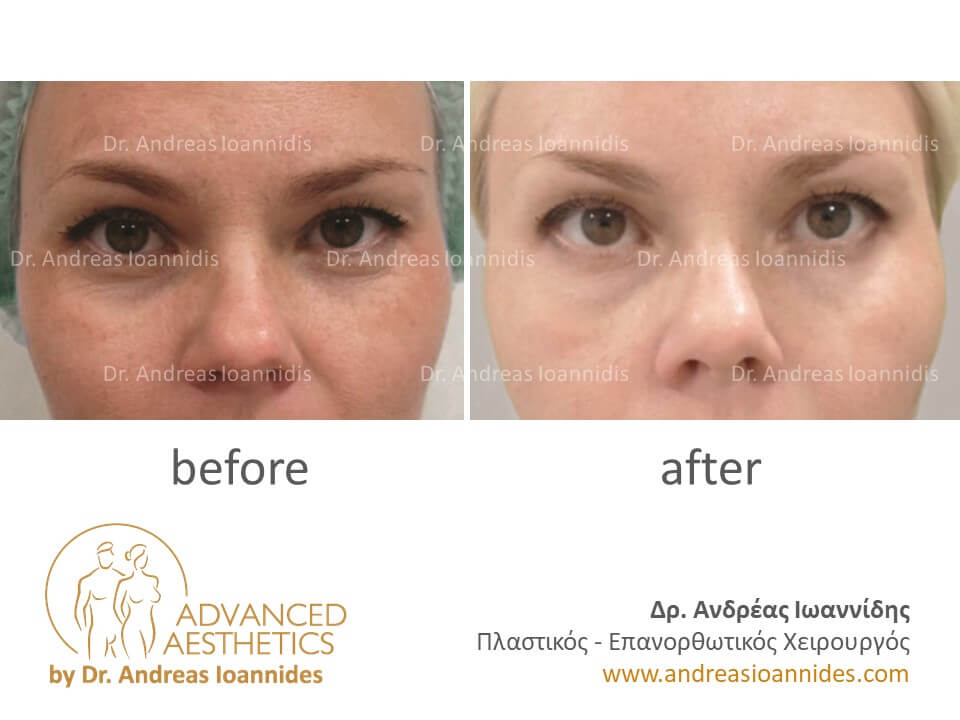
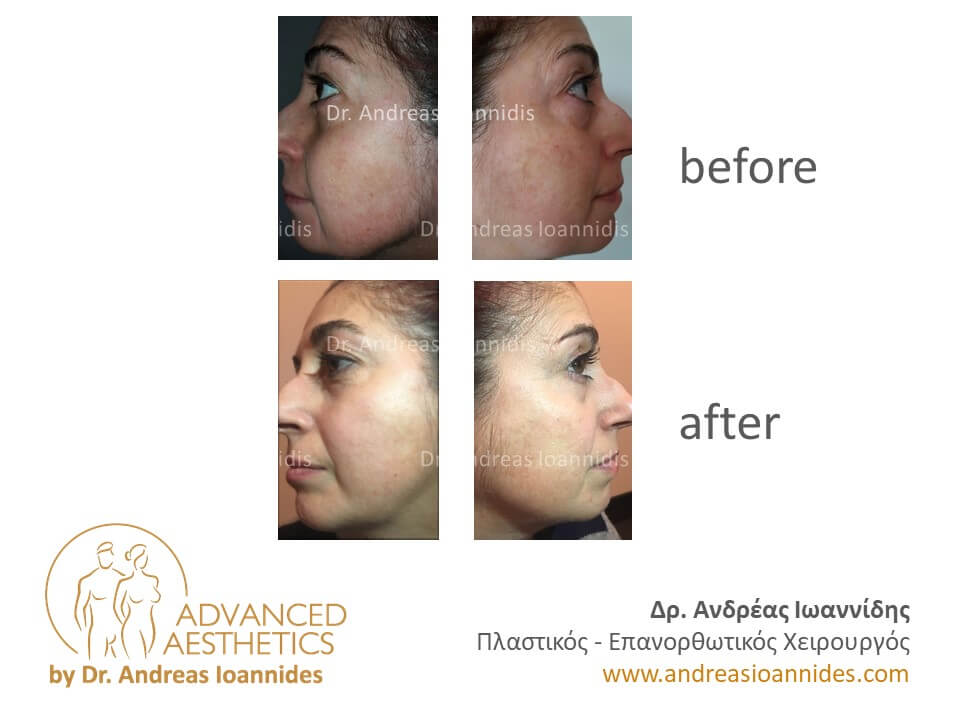
Brightness does not mean changing your skin colour
Skin Brightening with Biomimetic Peptides by Dr Andreas Ioannides
The aim is for the skin to appear:
- more even,
- brighter,
- better hydrated,
- smoother,
- healthier.
We do not want a different skin colour. We want better skin quality and a clearer, more uniform tone.
Would you like to know which treatment is right for your pigmentation?
During your personal consultation, Dr Andreas Ioannides will assess:
- the type of pigmentation,
- its depth,
- sun exposure,
- skin phototype,
- skin quality,
- the presence of melasma,
- previous treatments,
- your desired result.
The most appropriate approach may then include:
Mesotherapy with Biomimetic Peptides, medical skincare, chemical peel, laser or a combination of treatments.
Frequently Asked Questions About Hyperpigmentation & Skin Brightening
It is increased melanin production or accumulation that creates darker areas on the skin.
They are short amino-acid chains used in selected treatments to support specific cellular functions.
In selected patients, it may be used as part of a programme to improve skin tone and overall skin quality.
It may be used as part of selected protocols, but melasma usually requires long-term and combination-based management.
An initial course of approximately 2–3 sessions may be recommended, but the number is personalised.
Usually around 15–20 minutes.
Radiance and skin quality may improve gradually during the treatment course, while pigmentation may require more time.
Not necessarily. Hyperpigmentation may recur, particularly with sun exposure or hormonal influences.
Yes. Consistent photoprotection is an essential part of both treatment and prevention.
In appropriately selected patients and with a suitable product, treatment may be considered for the under-eye area.
Usually limited, although temporary redness, mild swelling or bruising may occur.
The price depends on the product, treatment area, number of sessions and overall treatment plan.
CONTACT

Dr. Andreas Ioannides
Contact us and book an appointment immediately
Choose your appointment by video call or by visiting one of our clinics!

Dr. Andreas Ioannides Executive Plastic Surgery is one of the most complete plastic surgery clinics and the international medical aesthetic medical centers ADVANCED AESTHETICS provide modern medical techniques and aesthetic medical treatments in Greece and Cyprus.
7 Common Myths About Plastic Surgery
Blepharoplasty: When Is It Indicated and What to Expect During Recovery
Rhinoplasty and Breathing: Can Aesthetics and Functionality Be Combined?
September and Plastic Surgery: Why Autumn Can Be a Good Time to Plan an Aesthetic Procedure
September and Aesthetic Treatments: Why It’s the Ideal Time for a Fresh Start
Thinking About Labiaplasty? 10 Things You Should Know Before Moving Forward
Labiaplasty: Everything You Need to Know About the Procedure That Improves Comfort and Confidence
Athens Clinic
T +30.210 9595566
Email: info@andreasioannides.com
Address: Syggrou Ave, 284, Kallithea, Zip 17673 – Athens
Cyprus Clinics
T +357.22335002
Email: info@andreasioannides.com
Athenium International Medical Institute
Address: Giannitson 9 Strovolos, Nicosia 2027, Cyprus
Address: Thiseos 1, Lemesos 3025, Zip 4004 – Cyprus
Copyright © 2022