


Cellulite is one of the most common aesthetic concerns affecting the female body and can appear regardless of body weight or fitness level. Even women with a slim, toned and athletic figure may develop characteristic:
- dimpling,
- uneven skin texture,
- small bulges,
- an “orange-peel” appearance,
- irregular surface contour.
Cellulite most commonly appears in areas such as:
- buttocks,
- thighs,
- outer thighs,
- the area above the knees,
- upper arms,
- other areas with subcutaneous fat.
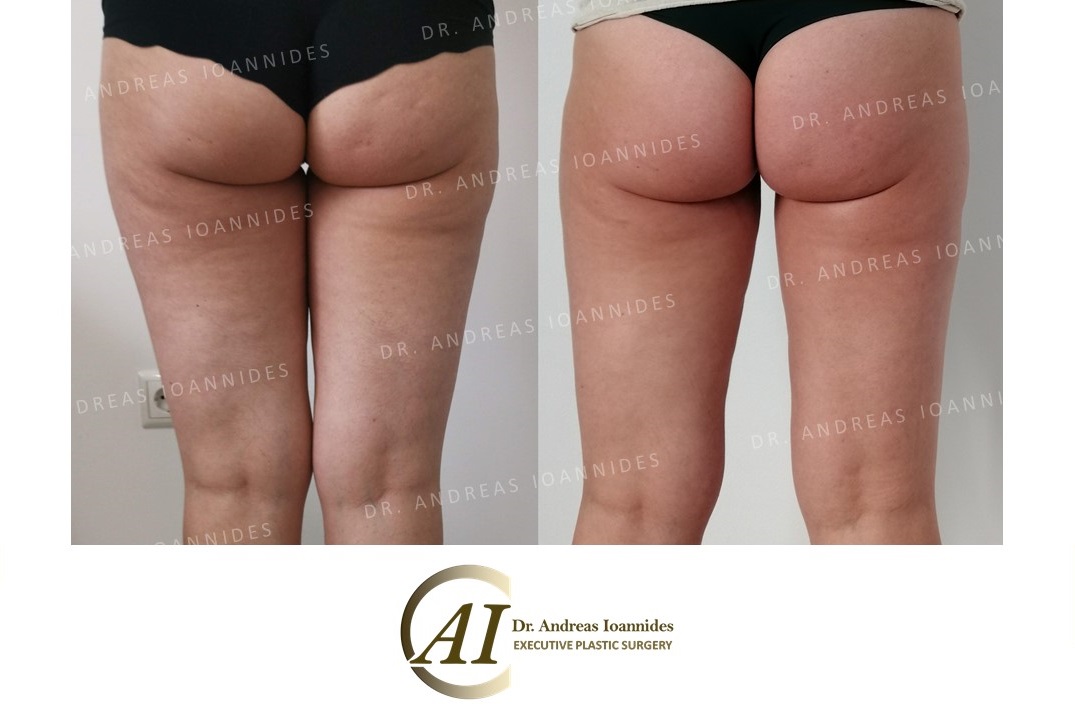
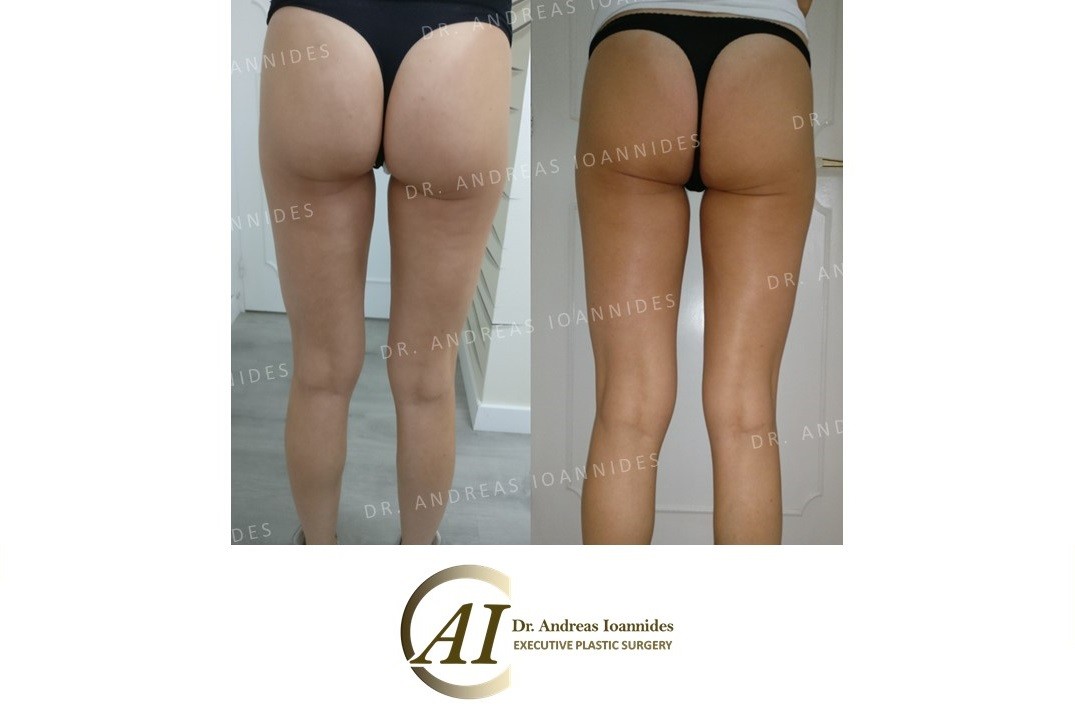
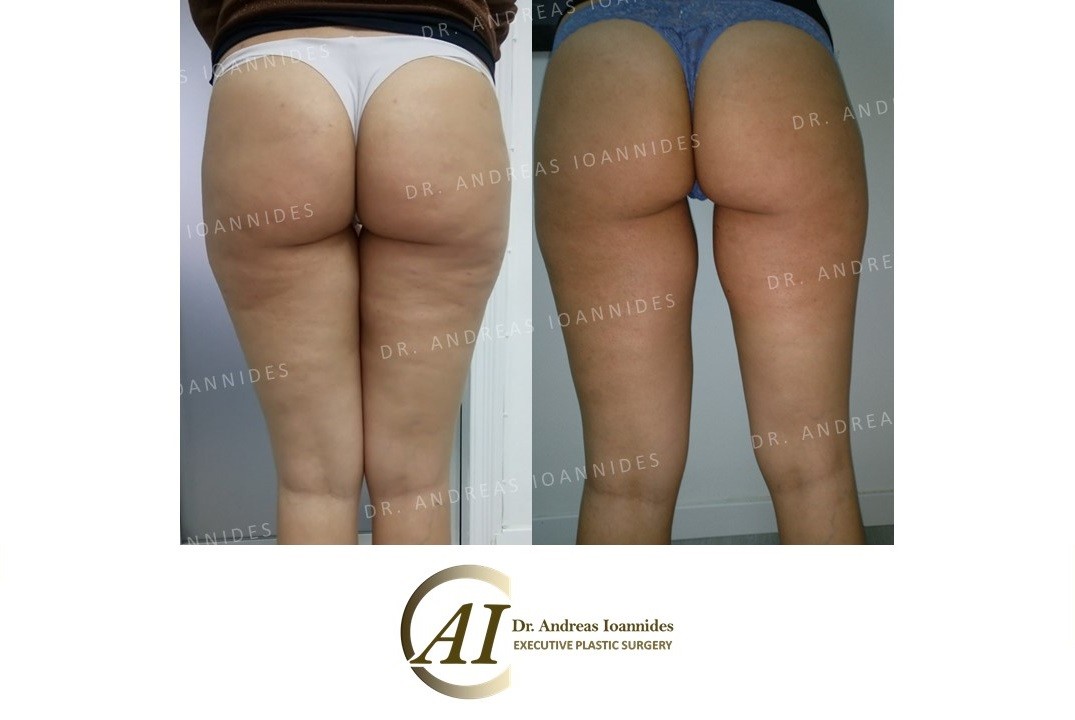
Cellulite Mesotherapy is a minimally invasive injectable approach that may be used in selected patients with the aim of improving skin texture and the overall appearance of the treated area. The goal is not weight loss. The goal is smoother, more even and better-contoured skin.
What is Cellulite?
Cellulite is a multifactorial alteration of the skin surface that creates characteristic dimples and bulges. It is not simply “excess fat”. Its appearance is related to the interaction between:
- the skin,
- subcutaneous fat,
- fibrous septa,
- microcirculation,
- hormonal factors,
- connective tissue quality.
Fibrous bands connecting the skin to deeper tissues may pull the skin downward, while subcutaneous fat can protrude between them. This creates the characteristic uneven appearance associated with cellulite.
Why is Cellulite more common in Women?
Cellulite is much more common in women because of differences in:
- the structure of subcutaneous fat,
- the arrangement of fibrous septa,
- hormonal influences,
- fat distribution,
- connective tissue architecture.
For this reason, cellulite may be present even in women with a normal or low body weight. Cellulite does not necessarily mean that a person has excess weight.
What causes or worsens Cellulite?
Its appearance may be influenced by:
- genetic predisposition,
- hormonal factors,
- age,
- skin quality and elasticity,
- distribution of subcutaneous fat,
- weight fluctuations,
- reduced muscle tone,
- lifestyle,
- photoageing and tissue laxity.
There is usually no single cause.
What is Cellulite Mesotherapy?
Mesotherapy is an injectable technique in which small amounts of selected active substances are delivered into the appropriate layer of the skin or subcutaneous tissue. Depending on the product and indication, the treatment plan may aim to:
- improve skin quality,
- support local microcirculation,
- improve mild localised fat deposits,
- improve texture,
- create a smoother overall appearance.
Mesotherapy should be considered a selected treatment option rather than a universal or permanent solution for every type of cellulite.
How can Mesotherapy help?
In appropriately selected patients, treatment may aim to improve:
- orange-peel texture,
- superficial irregularities,
- skin texture,
- local tissue quality,
- small areas of localised fat,
- the overall appearance of the thighs and buttocks.
The actual result depends on:
- the grade of cellulite,
- the thickness of subcutaneous fat,
- skin laxity,
- skin quality,
- the presence of prominent fibrous septa,
- the product used.
Can Mesotherapy “break” Fibrous Septa?
Fibrous bands, or septa, are an important part of cellulite anatomy. When they are particularly strong and create deep dimples, standard injectable mesotherapy should not be presented as a treatment that completely removes them. In these cases, another technique that targets the fibrous attachments more directly may be more appropriate. The treatment strategy should therefore be based on the dominant anatomical cause of the cellulite.
Mesotherapy for the Buttocks
The buttocks are one of the most common areas affected by cellulite. Treatment may be designed to improve:
- skin smoothness,
- small dimples,
- texture,
- the overall appearance of the area.
When laxity or volume loss is also present, a different or combined treatment may be recommended.
Mesotherapy for the Thighs
Cellulite on the thighs may appear:
- on the posterior thighs,
- on the outer thighs,
- on the inner thighs,
- near the knees.
The treatment plan depends on whether the main concern is:
- cellulite,
- localised fat,
- skin laxity,
- or a combination of factors.
Is Cellulite the same as Localised Fat?
No. Localised fat mainly refers to the amount of adipose tissue. Cellulite refers more to the architecture and surface appearance of the tissues. A patient may have:
- localised fat without significant cellulite,
- cellulite without excess fat,
- or a combination of both.
This is why the two conditions should not automatically be treated in the same way.
Can Cellulite disappear completely?
It is not realistic to promise complete and permanent elimination of cellulite. Cellulite is multifactorial and the response varies significantly between patients. The aim of treatment is:
- visible improvement in texture,
- reduction in the appearance of dimples,
- improved contour,
- a smoother overall skin appearance.
Even with modern treatments, results vary and maintenance may sometimes be needed.
How many sessions are required?
The number of treatments depends on:
- the severity of cellulite,
- the treatment area,
- the product used,
- individual response,
- whether other treatments are combined.
In many protocols, a course of multiple sessions may be recommended. An indicative course may include approximately 5–10 treatments, but the same number should not automatically be used for every patient. The final schedule is determined after assessment.
How long does each session take?
Treatment may take approximately 15–40 minutes, depending on:
- the area,
- the extent of treatment,
- the number of injection points,
- the personalised protocol.
Is Mesotherapy painful?
The treatment is generally well tolerated, but it does involve multiple small injections. Patients may experience:
- mild pinching,
- a slight burning sensation,
- pressure,
- temporary tenderness.
Comfort measures may be used when appropriate.
Is there downtime?
Downtime is usually limited. After treatment, patients may temporarily experience:
- small bruises,
- redness,
- swelling,
- tenderness,
- small bumps at injection points.
Most patients can return relatively quickly to their normal daily activities.
When will I see results?
Improvement is gradual. The result is not usually judged after the first session. As the treatment course progresses, patients may notice:
- smoother skin texture,
- improved surface appearance,
- reduced visibility of some dimples,
- better overall tissue quality.
The final outcome depends on the starting condition and the individual response.
Can it be combined with other treatments?
Yes. Cellulite often benefits from a combination approach because several anatomical factors may coexist. Depending on the case, treatment may be combined with:
- radiofrequency,
- skin-tightening treatments,
- ultrasound-based treatments,
- lymphatic support,
- liposuction in selected cases of localised fat,
- techniques targeting fibrous septa,
- B.R.F. Protocol,
- FRBR + Argon,
- other body-contouring procedures.
The combination is selected according to the actual anatomical problem, not simply by combining as many technologies as possible.
Liposuction and Cellulite
Liposuction is highly effective for localised fat, but it is not by itself a treatment for every type of cellulite. In some patients, it may improve the overall contour. In others, if cellulite is mainly caused by fibrous bands or skin laxity, another approach may be needed. For this reason, combination treatment must be planned individually.
Do Diet and Exercise help?
Cellulite can be present even in very slim and athletic individuals. However, maintaining:
- stable body weight,
- good muscle tone,
- balanced nutrition,
- adequate hydration,
- regular physical activity,
may contribute to overall appearance and help maintain the result. Exercise does not necessarily “cure” cellulite, but it can support overall body contour and tissue quality.
Who is a suitable candidate?
Cellulite Mesotherapy may be suitable for women and men who:
- have mild to moderate cellulite,
- want smoother skin texture,
- have small surface irregularities,
- prefer a non-surgical approach,
- have realistic expectations,
- are able to follow a treatment course.
Final suitability is determined after medical assessment.
When may another treatment be more appropriate?
When there is:
- deep or severe cellulite,
- significant fibrous tethering,
- marked skin laxity,
- a large amount of localised fat,
- excess skin,
mesotherapy alone may not be enough. In these cases, a different or combined approach may be recommended.
Is Mesotherapy safe?
Mesotherapy is a medical injectable procedure and is not completely risk-free. Possible adverse effects may include:
- redness,
- swelling,
- bruising,
- pain,
- inflammatory reaction,
- nodules,
- infection,
- allergic reaction.
Safety depends on:
- the product used,
- the correct indication,
- technique,
- sterile conditions,
- proper medical assessment.
Why choose Dr Andreas Ioannides?
Cellulite should not be treated in the same way in every patient. Before planning treatment, it is important to determine whether the main concern is:
- fibrous dimpling,
- localised fat,
- skin laxity,
- skin quality,
- or a combination of these.
Dr Andreas Ioannides, Plastic, Aesthetic & Reconstructive Surgeon, evaluates:
- the grade of cellulite,
- fat distribution,
- skin quality,
- laxity,
- fibrous tethering,
- overall body proportions,
- the desired result.
The most appropriate approach can then be selected. There is no single cellulite treatment for everyone. There is the right treatment for your type of cellulite.
How long do the results last?
Duration depends on:
- the type of cellulite,
- its severity,
- skin quality,
- weight,
- age,
- lifestyle,
- the treatment used.
Cellulite may become more visible again over time. For this reason, maintenance sessions may be recommended in selected patients.
How much does Cellulite Mesotherapy cost?
The cost varies according to the personalised treatment plan. The final price depends on:
- the treatment area,
- the extent of cellulite,
- the product used,
- the number of sessions,
- whether more than one area is treated,
- whether combination treatments are included.
The exact price is determined after a personal consultation.
Cellulite is not simply about weight.
Cellulite Mesotherapy by Dr Andreas Ioannides A slim woman may have pronounced cellulite. A woman with a higher body weight may have much less. This is why cellulite should not be assessed by looking only at the scale. We evaluate:
- the skin,
- subcutaneous fat,
- fibrous bands,
- laxity,
- overall anatomy.
The goal is smoother skin texture and a better body appearance — not an unrealistic promise of “perfect” skin.
Would you like to know which Cellulite Treatment is right for you?
During your personal consultation, Dr Andreas Ioannides will assess:
- the treatment area,
- the severity of cellulite,
- the depth of dimples,
- the presence of localised fat,
- skin laxity,
- skin quality,
- your desired result.
The most appropriate treatment may then include: Mesotherapy, skin-tightening technologies, fibrous-septa treatments, body contouring or a combination of techniques.
Frequently Asked Questions About Cellulite
Cellulite is a multifactorial alteration of the skin surface that creates dimples and uneven texture, most commonly on the thighs and buttocks.
Not exactly. Subcutaneous fat plays a role, but fibrous septa and skin structure are also important.
Yes. It is very common and is not directly related only to body weight.
In selected patients, it may improve the appearance and texture of the treated area, but effectiveness depends on the type of cellulite.
A course of multiple treatments may be required, often around 5–10 sessions, although the number is personalised.
Usually around 15–40 minutes, depending on the area.
The treatment involves micro-injections and may cause mild discomfort, burning or tenderness.
Usually limited. Temporary bruising, redness or swelling may occur.
Complete elimination cannot be guaranteed. The aim is meaningful aesthetic improvement in texture and dimpling.
Liposuction mainly treats localised fat and does not by itself correct every type of cellulite.
Yes. Depending on the problem, it may be combined with tightening treatments, techniques targeting fibrous septa and other body-contouring approaches.
The price depends on the treatment area, number of sessions, product used and any combination treatments.
CONTACT

Dr. Andreas Ioannides
Contact us and book an appointment immediately
Choose your appointment by video call or by visiting one of our clinics!

Dr. Andreas Ioannides Executive Plastic Surgery is one of the most complete plastic surgery clinics and the international medical aesthetic medical centers ADVANCED AESTHETICS provide modern medical techniques and aesthetic medical treatments in Greece and Cyprus.
Dr. Andreas Ioannidis at the 16th Panhellenic Congress of Plastic, Reconstructive & Aesthetic Surgery
7 Common Myths About Plastic Surgery
Blepharoplasty: When Is It Indicated and What to Expect During Recovery
Rhinoplasty and Breathing: Can Aesthetics and Functionality Be Combined?
September and Plastic Surgery: Why Autumn Can Be a Good Time to Plan an Aesthetic Procedure
September and Aesthetic Treatments: Why It’s the Ideal Time for a Fresh Start
Thinking About Labiaplasty? 10 Things You Should Know Before Moving Forward
Athens Clinic
T +30.210 9595566
Email: info@andreasioannides.com
Address: Syggrou Ave, 284, Kallithea, Zip 17673 – Athens
Cyprus Clinics
T +357.22335002
Email: info@andreasioannides.com
Athenium International Medical Institute
Address: Giannitson 9 Strovolos, Nicosia 2027, Cyprus
Address: Thiseos 1, Lemesos 3025, Zip 4004 – Cyprus
Copyright © 2022