


Reshaping the Nose Without Surgery Through a Personalised Injectable Approach
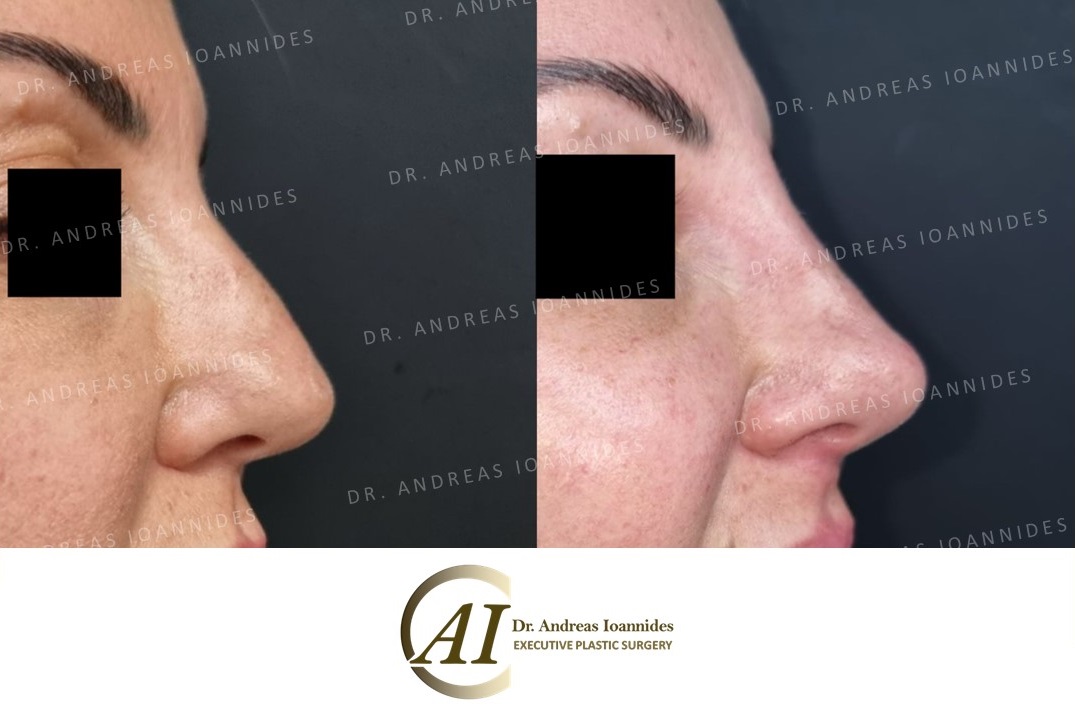
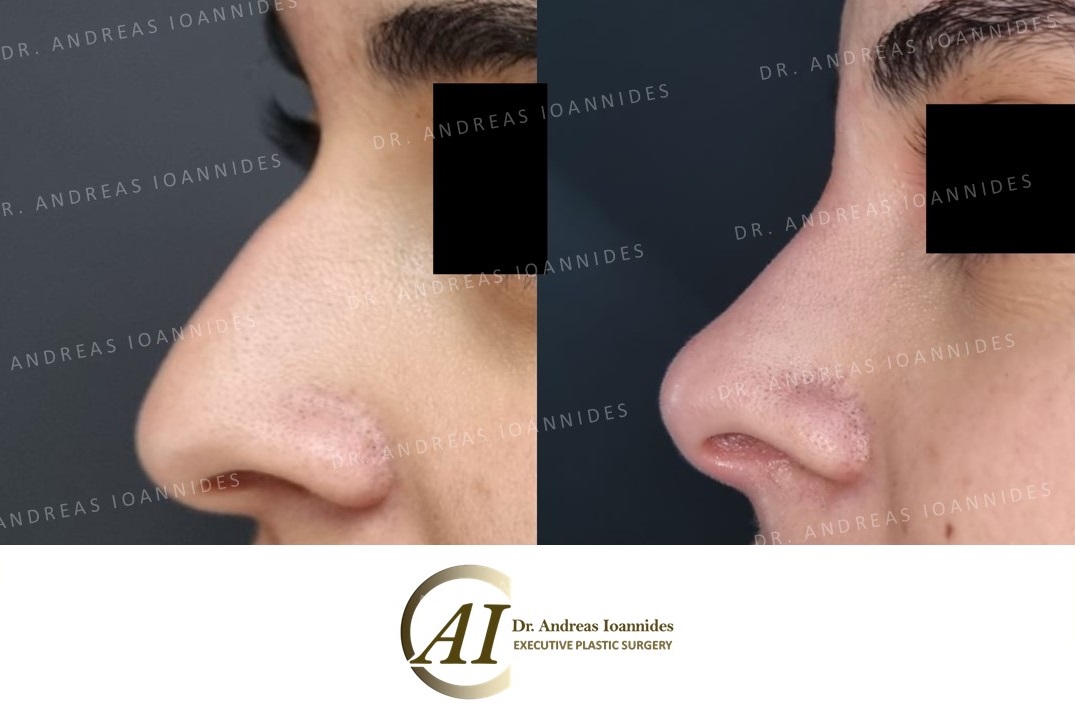
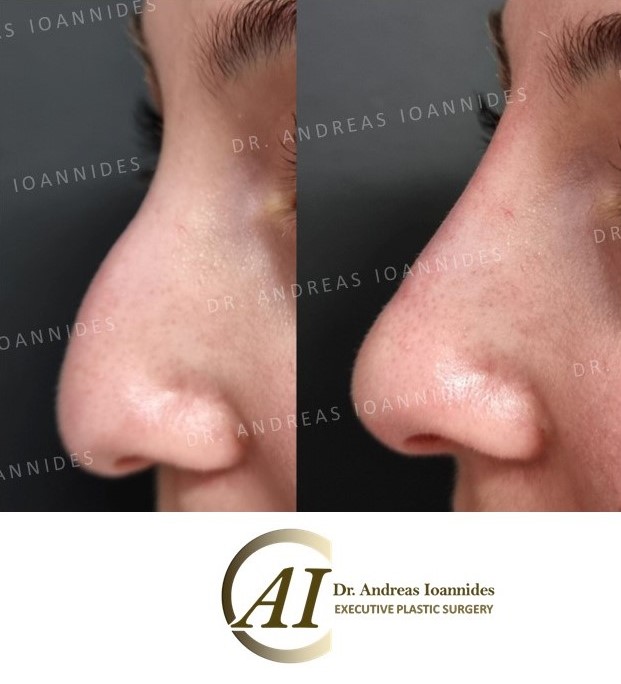
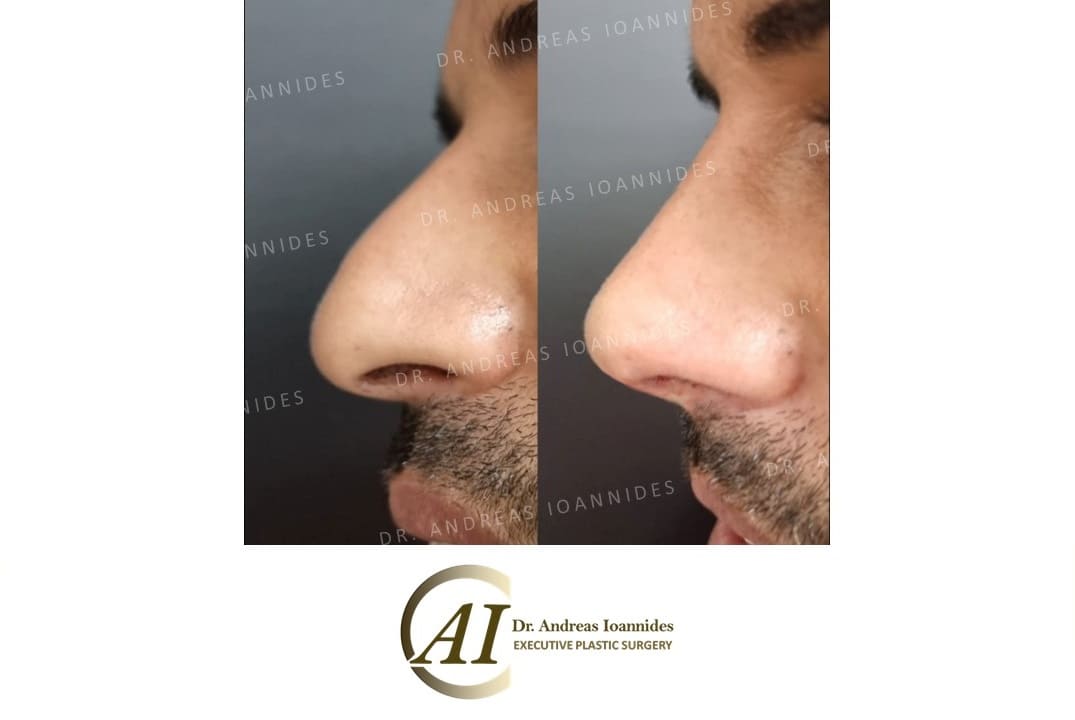
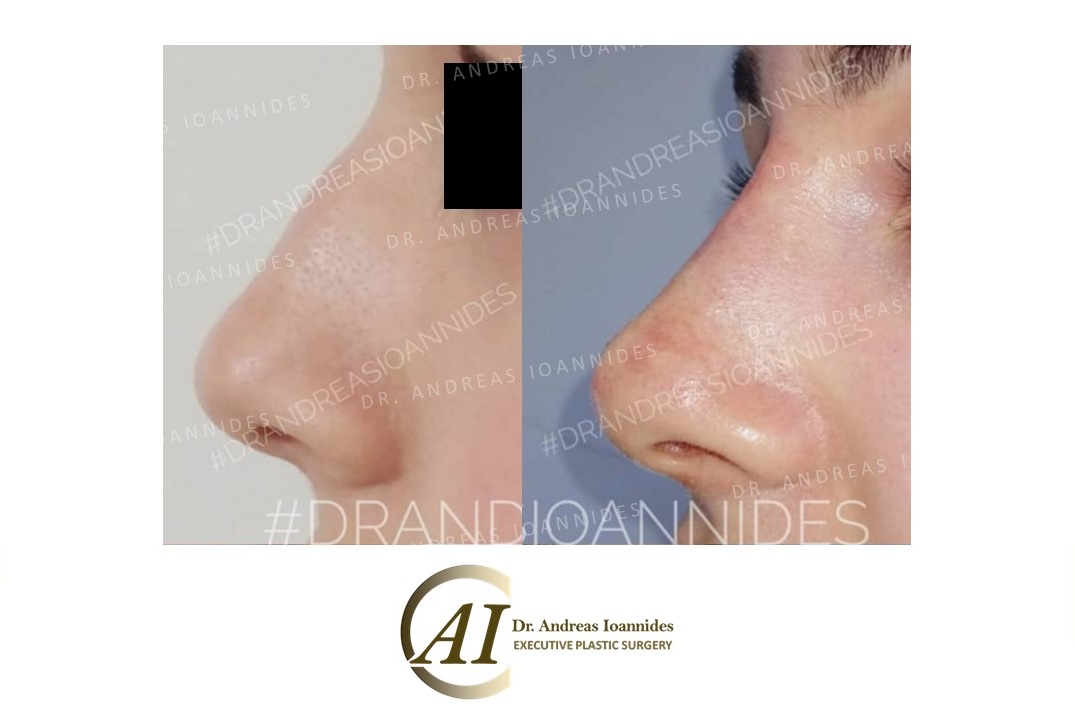
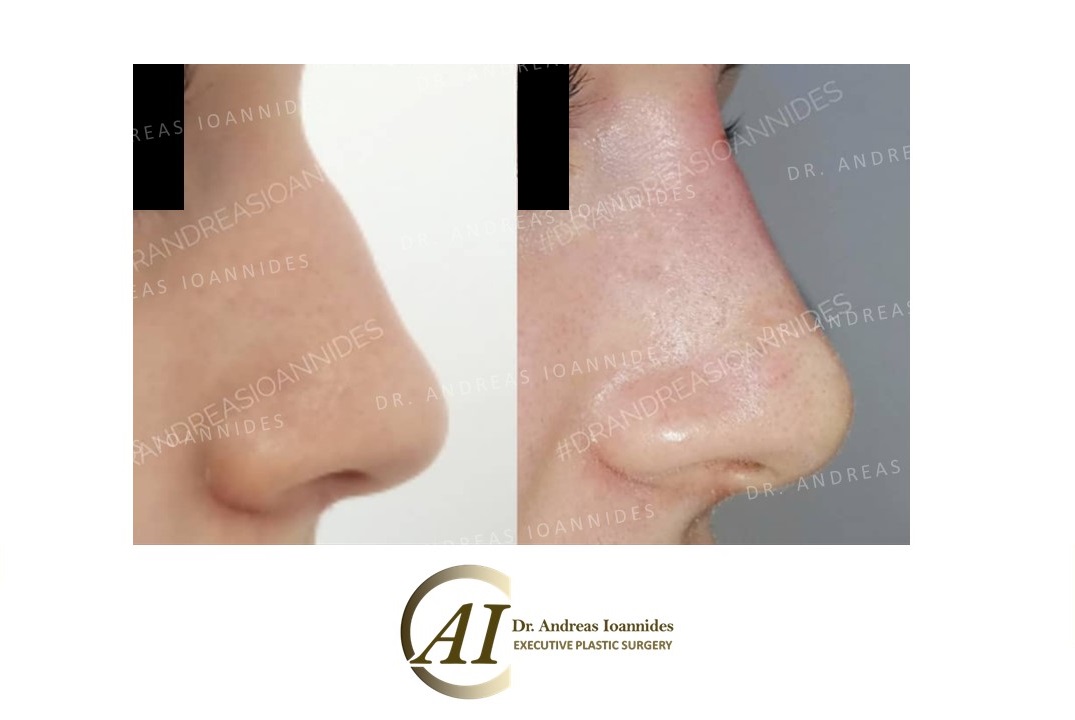
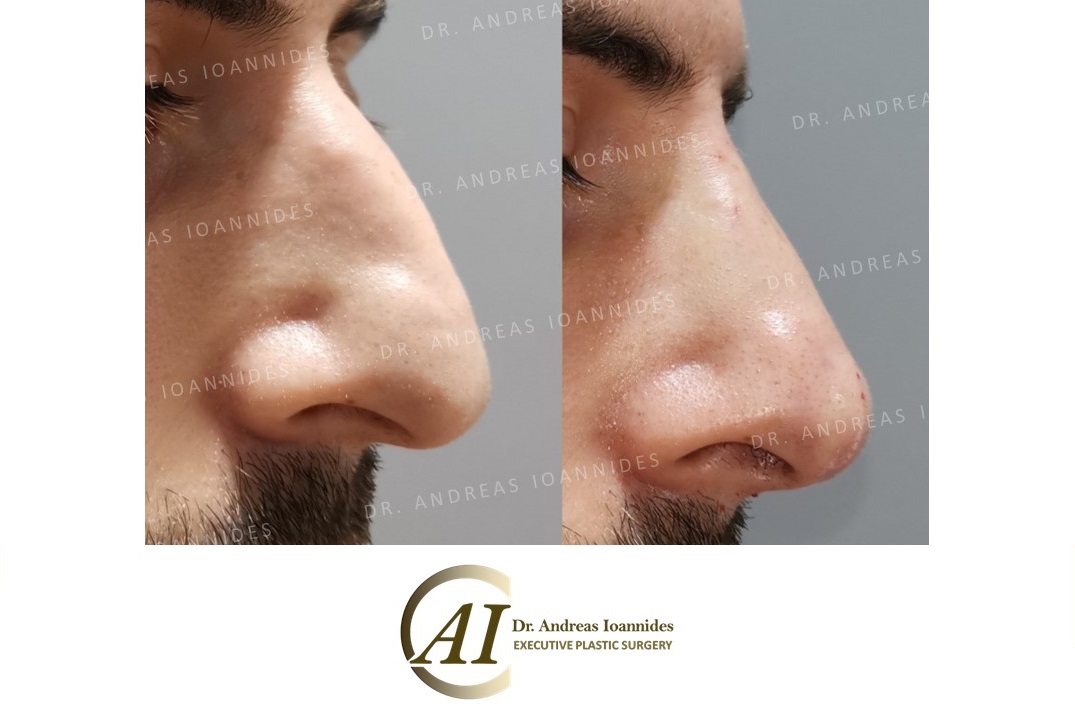
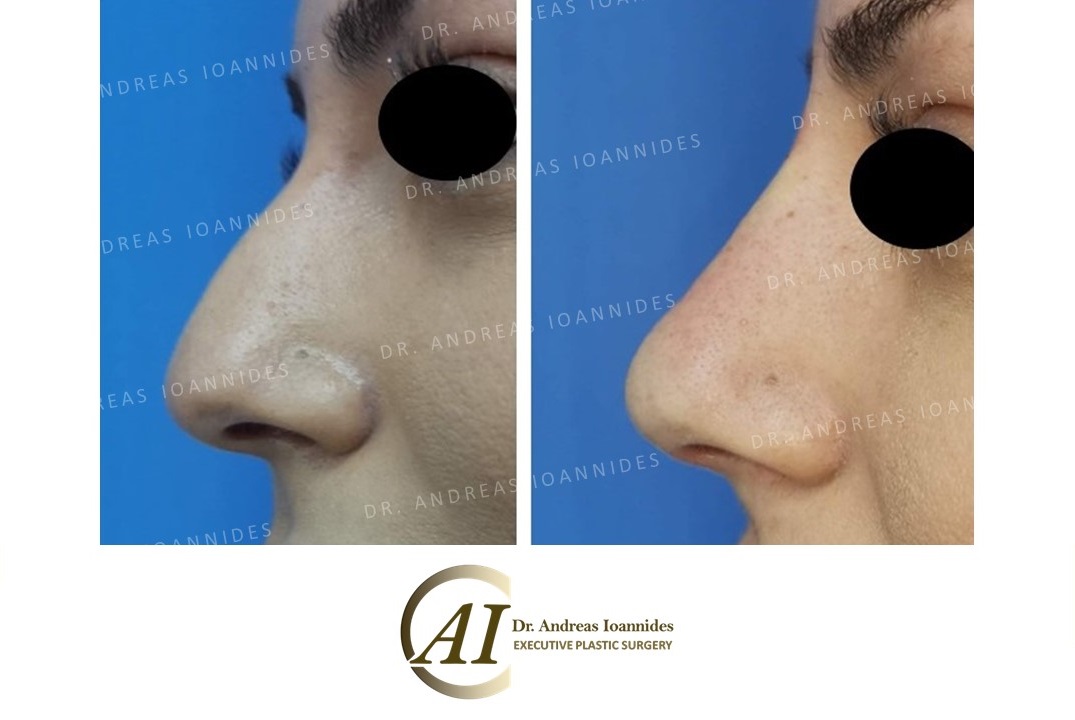
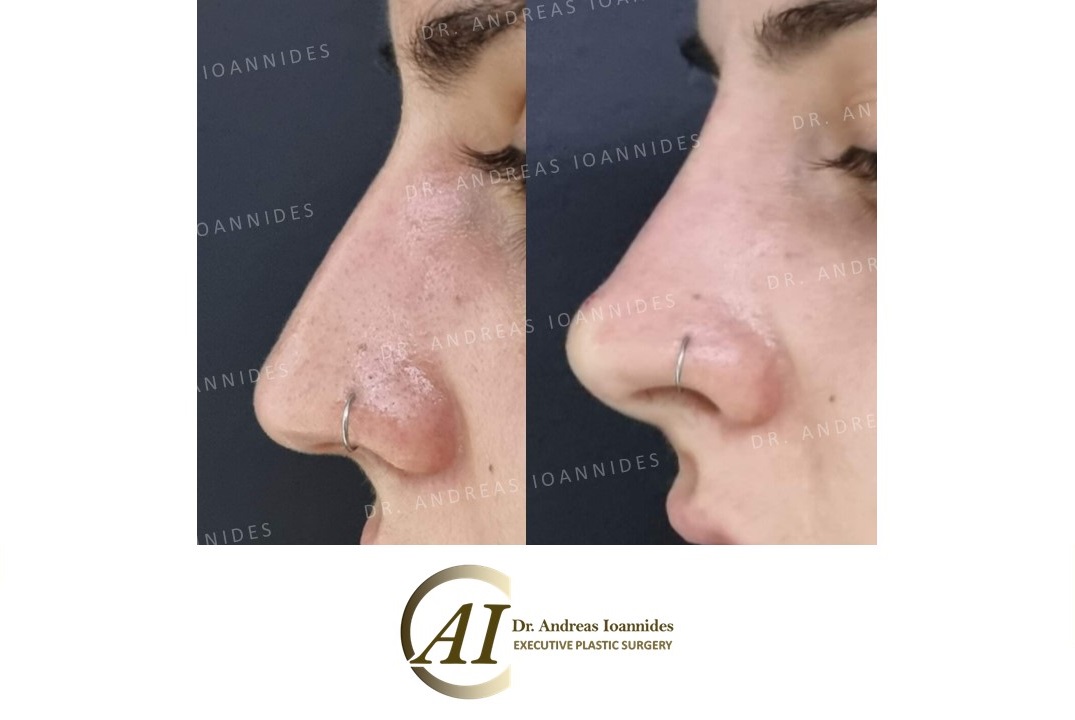
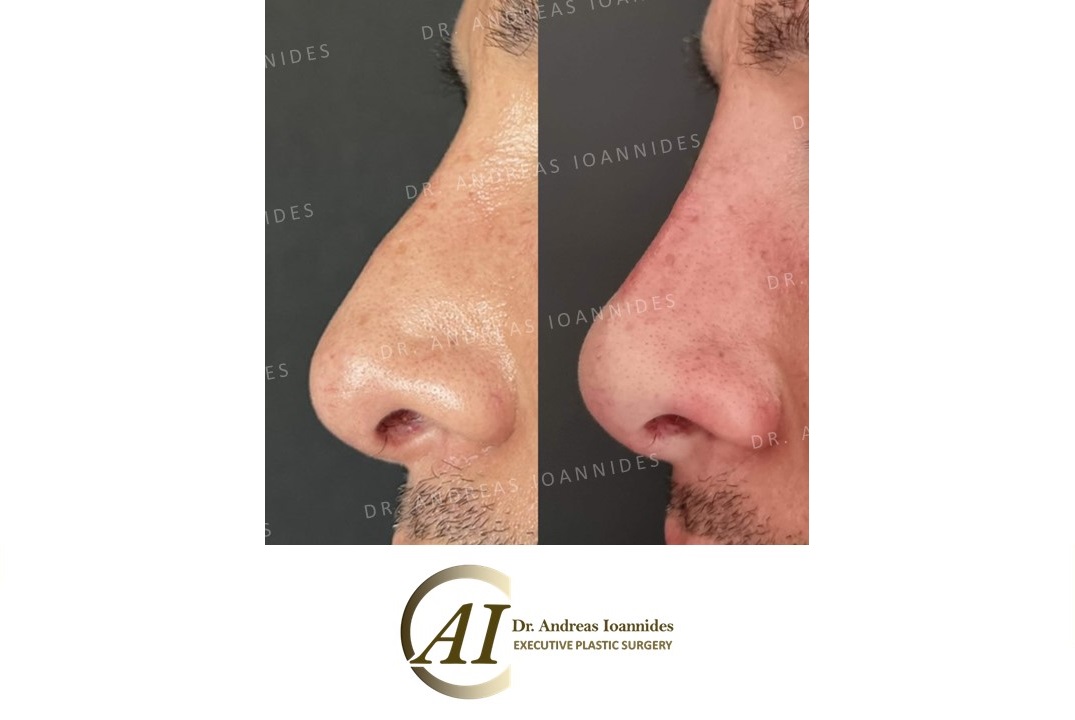
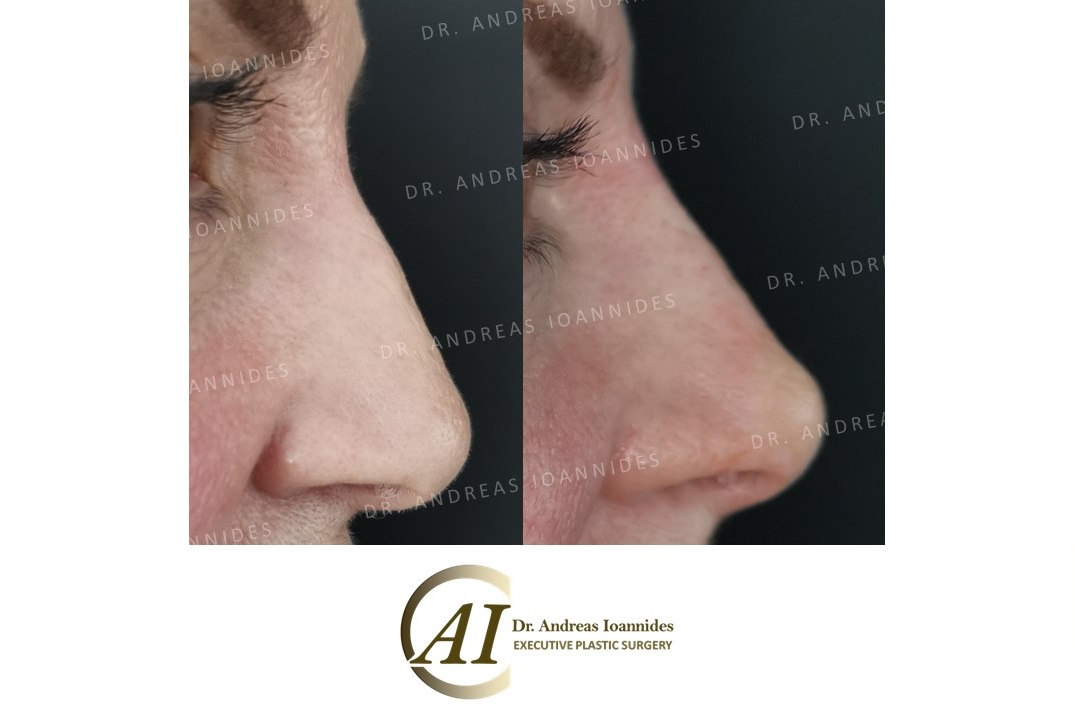
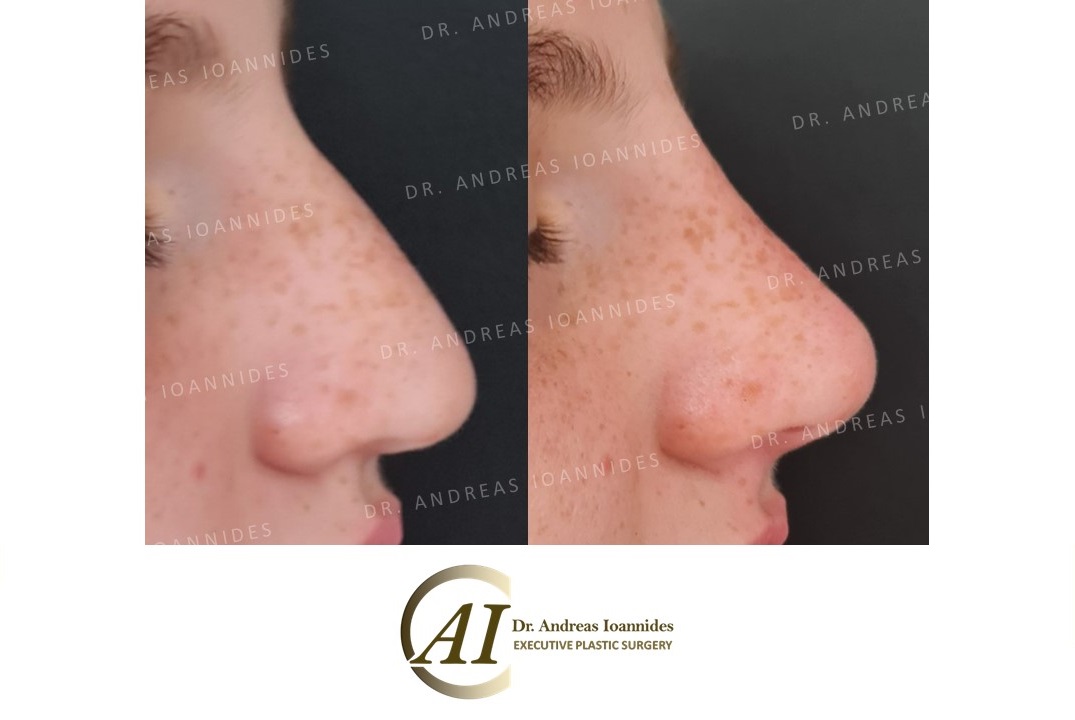
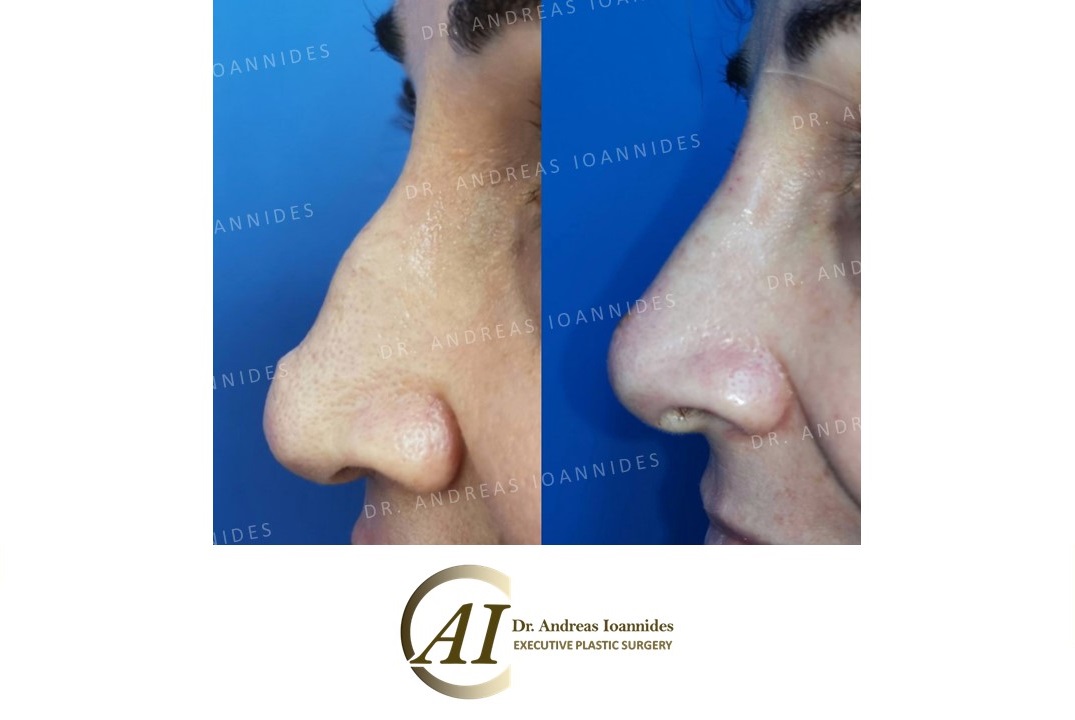
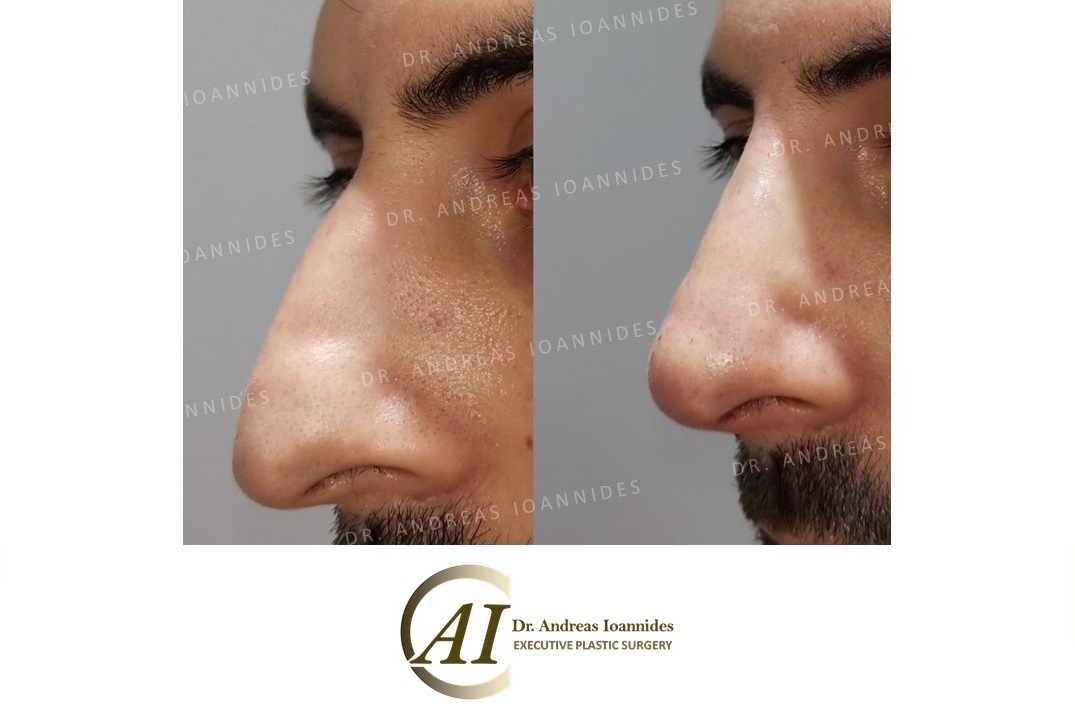
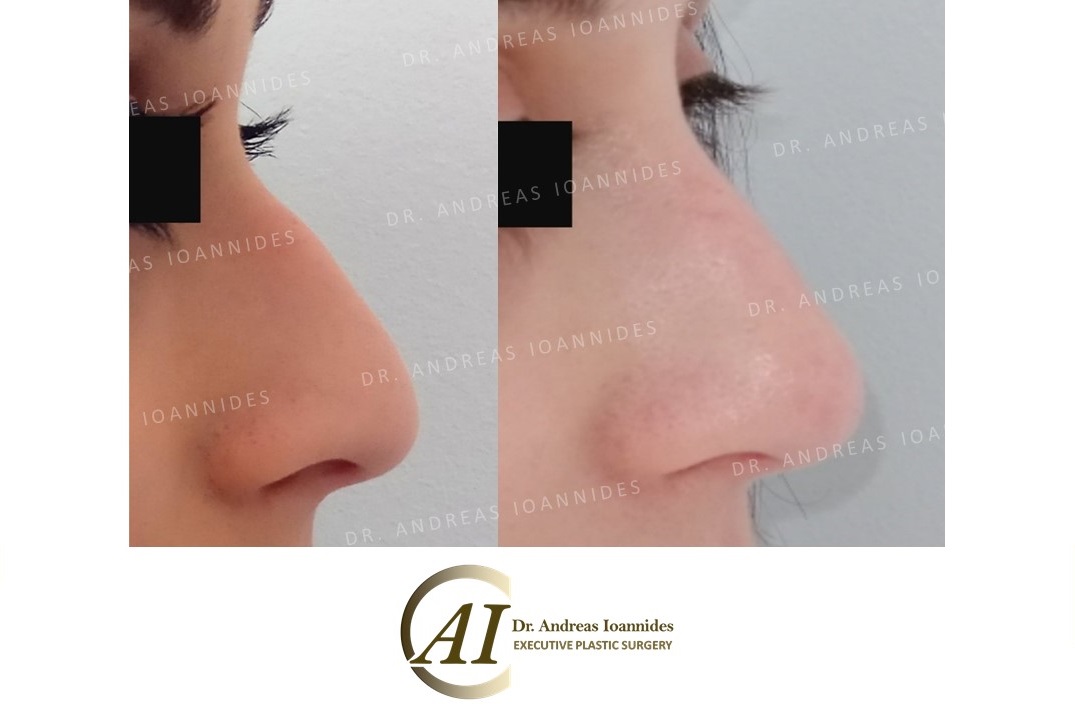
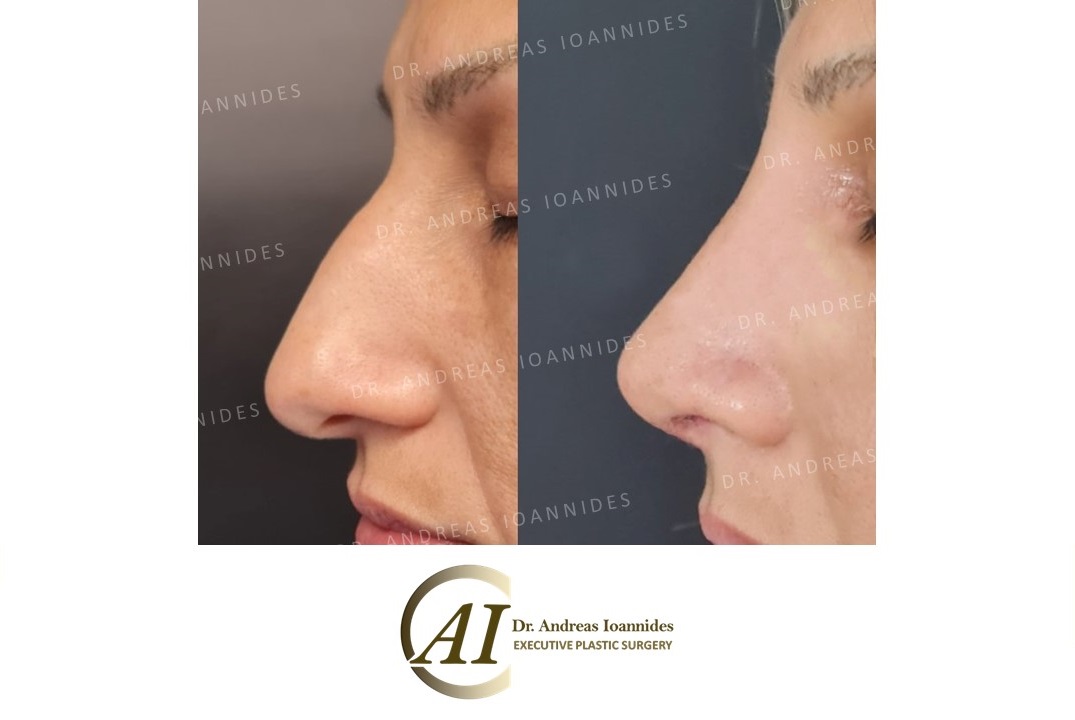
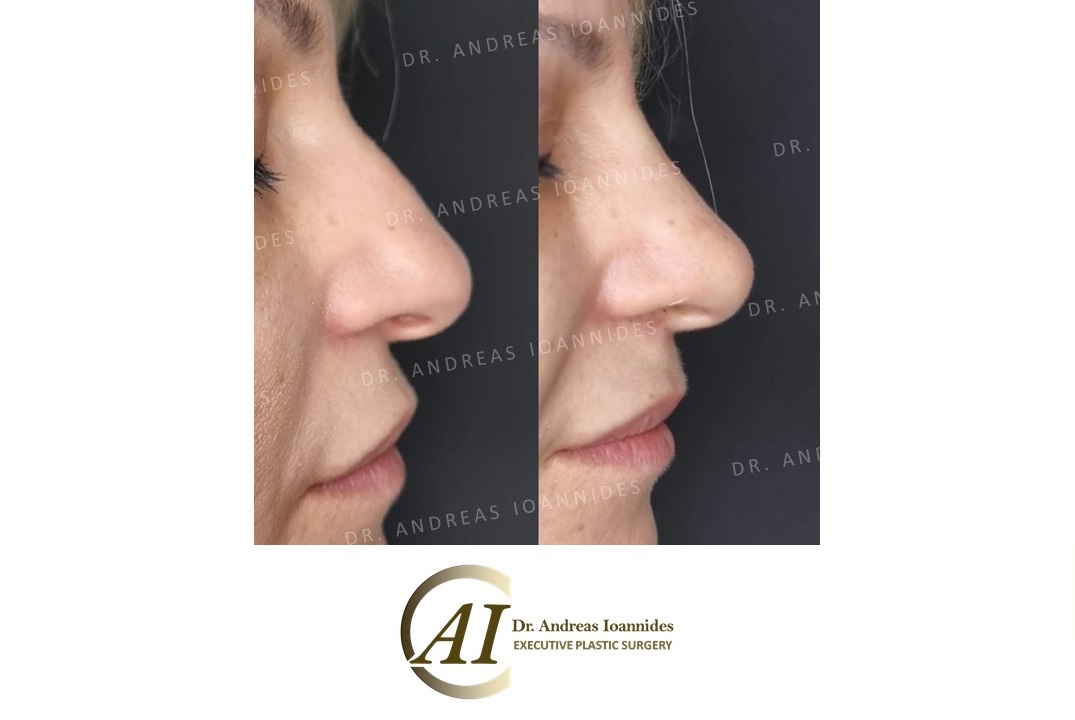
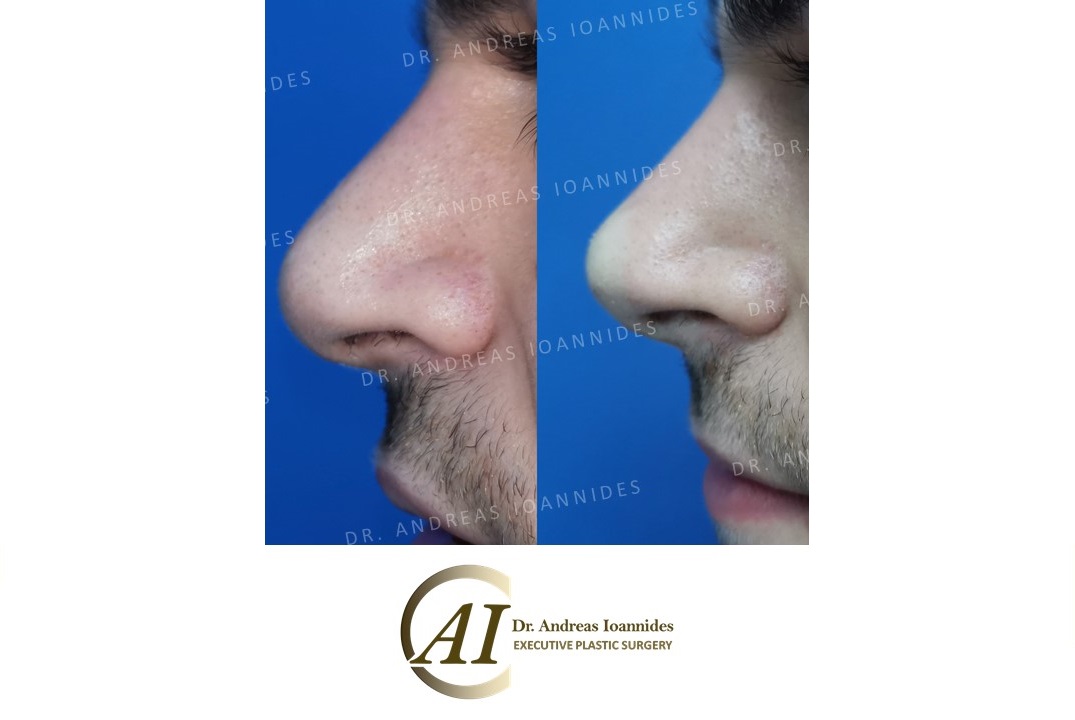
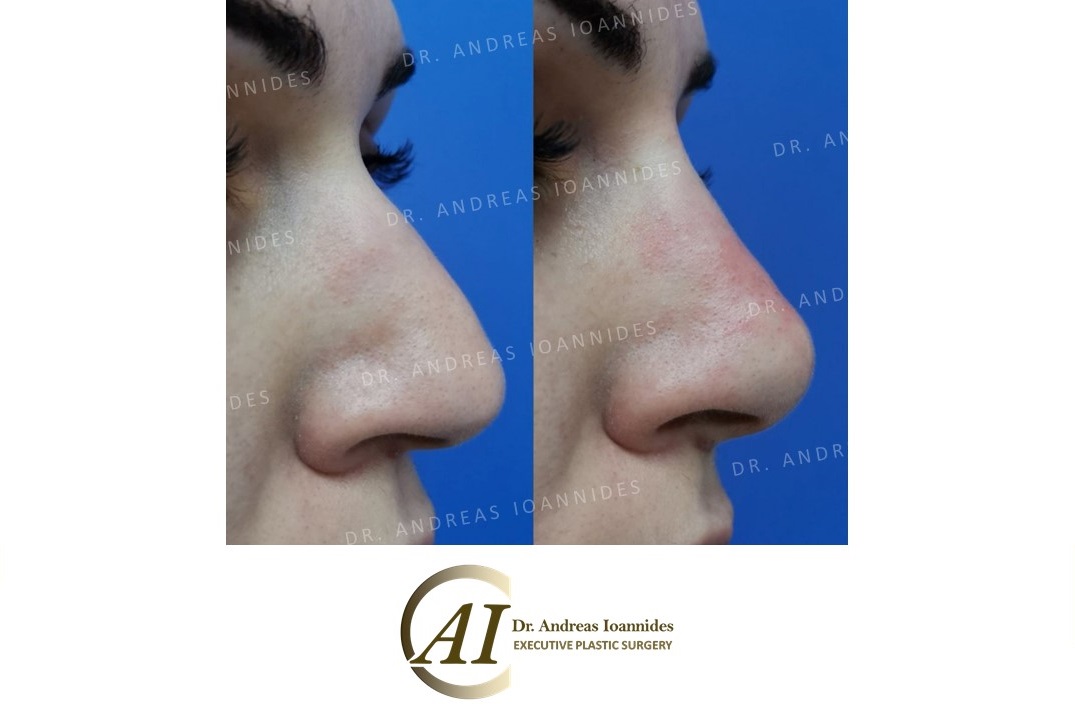
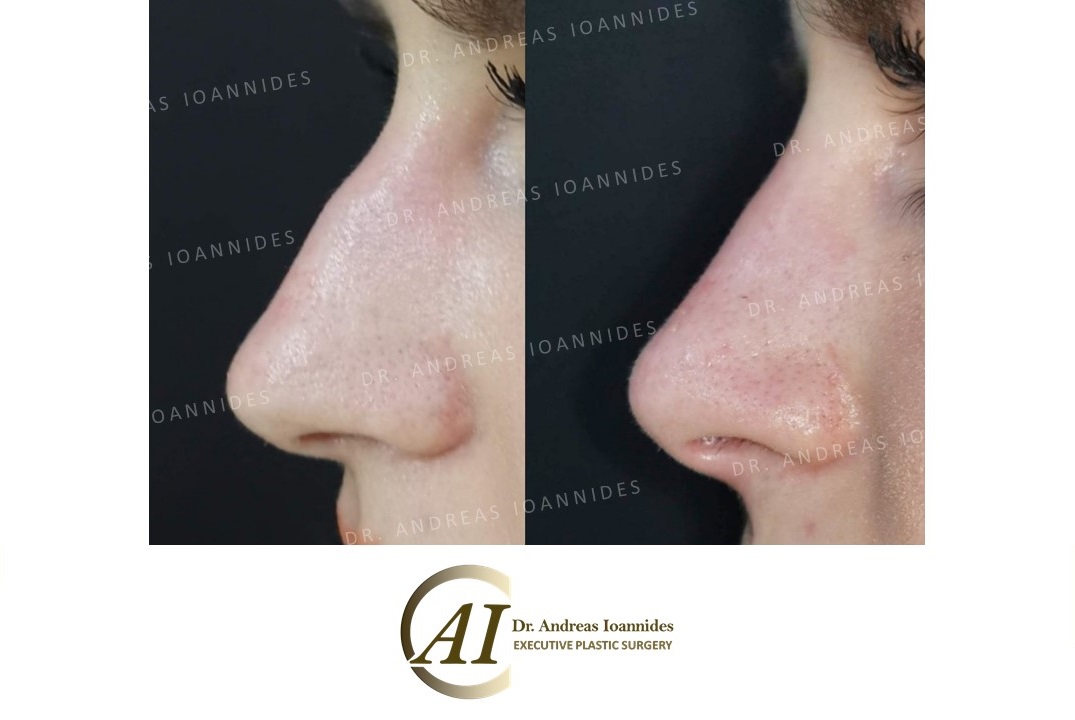
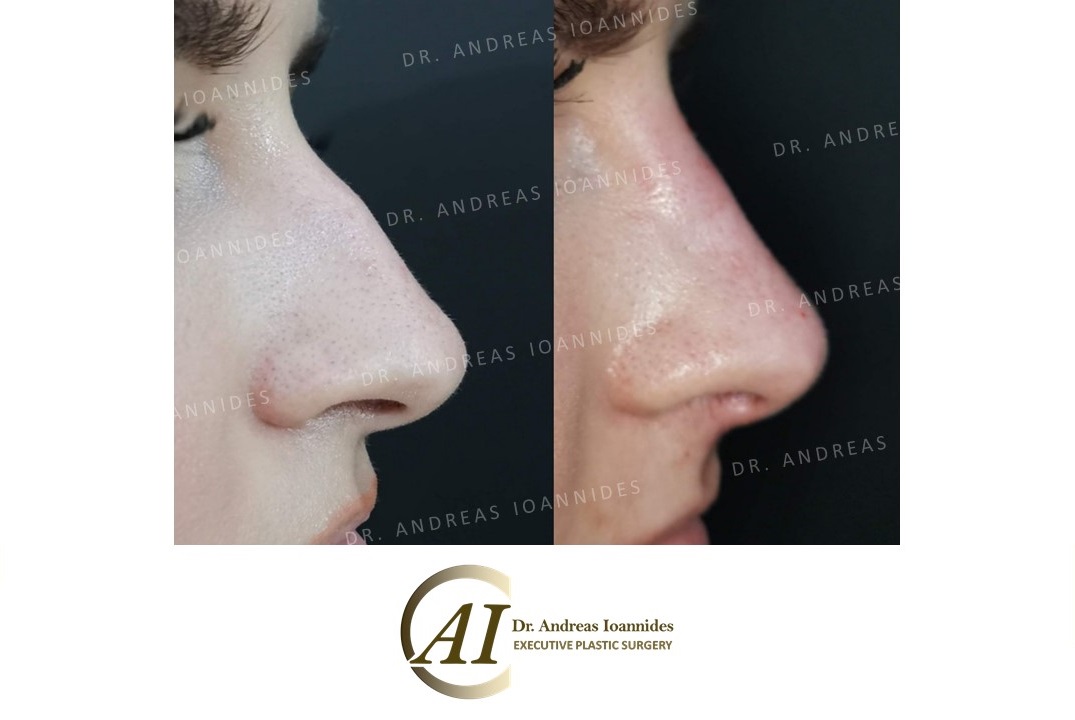
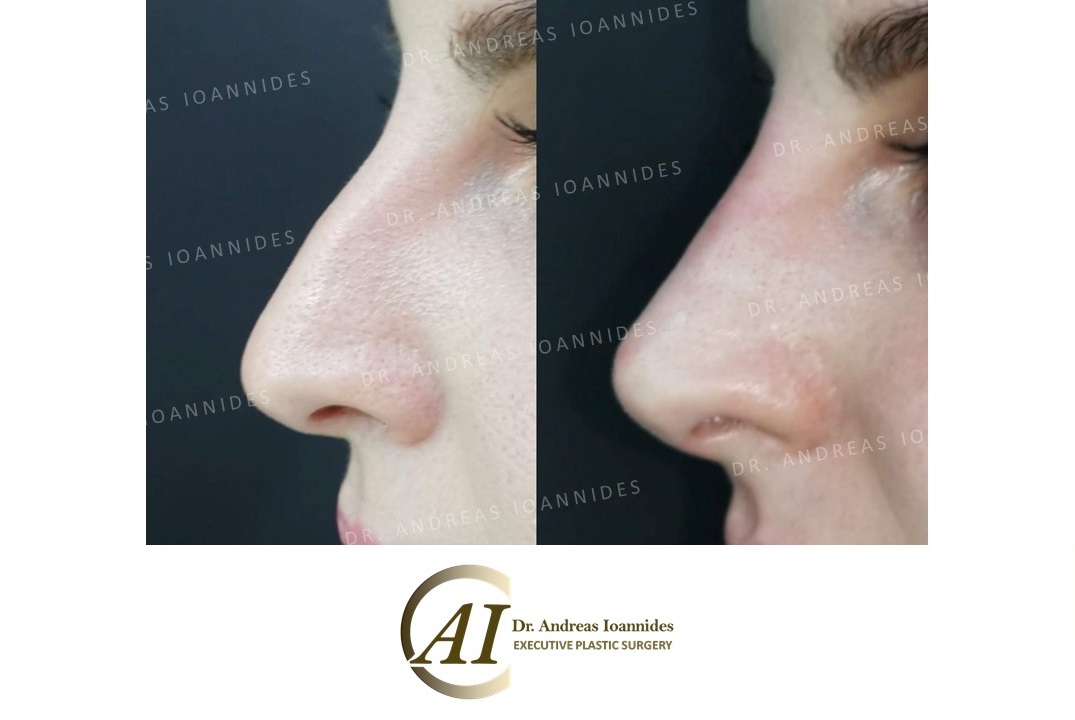
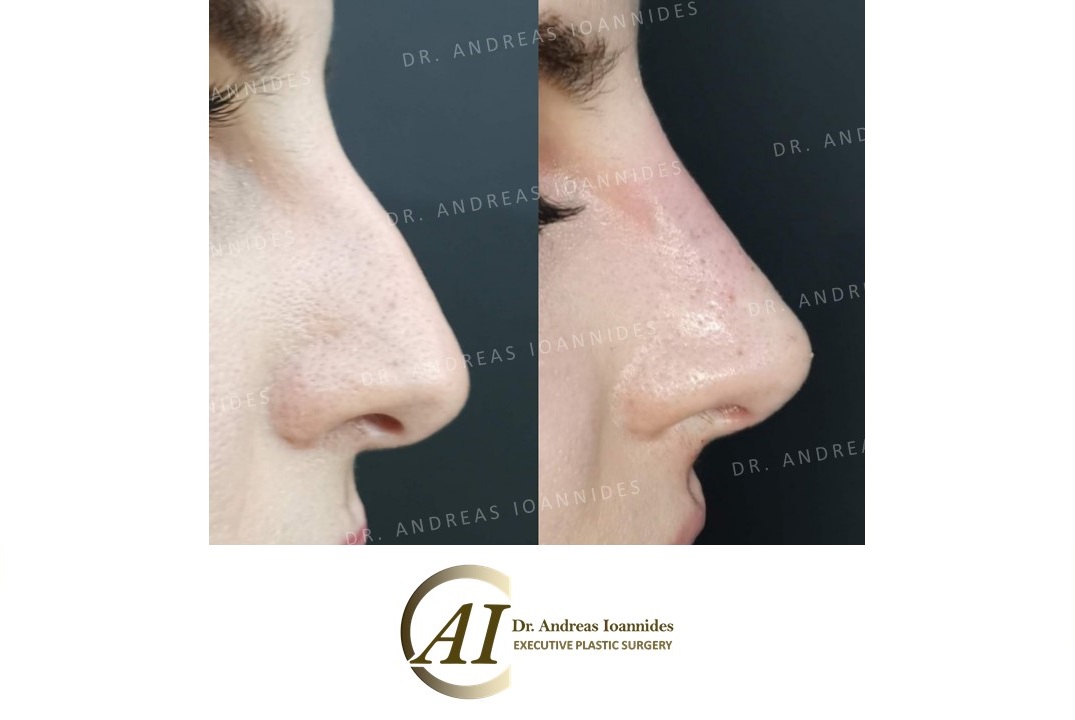
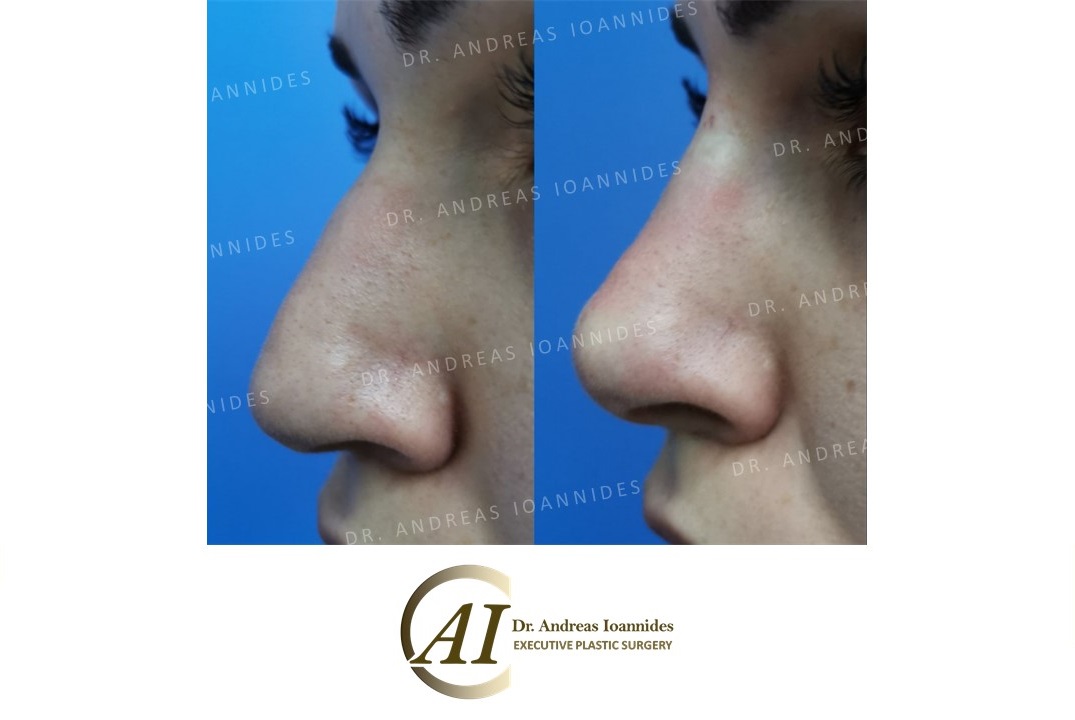
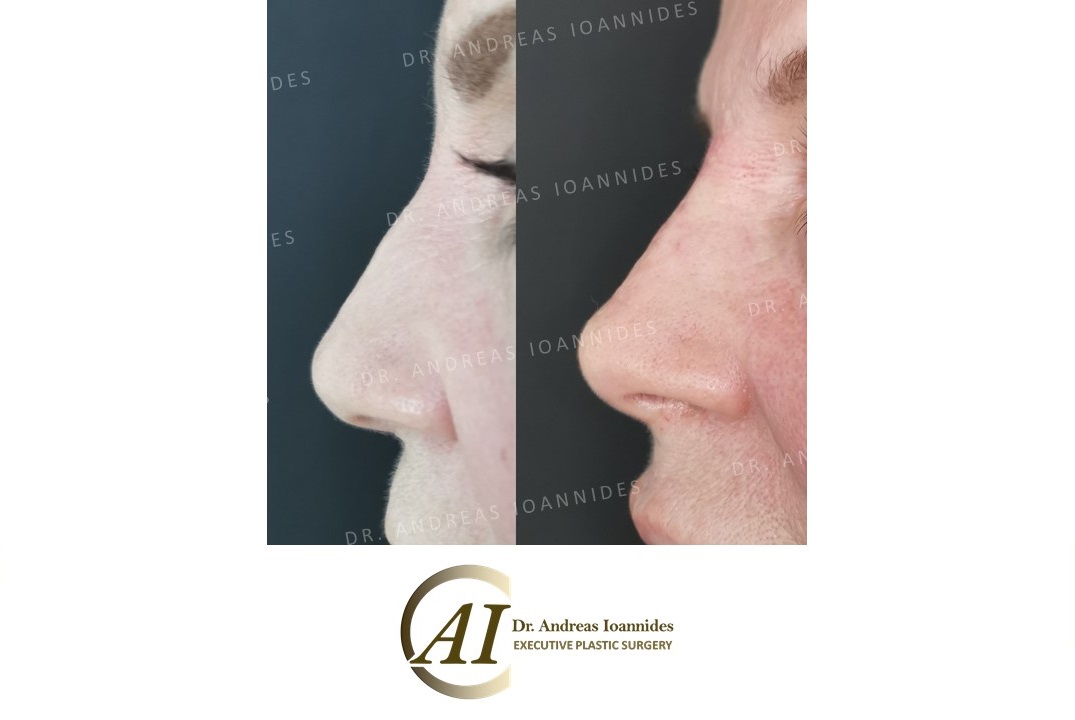
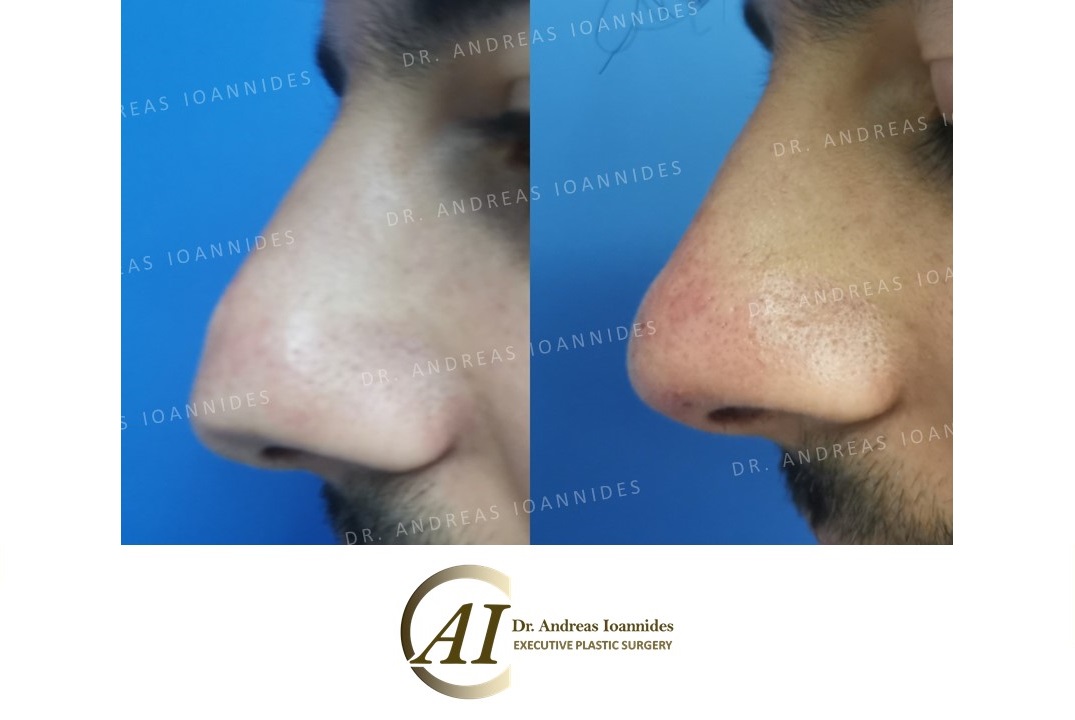
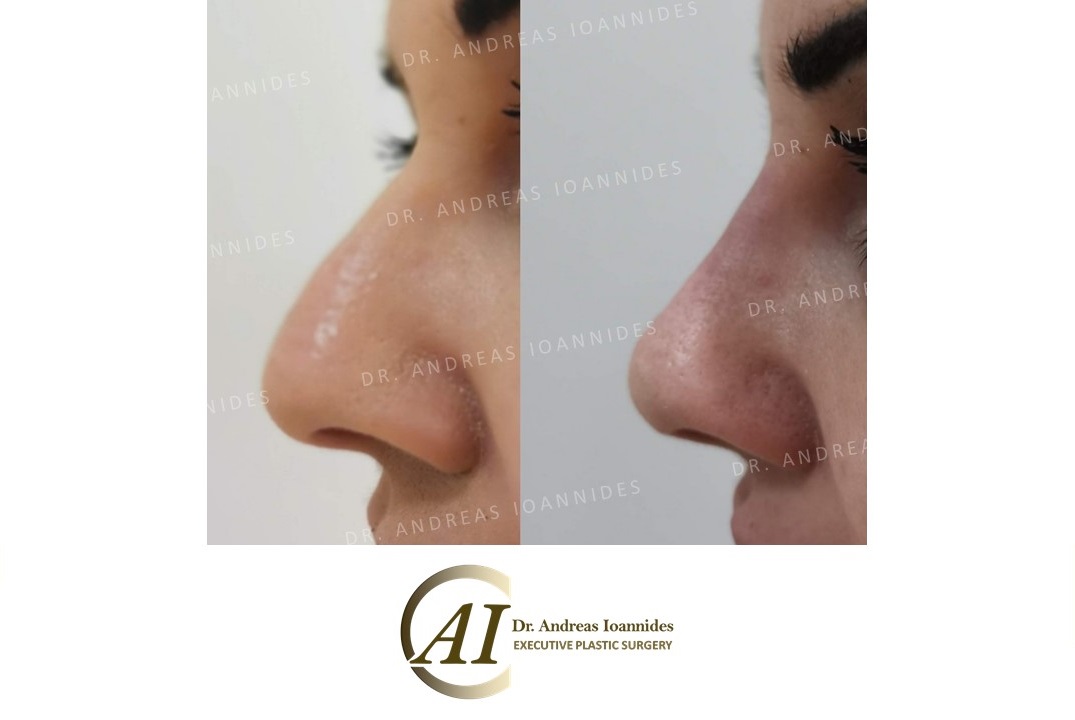
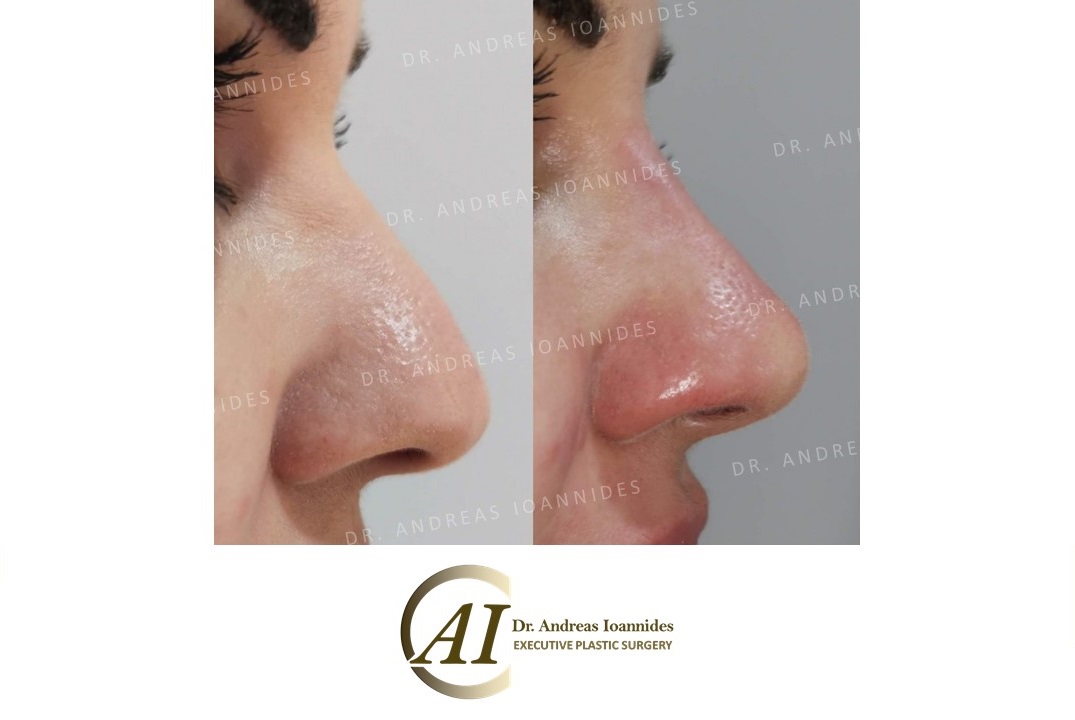
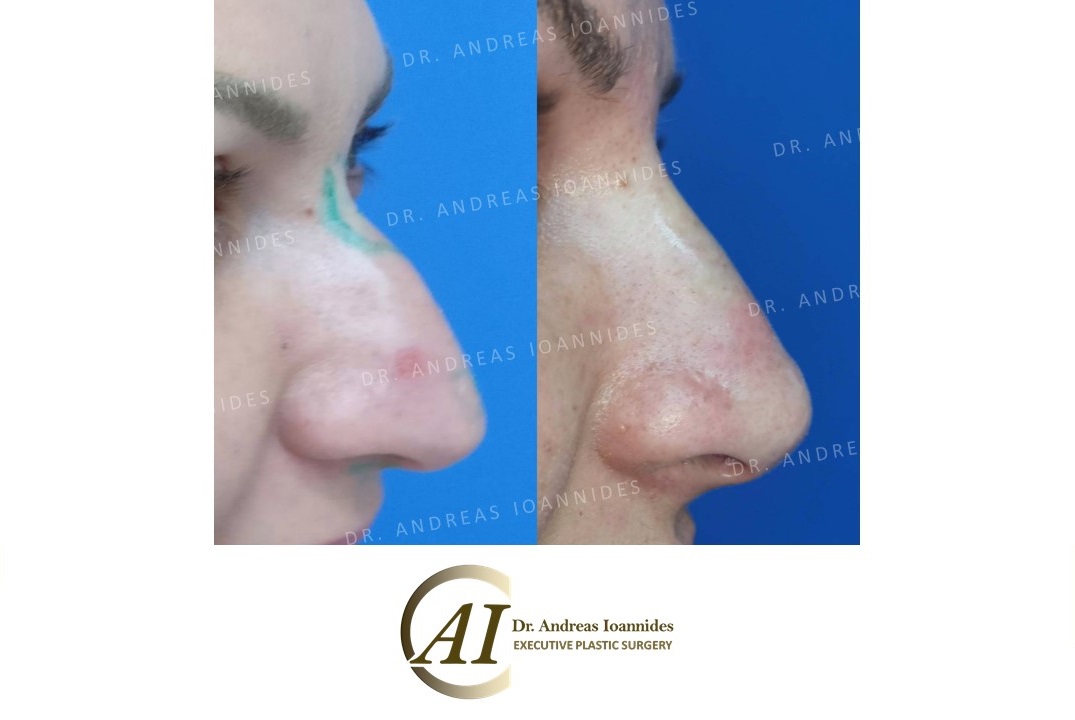
Liquid Rhinoplasty / Non-Surgical Rhinoplasty is an injectable technique designed to improve selected minor nasal irregularities without surgery.
Using carefully selected injectable materials, Dr Andreas Ioannides, Plastic & Reconstructive Surgeon, may improve the visual appearance of:
- small irregularities along the bridge,
- mild asymmetry,
- a small dorsal hump through contour balancing,
- depressions or indentations,
- the transition between the forehead and nose,
- selected features of the nasal tip,
- overall profile balance.
Liquid Nose Reshaping does not truly make the nose smaller and does not alter the underlying bone or cartilage structure.
The aim is to improve visual balance and contour with precision, without excessive volume and without compromising facial harmony.
What Is Liquid Rhinoplasty?
Liquid Rhinoplasty, also known as Non-Surgical Rhinoplasty or a “nose filler” treatment, is a non-surgical aesthetic procedure in which injectable material is placed at specific points of the nose.
The technique is used to visually improve nasal contour and proportions without:
- osteotomies,
- surgical removal of cartilage,
- general anaesthesia in most cases,
- the recovery associated with traditional rhinoplasty.
The quality of the result depends greatly on correct patient selection and precise product placement.
What Concerns Can It Improve?
Non-Surgical Rhinoplasty may be considered for patients with small or selected moderate irregularities.
It may be used for:
- a small dorsal hump,
- minor irregularities of the bridge,
- mild asymmetry,
- a depression along the dorsum,
- a deep nasofrontal angle,
- selected minor irregularities after previous rhinoplasty,
- improvement of the overall continuity of the profile.
In carefully selected patients, it may also provide subtle visual improvement to the tip.
What Can Non-Surgical Rhinoplasty Not Correct?
Liquid Rhinoplasty has important limitations.
It cannot:
- make a large nose genuinely smaller,
- remove a significant dorsal hump,
- correct severe nasal deviation,
- narrow a wide bony nose,
- correct major breathing problems,
- completely reshape the nasal tip,
- replace surgical rhinoplasty when there is a significant structural deformity.
In these cases, surgical rhinoplasty may be the more appropriate option.
We do not try to correct with filler what genuinely requires surgery.
How Does Liquid Rhinoplasty Work?
The technique is based on strategically adding small amounts of injectable material to selected areas.
This may create the visual impression of:
- a straighter bridge,
- smoother transitions,
- better symmetry,
- a more balanced profile.
For example, a small hump is not actually removed with filler. Instead, carefully placed volume around it may make the bridge appear smoother and straighter.
This distinction is important for maintaining realistic expectations.
What Material Is Used?
The injectable product is selected according to:
- the treatment area,
- the patient’s anatomy,
- the desired result,
- the intended duration,
- the medical history.
In modern aesthetic practice, temporary fillers such as hyaluronic acid are commonly used when clinically appropriate.
The doctor selects the product according to its properties, density and the tissue plane in which it needs to be placed.
Is the Result Permanent?
No.
Liquid Rhinoplasty is generally a temporary treatment when absorbable fillers are used.
Duration depends on:
- the product,
- the amount used,
- the treatment area,
- metabolism,
- tissue movement,
- individual response.
For long-term structural changes to the nose, surgical rhinoplasty remains the more comprehensive option.
Liquid Rhinoplasty or Surgical Rhinoplasty?
These techniques are not competitors. They have different indications.
Liquid Rhinoplasty may be suitable when there is:
- a minor irregularity,
- a need for visual contour smoothing,
- limited asymmetry,
- a desire for temporary improvement without surgery.
Surgical Rhinoplasty may be more appropriate when there is:
- a large nose,
- a pronounced hump,
- significant deviation,
- major tip deformity,
- a functional breathing problem,
- a need for true reduction or structural reshaping.
The correct choice is made after clinical assessment.
Can Filler Make the Nose Look Smaller?
This is one of the most common questions.
Filler adds volume rather than removing it.
However, precise placement can make the nose appear:
- straighter,
- more balanced,
- more symmetrical,
- visually more refined.
This is not the same as genuinely reducing the size of the nose.
Can It Improve the Nasal Tip?
In selected cases, subtle visual improvement may be possible.
However, when there is:
- significant tip drooping,
- a wide or bulky tip,
- major cartilage asymmetry,
- a need for true reduction or reconstruction,
surgical rhinoplasty offers greater possibilities.
Can It Improve a Dorsal Hump?
A small hump may sometimes be visually camouflaged with filler.
The product is placed around the area to create a smoother dorsal line.
A large hump, however, is generally not a good indication because adding volume may make the nose appear larger overall.
Can It Correct a Crooked Nose?
Small visual asymmetries may sometimes be improved.
However, Liquid Rhinoplasty cannot correct a true significant deviation of the nasal bones or septum.
In such cases, surgical assessment is necessary.
How Long Does the Treatment Take?
The procedure is usually relatively short.
Treatment time depends on:
- the number of correction points,
- the anatomy,
- the amount of material required,
- whether it is a first treatment or a corrective procedure.
In many cases, treatment may take approximately 15–30 minutes.
Is Anaesthesia Required?
General anaesthesia is usually not required.
Depending on the case, treatment may involve:
- topical numbing cream,
- filler containing local anaesthetic,
- another local pain-control approach where needed.
The aim is to make the procedure as comfortable as possible.
Is There Downtime?
Downtime is usually limited.
After treatment, patients may experience:
- mild swelling,
- redness,
- tenderness,
- minor bruising,
- temporary asymmetry due to swelling.
Many patients can return relatively quickly to daily activities.
When Will I See the Results?
The change is usually visible immediately.
However, initial swelling may temporarily influence the appearance.
The final result is assessed after:
- swelling subsides,
- the filler settles,
- the tissues stabilise.
Is Non-Surgical Rhinoplasty Safe?
Liquid Rhinoplasty is a medical injectable procedure and is not risk-free.
The nose is a particularly demanding area because of its complex vascular anatomy.
Potential risks may include:
- swelling,
- bruising,
- asymmetry,
- nodules,
- infection,
- product migration,
- vascular occlusion,
- skin ischaemia or tissue injury,
- very rare but serious vascular complications.
For this reason, the treatment should be performed by a doctor with detailed knowledge of nasal anatomy and experience in filler complication management.
Why Choose Dr Andreas Ioannides?
Liquid Rhinoplasty may appear simple because it does not involve surgery.
In reality, it is one of the most anatomically demanding injectable treatments of the face.
Dr Andreas Ioannides, Plastic & Reconstructive Surgeon, evaluates:
- the nasal bridge,
- the tip,
- the nasofrontal angle,
- the septum,
- the relationship between the nose and upper lip,
- the profile,
- the chin and overall facial balance.
His experience in surgical rhinoplasty is particularly valuable because it helps determine when a minor concern can be managed with filler and when true surgery is more appropriate.
The goal is not to make every nose look the same. The goal is to create the right balance for your face.
Liquid Rhinoplasty and Facial Harmonisation
The nose should not be assessed in isolation.
Its appearance is influenced by:
- the forehead,
- cheekbones,
- lips,
- chin,
- jawline.
In some patients, a subtle improvement to the nose combined with careful chin or facial contouring may create better overall balance.
This is known as facial harmonisation.
The goal remains natural proportions rather than excessive filler use.
Liquid Rhinoplasty After Previous Rhinoplasty
In very selected patients, filler may be used to improve minor irregularities after previous surgical rhinoplasty.
However, extra caution is required because:
- the anatomy has been altered,
- scar tissue may be present,
- vascular pathways may differ.
Not every post-rhinoplasty irregularity is suitable for filler treatment.
How Much Does Liquid Rhinoplasty Cost?
The cost of Non-Surgical Rhinoplasty varies according to the personalised treatment plan.
The final price depends on:
- the product used,
- the amount required,
- the areas of the nose that need correction,
- whether it is a first or revision treatment,
- anatomical complexity,
- whether facial harmonisation is combined.
For this reason, the exact price is determined after a personal consultation.
Natural Results Make the Difference
Liquid Nose Reshaping by Dr Andreas Ioannides
The success of Non-Surgical Rhinoplasty does not depend on how much filler is used.
It depends on whether the desired improvement can be achieved with the smallest appropriate amount in the correct anatomical location.
The aim is:
- a smoother bridge,
- better symmetry,
- a more balanced profile,
- natural harmony with the rest of the face.
The best Liquid Rhinoplasty is one that improves the nose without making it obvious that filler has been used.
Would You Like to Know If Non-Surgical Rhinoplasty Is Right for You?
During your personal consultation, Dr Andreas Ioannides will assess:
- the nasal bridge,
- the dorsal hump,
- the tip,
- symmetry,
- the profile,
- nasal function,
- previous surgery,
- the relationship between the nose and chin,
- your desired result.
It can then be determined whether the best option is:
Liquid Rhinoplasty, Surgical Rhinoplasty, Revision Rhinoplasty or combined Facial Harmonisation.
Frequently Asked Questions About Liquid Rhinoplasty
It is a non-surgical injectable treatment that uses filler to improve selected minor irregularities and the contour of the nose.
Not literally. Filler adds volume. However, precise placement may make the nose appear more balanced and refined.
It may provide limited visual improvement in suitable patients, but it cannot replace surgery when significant tip drooping is present.
It may provide limited visual improvement in suitable patients, but it cannot replace surgery when significant tip drooping is present.
No. When absorbable fillers are used, the result is temporary.
In many cases, treatment takes approximately 15–30 minutes depending on complexity.
Downtime is usually limited, although temporary swelling, redness or bruising may occur.
Like all filler treatments, it carries potential risks. The nose is an anatomically complex area and treatment should be performed by an appropriately trained doctor.
In very selected cases, yes. Previous surgery changes the anatomy and requires additional caution.
When there is a large nose, pronounced hump, significant deviation, breathing problems or a need for true structural reshaping of the bone and cartilage.
The cost depends on the product, amount required, anatomical complexity and whether other facial harmonisation treatments are combined. The exact price is determined after consultation.
CONTACT

Dr. Andreas Ioannides
Contact us and book an appointment immediately
Choose your appointment by video call or by visiting one of our clinics!

Dr. Andreas Ioannides Executive Plastic Surgery is one of the most complete plastic surgery clinics and the international medical aesthetic medical centers ADVANCED AESTHETICS provide modern medical techniques and aesthetic medical treatments in Greece and Cyprus.
September and Plastic Surgery: Why Autumn Can Be a Good Time to Plan an Aesthetic Procedure
September and Aesthetic Treatments: Why It’s the Ideal Time for a Fresh Start
Thinking About Labiaplasty? 10 Things You Should Know Before Moving Forward
Labiaplasty: Everything You Need to Know About the Procedure That Improves Comfort and Confidence
Medical Tourism in Greece and Cyprus: Choosing Quality, Experience, and Safety
Rhinoplasty: Everything You Need to Know
Body Firming & Contouring – Advanced Aesthetics by Dr. Andreas Ioannides
Athens Clinic
T +30.210 9595566
Email: info@andreasioannides.com
Address: Syggrou Ave, 284, Kallithea, Zip 17673 – Athens
Cyprus Clinics
T +357.22335002
Email: info@andreasioannides.com
Athenium International Medical Institute
Address: Giannitson 9 Strovolos, Nicosia 2027, Cyprus
Address: Thiseos 1, Lemesos 3025, Zip 4004 – Cyprus
Copyright © 2022