


Dark circles and under-eye bags are among the most common aesthetic concerns affecting the eye area. They can make the face appear:
- tired,
- dull,
- older,
- less refreshed,
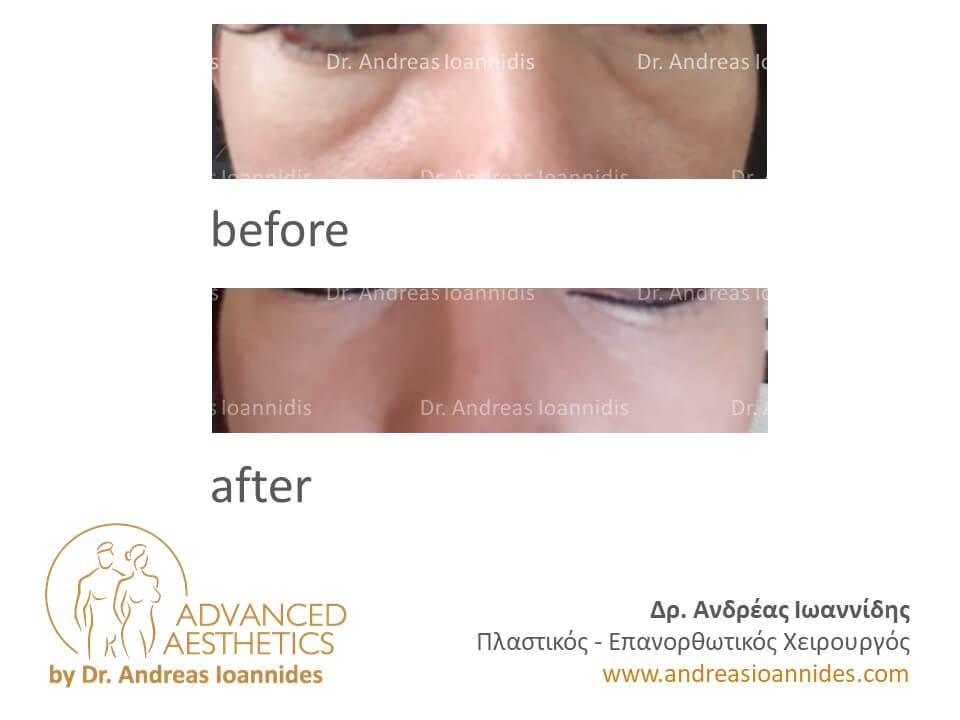
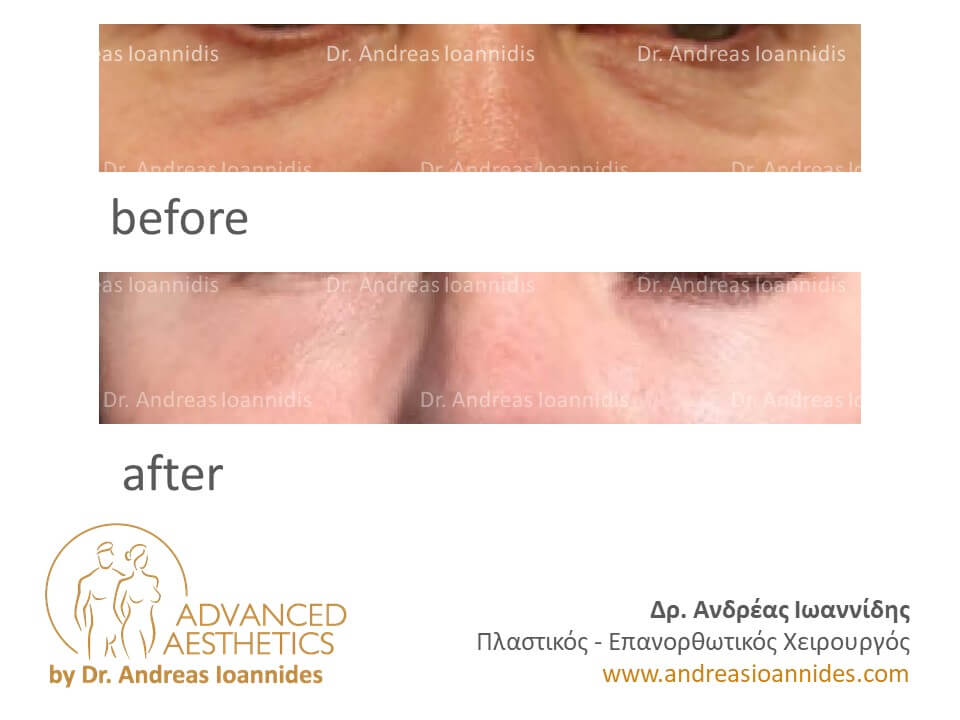
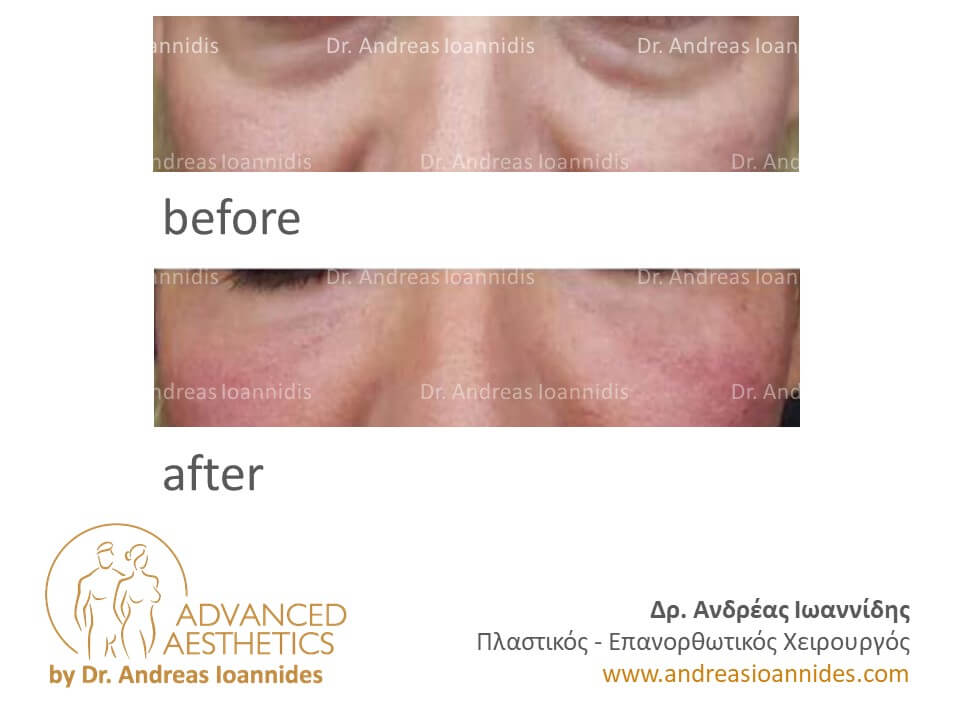
even when the patient feels well rested. Under-Eye Mesotherapy with Biomimetic Peptides is an injectable treatment designed to improve skin quality and selected concerns such as:
- dark circles,
- mild puffiness,
- fine lines,
- reduced elasticity,
- tired-looking eyes,
- early changes in the under-eye area.
Biomimetic peptides are used in aesthetic treatments to support specific cellular functions and skin-renewal processes. The aim is not to change your eyes. The aim is to create a brighter, fresher and more rested appearance.
What are Biomimetic Peptides?
Biomimetic peptides are short chains of amino acids designed to mimic or support selected biological signals within the body. In aesthetic medicine, they are used in selected formulations to support processes such as:
- skin renewal,
- fibroblast activity,
- collagen production,
- elastin production,
- improved texture,
- overall skin quality.
The exact effect always depends on the specific product, formulation and indication.
What is Under-Eye Mesotherapy?
Mesotherapy is a technique in which very small amounts of selected active ingredients are injected superficially or intradermally into the treatment area. In the under-eye region, it may be used to improve:
- hydration,
- skin texture,
- elasticity,
- fine lines,
- selected forms of discolouration,
- the overall tired appearance of the area.
The treatment plan is adapted to the underlying cause of the concern.
Why do Dark Circles appear?
Dark circles are not one single condition. They may be related to:
- hyperpigmentation,
- thin skin and visible underlying vessels,
- shadowing from tear trough hollowing,
- volume loss,
- skin laxity,
- genetic factors,
- sun damage,
- orbital anatomy,
- a combination of factors.
For this reason, the same treatment does not work equally well for everyone. The correct approach begins with identifying the true cause.
How can Mesotherapy help Dark Circles?
In appropriately selected patients, treatment may help:
- improve the quality of thin under-eye skin,
- increase hydration,
- improve elasticity,
- create a more even appearance,
- reduce the tired look of the area.
However, when dark circles are mainly caused by deep tear trough hollowing or significant volume loss, a different treatment may be more appropriate.
What causes Under-Eye Bags?
Under-eye bags are not always caused by “excess fat”. They may be related to:
- protruding orbital fat,
- fluid retention,
- tissue laxity,
- reduced lymphatic drainage,
- changes in lower eyelid support,
- midface anatomy.
It is therefore important to distinguish true fat protrusion from simple puffiness.
Can Mesotherapy reduce Under-Eye Bags?
In selected cases with mild puffiness and superficial tissue changes, an appropriate mesotherapy protocol may improve the appearance of the area. However, it should not be presented as a treatment that “dissolves” or removes every type of under-eye bag. When there is significant fat protrusion, a more appropriate option may be:
- Thermi-Lid™,
- lower blepharoplasty,
- Midface Suspension,
- another personalised treatment.
How do Biomimetic Peptides work around the Eyes?
Depending on the specific formulation, peptides may be designed to support:
- cellular communication,
- collagen production,
- elastin production,
- hydration,
- skin texture,
- overall skin renewal.
The goal is to improve the quality and appearance of the delicate under-eye skin.
Who is a suitable candidate?
Treatment may be suitable for women and men who have:
- early dark circles,
- thin or dull under-eye skin,
- mild puffiness,
- fine lines,
- early loss of elasticity,
- a tired-looking eye area,
- a preference for non-surgical rejuvenation.
Final suitability is determined after medical assessment.
When is Mesotherapy not enough?
Mesotherapy is not the correct solution for every under-eye concern. When there is:
- significant fat protrusion,
- pronounced laxity,
- major excess skin,
- deep tear trough hollowing,
- advanced midface descent,
another technique may be required. Possible alternatives include:
- Thermi-Lid™,
- lower blepharoplasty,
- nanofat,
- Midface Suspension,
- laser,
- pigmentation treatment,
- or a combination of techniques.
How is the treatment performed?
After assessment of the under-eye area, small and carefully controlled injections of the selected product are placed into the treatment area. Particular care is required because of the delicate anatomy around the eyes. A session usually takes approximately 15–20 minutes.
How many sessions are required?
The treatment programme is personalised. In many cases, an initial course of approximately 2–3 sessions may be recommended, with intervals determined according to the product and the patient’s response. Not every patient requires the same protocol. Reassessment determines whether further treatment or maintenance is needed.
When will I see results?
Improvement is usually gradual. During the treatment course, patients may begin to notice changes in:
- hydration,
- skin quality,
- brightness,
- fine lines,
- the overall appearance of fatigue.
The final response depends on:
- the cause of the concern,
- age,
- skin quality,
- the product used,
- the number of sessions.
Is there downtime?
Downtime is usually limited. Temporary effects may include:
- mild swelling,
- redness,
- small bruises,
- tenderness at the injection points,
- small temporary bumps.
Most patients return relatively quickly to their normal daily activities.
Is the treatment painful?
The under-eye area is sensitive. During treatment, patients may experience:
- a small pinching sensation,
- mild burning,
- pressure.
Appropriate comfort measures may be used depending on the individual case.
Is Under-Eye Mesotherapy safe?
Periorbital mesotherapy is a medical injectable procedure and is not completely risk-free. Possible adverse effects may include:
- swelling,
- redness,
- bruising,
- allergic or inflammatory reactions,
- infection,
- prolonged puffiness,
- other less common complications.
The area around the eyes has particularly delicate anatomy, so correct product selection and treatment by an appropriately trained physician are essential.
Why choose Dr Andreas Ioannides?
Dark circles and under-eye bags should not be treated with the same approach in every patient. Success begins with the correct diagnosis. Dr Andreas Ioannides, Plastic, Aesthetic & Reconstructive Surgeon, assesses:
- skin quality,
- pigmentation,
- the presence of under-eye bags,
- puffiness,
- tear trough hollowing,
- the midface,
- tissue laxity,
- overall periorbital anatomy.
This allows the most appropriate option to be selected, which may include:
- mesotherapy with biomimetic peptides,
- Thermi-Lid™,
- nanofat,
- laser,
- lower blepharoplasty,
- Midface Suspension,
- or a combination of treatments.
We do not simply treat a dark circle. We treat the cause of the tired-looking eye area.
Can it be combined with Thermi-Lid™?
Yes, in appropriately selected patients. The two treatments have different goals.
Mesotherapy with Biomimetic Peptides
Focuses more on:
- skin quality,
- hydration,
- fine lines,
- surface rejuvenation.
Thermi-Lid™
Focuses more on:
- tissue tightening,
- improvement of lower eyelid laxity,
- deeper collagen remodelling.
When several concerns coexist, a combined approach may be appropriate.
How long do the results last?
Duration depends on:
- the product,
- the cause of the dark circles,
- skin quality,
- age,
- lifestyle,
- sun exposure,
- the number of sessions.
There is no identical duration for every patient. Maintenance treatments may be recommended when appropriate.
How much does Under-Eye Mesotherapy cost?
The cost varies according to the treatment plan. The final price depends on:
- the product used,
- the number of sessions,
- the severity of the concern,
- whether combination treatment is required.
The exact price is determined after a personal consultation.
A tired-looking eye area does not always have the same cause
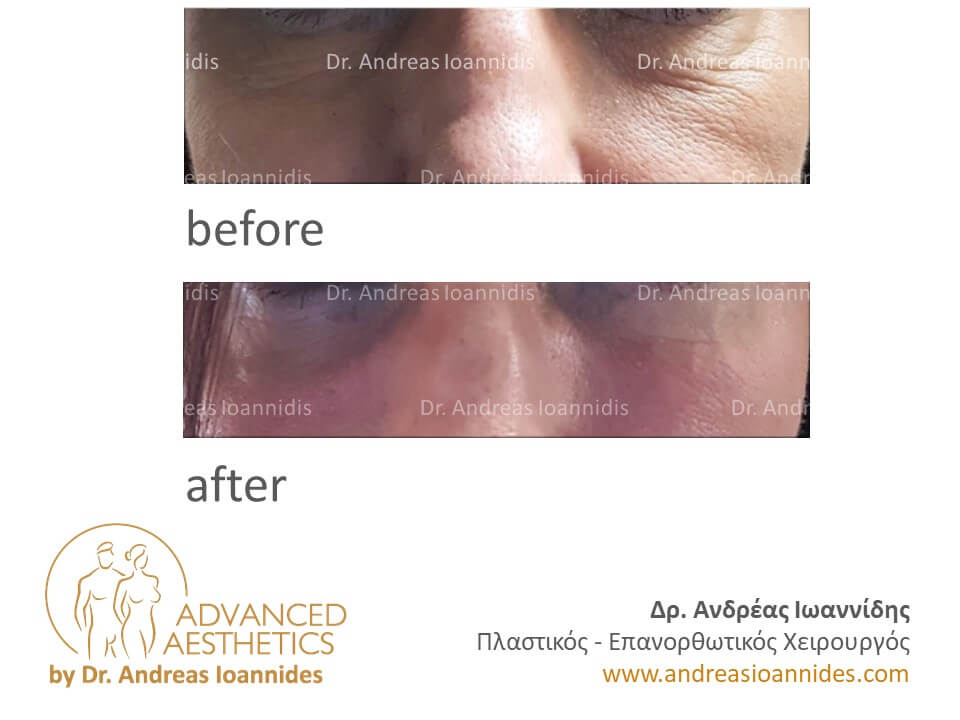
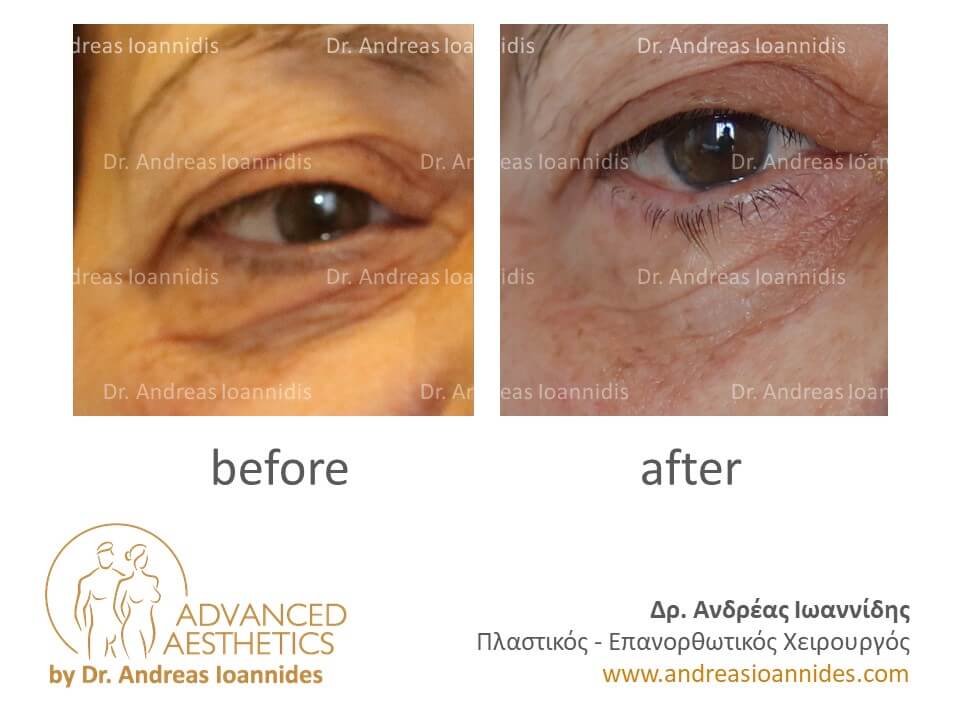
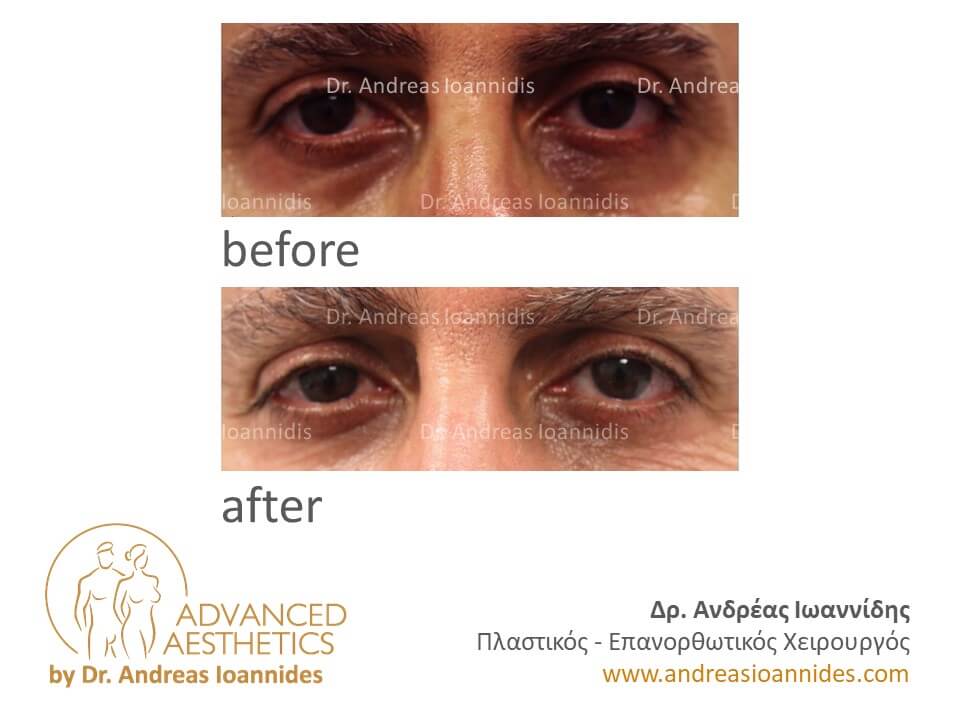
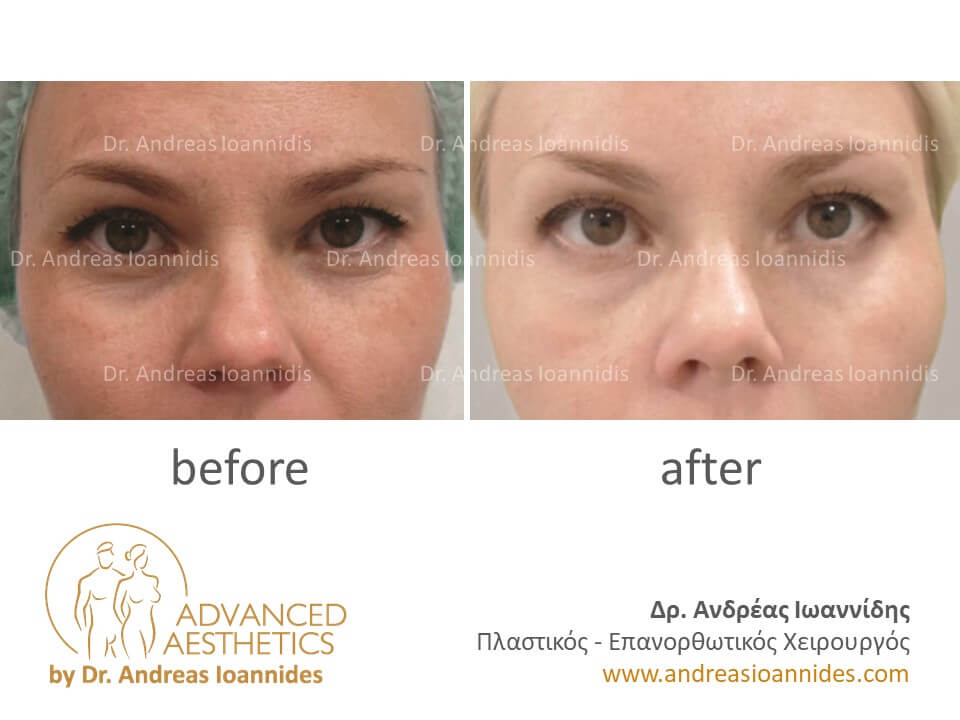
Under-Eye Mesotherapy with Biomimetic Peptides by Dr Andreas Ioannides One patient may have pigmentation another thin skin, under-eye bags, volume loss or laxity. For this reason, the right treatment starts with identifying the actual problem. The aim is a brighter, more rested and natural-looking eye area — without exaggeration.
Would you like to know which treatment is right for your Dark Circles or Under-Eye Bags?
During your personal consultation, Dr Andreas Ioannides will assess:
- the type of dark circles,
- the presence of under-eye bags,
- puffiness,
- skin quality,
- laxity,
- tear trough hollowing,
- midface anatomy,
- your desired result.
The most appropriate treatment may then include:
Mesotherapy with Biomimetic Peptides, Thermi-Lid™, nanofat, laser, lower blepharoplasty, Midface Suspension or a combination of techniques.
Frequently Asked Questions About Dark Circles & Under-Eye Bags
They are short amino-acid chains used in selected aesthetic formulations to support specific skin-renewal functions.
They may help in selected cases, particularly when the concern is related to skin quality, thinness or discolouration.
Not all of them. Treatment may improve mild puffiness and skin quality, but significant fat bags may require another approach.
An initial course of approximately 2–3 sessions may be recommended in many patients, but the protocol is personalised.
Usually around 15–20 minutes.
Improvement is generally gradual and becomes more noticeable during the treatment course.
Downtime is usually limited. Temporary swelling, redness or small bruises may occur.
Yes, when both skin-quality concerns and laxity are present.
No. Dark circles have different causes and the treatment must be adapted accordingly.
The price depends on the product, number of sessions and overall treatment plan.
CONTACT

Dr. Andreas Ioannides
Contact us and book an appointment immediately
Choose your appointment by video call or by visiting one of our clinics!

Dr. Andreas Ioannides Executive Plastic Surgery is one of the most complete plastic surgery clinics and the international medical aesthetic medical centers ADVANCED AESTHETICS provide modern medical techniques and aesthetic medical treatments in Greece and Cyprus.
7 Common Myths About Plastic Surgery
Blepharoplasty: When Is It Indicated and What to Expect During Recovery
Rhinoplasty and Breathing: Can Aesthetics and Functionality Be Combined?
September and Plastic Surgery: Why Autumn Can Be a Good Time to Plan an Aesthetic Procedure
September and Aesthetic Treatments: Why It’s the Ideal Time for a Fresh Start
Thinking About Labiaplasty? 10 Things You Should Know Before Moving Forward
Labiaplasty: Everything You Need to Know About the Procedure That Improves Comfort and Confidence
Athens Clinic
T +30.210 9595566
Email: info@andreasioannides.com
Address: Syggrou Ave, 284, Kallithea, Zip 17673 – Athens
Cyprus Clinics
T +357.22335002
Email: info@andreasioannides.com
Athenium International Medical Institute
Address: Giannitson 9 Strovolos, Nicosia 2027, Cyprus
Address: Thiseos 1, Lemesos 3025, Zip 4004 – Cyprus
Copyright © 2022